

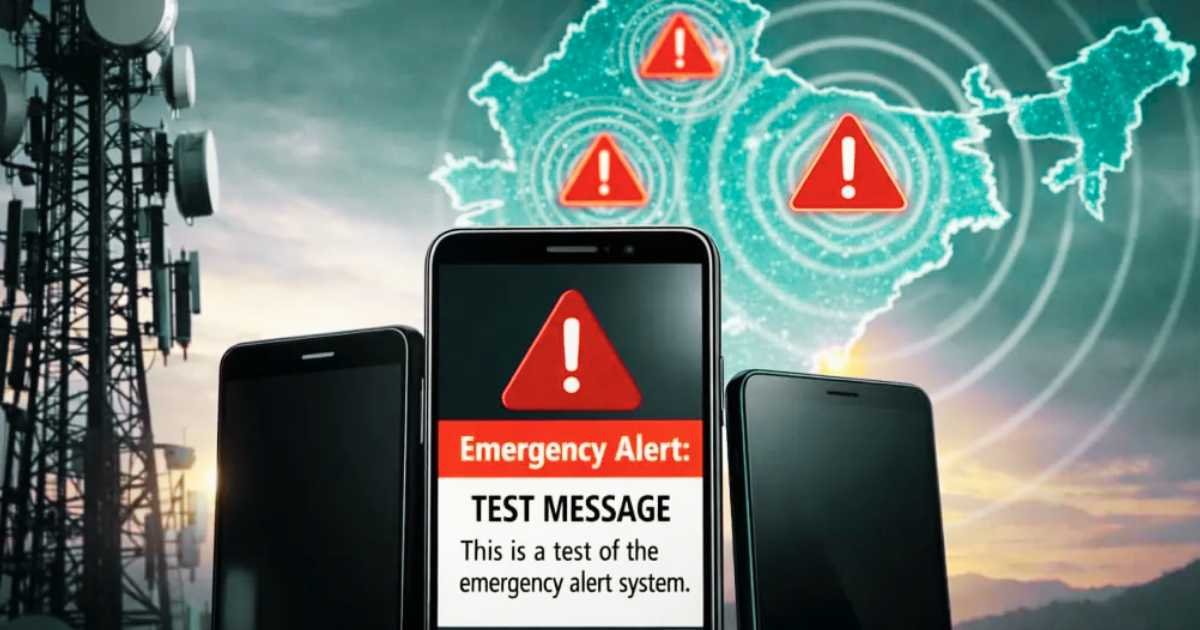
New Delhi: The government on Tuesday said nationwide testing of the Cell Broadcast system is underway to strengthen disaster alert communication across India.
The Department of Telecommunications, along with the National Disaster Management Authority, is conducting trials to assess system performance. Officials said the initiative aims to ensure faster and more reliable emergency alerts.
Authorities have already operationalised the Integrated Alert System known as SACHET. It currently delivers geo-targeted SMS alerts across all 36 states and Union Territories.
So far, the system has sent over 134 billion SMS alerts in more than 19 Indian languages. These alerts supported disaster warnings during cyclones, extreme weather, and other emergencies.
Cell Broadcast system enables real-time emergency alerts
Officials said the Cell Broadcast system would complement SMS alerts in time-critical situations. It can send messages to all mobile devices in a specific area simultaneously.
This technology ensures near real-time delivery during events such as earthquakes, tsunamis, and industrial hazards. Therefore, it improves response time and public safety.
The Centre for Development of Telematics developed the system using global standards. It follows the Common Alerting Protocol recommended by international agencies.
During the testing phase, users may receive multiple test alerts in English, Hindi, and regional languages. However, authorities clarified that these messages require no action.
Officials also advised users not to panic and to rely only on official updates. In addition, they requested public cooperation during the testing process.
Once fully operational, the system will send alerts to all mobile devices regardless of settings. As a result, it will ensure wider reach during real emergencies.
The government said the initiative would strengthen disaster preparedness and communication. It added that continued testing would ensure reliability before full deployment.
