

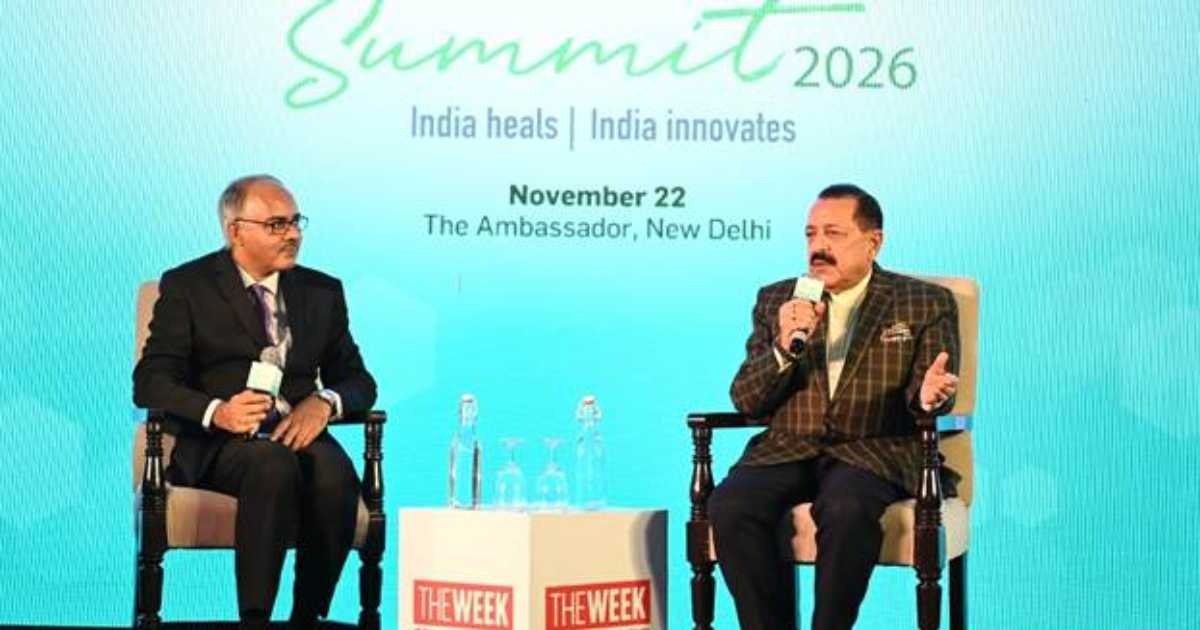
New Delhi: India is shifting its healthcare strategy towards prevention, early detection and precision medicine, Union Minister Dr. Jitendra Singh said on November 22, 2026. He said research at molecular and genetic levels is opening new possibilities for disease prevention and treatment. The shift assumes importance as metabolic and lifestyle-related disorders increasingly affect younger people.
Speaking at THE WEEK Health Summit 2026 in New Delhi, the Minister delivered the Chief Guest Address on Healthcare Initiatives of the Union Government. He also interacted with healthcare professionals, researchers and industry representatives. The summit included Dr. Nikhil Tandon, Director of AIIMS New Delhi, and Sharad Aggarwal, Director of FSSAI. Dr. Andrei Kozik, Deputy Head–India of the International Committee of the Red Cross, also attended, along with senior doctors and researchers.
Dr. Jitendra Singh said diabetes, obesity, hypertension and cardiovascular diseases are affecting younger populations. Therefore, prevention and early diagnosis have become essential. Changing food habits and reduced physical activity are adding to these risks. Moreover, lifestyle-related health challenges now affect both urban and rural populations. He said society must share responsibility for prevention through greater awareness.
The Minister said India is expanding research beyond conventional treatment methods. Advances in biotechnology, molecular science and genetic research are helping scientists examine disease mechanisms. These developments could support more precise interventions and improve disease management.
He also highlighted India’s progress in vaccine development and preventive medicine. India’s indigenous DNA vaccine developed during the COVID-19 pandemic demonstrated its research capabilities. Meanwhile, more than 50 lakh adolescent girls have received HPV vaccines under the vaccination initiative. The programme supports efforts to prevent cervical cancer.
Genome research supports precision medicine
Dr. Jitendra Singh said genome sequencing has covered 10,000 Indians from 84 different populations. The work reflects India’s genetic diversity and offers opportunities to study disease susceptibility. He also cited more than 400 genetic traits across different populations. These findings could help researchers understand health risks and develop targeted interventions.
The Minister said precision medicine is gaining importance through treatment based on individual genetic profiles, lifestyles and environments. Since the same disease can affect people differently, treatment approaches may also need to differ. He referred to research on biomarkers among women with gestational diabetes. The studies aim to identify those at greater risk of developing Type 2 diabetes later in life. This could help doctors plan more targeted follow-up.
The Government and ICMR are also working to expand diagnosis and treatment for rare genetic diseases. Dr. Jitendra Singh said these conditions often place a heavy burden on patients and families. Diagnostic difficulties, high treatment costs and limited medicine availability remain major challenges. Therefore, sustained scientific and institutional support is necessary.
He also cited progress in indigenous medical research, including new antibiotics and genetic therapies. Referring to gene therapy research for haemophilia at Christian Medical College, Vellore, he noted that the findings appeared in the New England Journal of Medicine. He said Indian researchers are developing advanced medical solutions with potential applications beyond the country.
On healthcare infrastructure, the Minister said expanded dialysis facilities at district hospitals have improved access for kidney patients. At the same time, research is advancing towards detecting kidney disease before symptoms appear. He stressed that controlling diabetes and hypertension remains important to protect vital organs and reduce chronic disease risks.
Dr. Jitendra Singh called for stronger collaboration among government institutions, research organisations, healthcare professionals and private-sector partners. Such partnerships can accelerate research and turn scientific discoveries into practical healthcare solutions. He also urged greater philanthropic support for medical research.
Addressing young people, the Minister warned against health misinformation and unverified nutrition advice. He also cautioned against using medicines without supervision for cosmetic purposes. Instead, he advised young people to consult qualified medical professionals and rely on authenticated scientific information.
India’s expanding work in genomics, biotechnology and indigenous medical innovation is strengthening its preventive healthcare capabilities. Dr. Jitendra Singh said scientific progress and early intervention will play an increasingly important role in addressing emerging health challenges. The approach also supports the broader vision of Viksit Bharat 2047.
