

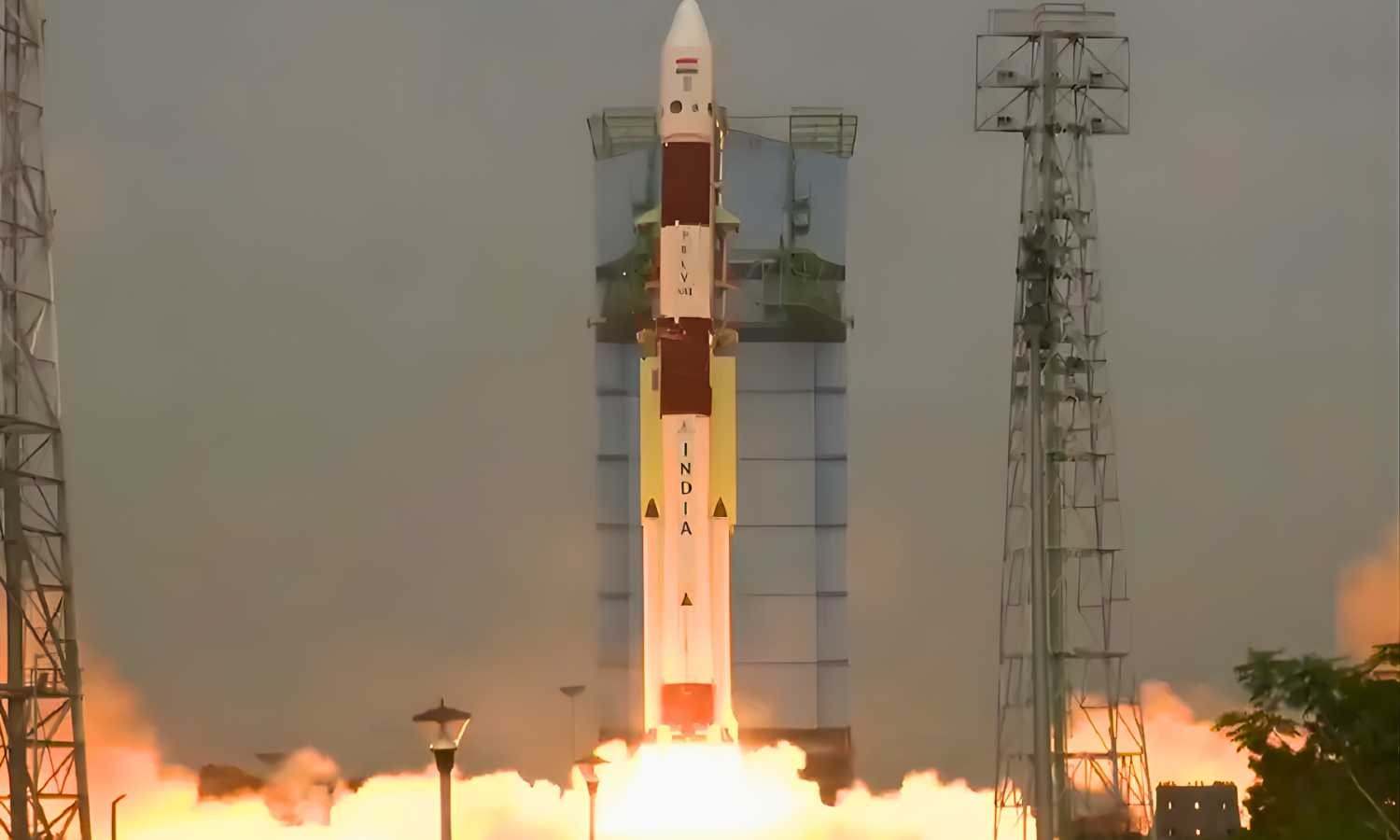
Sriharikota: The Indian Space Research Organisation launched its first mission of 2026 on Monday. ISRO sent the PSLV-C62 rocket into orbit from Sriharikota. The mission placed a next-generation Earth observation satellite named Anvesha along with other payloads.
At liftoff, the PSLV-C62 rocket rose from the Satish Dhawan Space Centre. Flames and smoke marked the launch. Through this mission, ISRO deployed 14 satellites into precise orbits. The primary payload weighed 1,485 kg.
During the mission, ISRO placed EOS-N1, also called Anvesha, into orbit. Scientists described it as one of the most advanced satellites in its class. The satellite marks the ninth full-fledged commercial mission built by NewSpace India Limited.
Earlier, ISRO Chairman V. Narayanan said the PSLV-C62 launch opened India’s space calendar for 2026. He added that Anvesha will strengthen India’s defence and surveillance capabilities.
PSLV-C62 launch boosts India’s space-based surveillance
According to scientists, Anvesha will significantly improve India’s ability to monitor Earth from space. It will enhance both strategic surveillance and advanced Earth observation.
Besides the main payload, the rocket also carried an experimental capsule from a Spanish startup. It also deployed satellites for 17 domestic and international customers. ISRO said the capsule will re-enter Earth and splash down in the South Pacific Ocean after completing its mission.
Overall, the successful launch reinforced ISRO’s record for reliable and cost-effective space access. At the same time, it highlighted India’s growing role in commercial launches and national security applications.
