

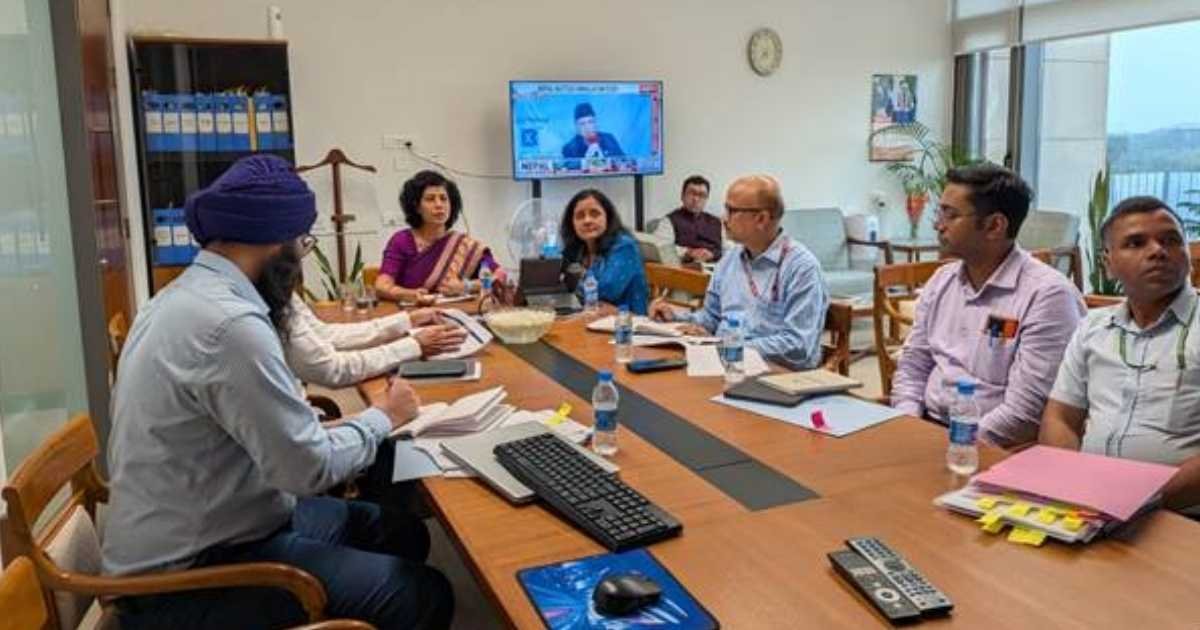
New Delhi: The Union Health Ministry reviewed India’s progress towards malaria elimination by 2030 and called for stronger, area-specific action.
Additional Secretary and National Health Mission Mission Director Aradhana Patnaik chaired the high-level review meeting. Senior ministry officers, health officials and district administrators attended the meeting.
India recorded nearly an 80% decline in malaria cases and deaths between 2015 and 2025. During the same period, high-burden districts fell from 155 to 33.
As many as 160 districts reported zero indigenous malaria cases between 2022 and 2025. The government said the figures reflected sustained interruption of local transmission.
The review focused on 33 high-burden districts across nine States and Union Territories. These districts accounted for 64% of malaria cases and 54% of malaria deaths reported in 2025.
Officials reviewed the malaria situation in Mizoram, Odisha, Tripura, Assam and Andhra Pradesh. They also examined progress in the Andaman and Nicobar Islands, Chhattisgarh, Jharkhand and Maharashtra.
Patnaik stressed the need for continued vigilance and focused strategies based on local conditions. She called for effective District Action Plans in all 33 high-burden districts.
She also called for Village Action Plans in high-burden villages. These plans should reflect local epidemiological and geographical conditions.
The meeting stressed early diagnosis and complete treatment as key elements of malaria elimination. Officials identified delays in testing and treatment as major factors behind malaria deaths.
States were advised to strengthen active surveillance and maintain uninterrupted supplies of diagnostic tools and anti-malarial medicines. The focus will remain on hard-to-reach and vulnerable areas.
Malaria elimination requires stronger surveillance
The review also called for better surveillance and improved data quality. States were asked to examine unusually high Annual Blood Examination Rates.
Officials said such reviews could identify duplicate testing, repeated entries and asymptomatic screening in reported data. They also stressed accurate reporting of malaria indicators.
Asymptomatic cases detected through mass screening should be reported separately. Officials said such cases should not enter API and ABER calculations.
This approach will help provide a more accurate picture of malaria transmission. It will also improve assessment of programme performance.
Patnaik stressed that health services alone cannot address every factor that supports malaria transmission. Waterlogging, mosquito breeding and poor environmental management can also sustain transmission.
Therefore, states were advised to improve coordination with Rural Development and Urban Development departments. They were also asked to work closely with Panchayati Raj Institutions.
Officials encouraged greater participation from Self-Help Groups and community volunteers. Panchayati Raj representatives were also urged to support local malaria control efforts.
Community groups can help report fever cases early and identify waterlogged areas. They can also identify mosquito breeding sites and support source-reduction measures.
The review brought together officials from the Union Health Ministry, National Centre for Vector Borne Diseases Control and State National Health Missions.
Joint Secretary Shri Prabhakar and Joint Secretary (VBD) Shri Nikhil Gajraj attended the meeting. Dr. Tanu Jain, Director, NCVBDC, also participated.
Mission Directors of NHM and State Programme Officers from the concerned States attended the review. District Collectors, Chief Medical Officers and District Malaria Officers from the concerned districts also participated.
The Health Ministry said focused action, stronger surveillance and community participation would remain important for India’s malaria elimination goal by 2030.
