

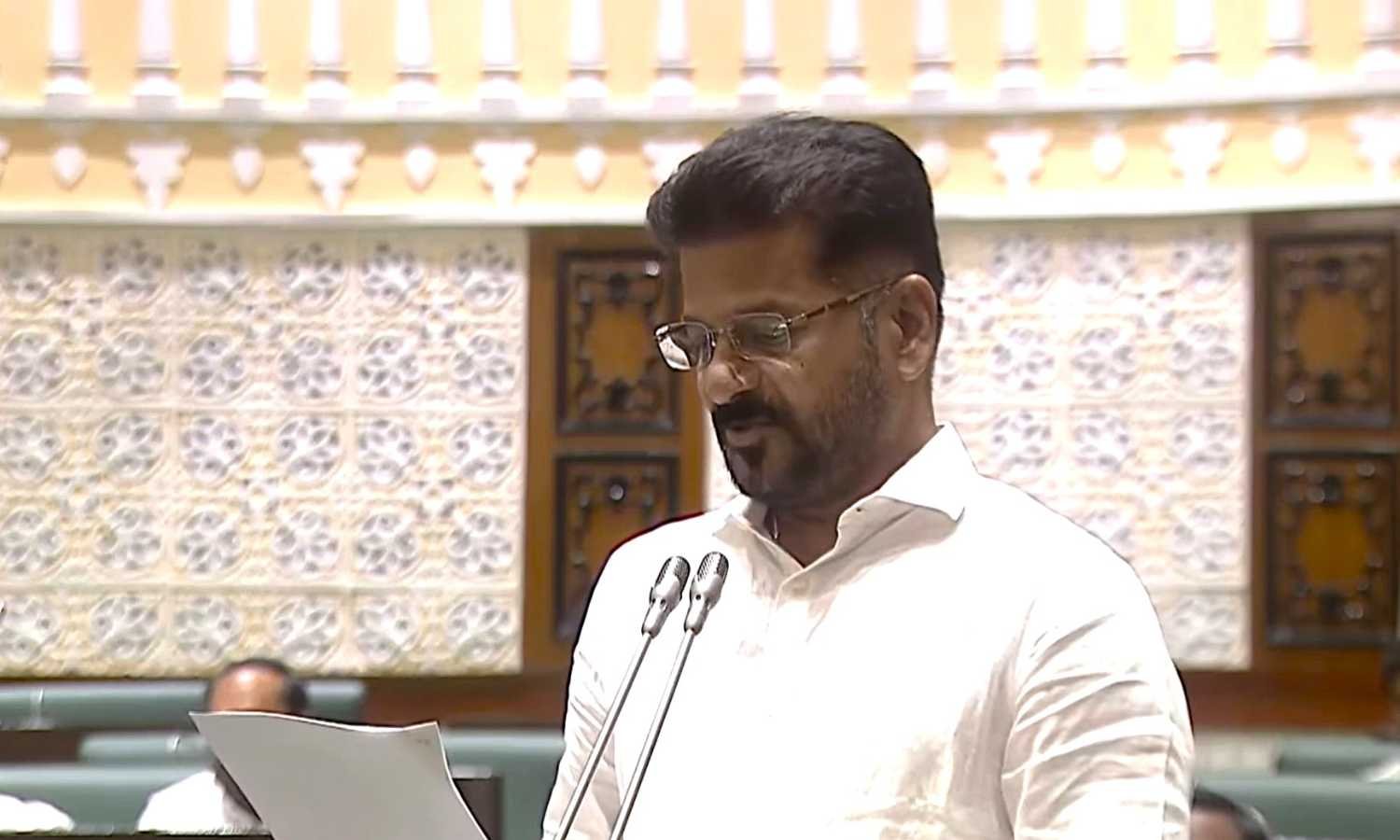
Hyderabad: The Telangana Legislative Assembly on Friday unanimously rejected the proposed VB-GRAMG Act, 2025, and demanded that the Centre continue the Mahatma Gandhi National Rural Employment Guarantee Act without dilution.
During the session, the House adopted a resolution moved by Panchayat Raj and Rural Development Minister Seethakka opposing the Viksit Bharat–Guarantee for Rozgar Aajeevika Mission (Grameen) law. Chief Minister A. Revanth Reddy participated in the debate and strongly backed the resolution.
Addressing the Assembly, Revanth Reddy said the VB-GRAMG Act would severely disrupt employment guarantees for the rural poor. Therefore, he urged the Union government to withdraw the proposed law and implement MGNREGA in its original form.
According to the Chief Minister, the new law weakened the rights-based nature of rural employment. Moreover, he warned that women and marginalised communities would suffer the most, as they depended heavily on guaranteed work.
Recalling the origins of MGNREGA, he said the scheme, launched on February 2, 2006, helped reduce poverty, unemployment and distress migration. Importantly, it guaranteed at least 100 days of wage employment with minimum wages.
VB-GRAMG Act termed anti-poor and anti-women
Highlighting beneficiary data, Revanth Reddy said nearly 90 percent of beneficiaries in Telangana belonged to SC, ST and BC communities. Of them, 62 percent were women, he added.
He further criticised the VB-GRAMG Act for replacing demand-driven work planning with restricted workdays. As a result, he said employment opportunities would shrink, particularly for women workers.
On funding, the Chief Minister objected to the proposed 60:40 Centre-State cost-sharing pattern. In contrast, he said the existing MGNREGA framework ensured full Central funding and upheld cooperative federalism.
Additionally, he opposed removing Mahatma Gandhi’s name from the scheme. He argued that dropping the name diluted Gandhian values and demanded its immediate restoration.
Referring to work categories, Revanth Reddy said the current law permitted 266 types of works. However, he warned that removing labour-intensive activities such as land development would hurt small farmers, Dalits and tribal communities.
He also opposed the proposed 60-day work break during the agricultural season. Consequently, he said landless labourers would lose income and demanded year-round implementation of the scheme.
The Chief Minister recalled that MGNREGA was first implemented in Anantapur district and later in Mahabubnagar. He said the law recognised employment as a legal right and helped curb migration from regions such as Palamuru.
Warning of future risks, he said the new law could trigger renewed migration to cities. Finally, he said the Assembly resolution reflected the aspirations of rural labour families and called for bipartisan support.
