
Sameer Waliullah says Owaisi exports a leadership formula he never used in Hyderabad

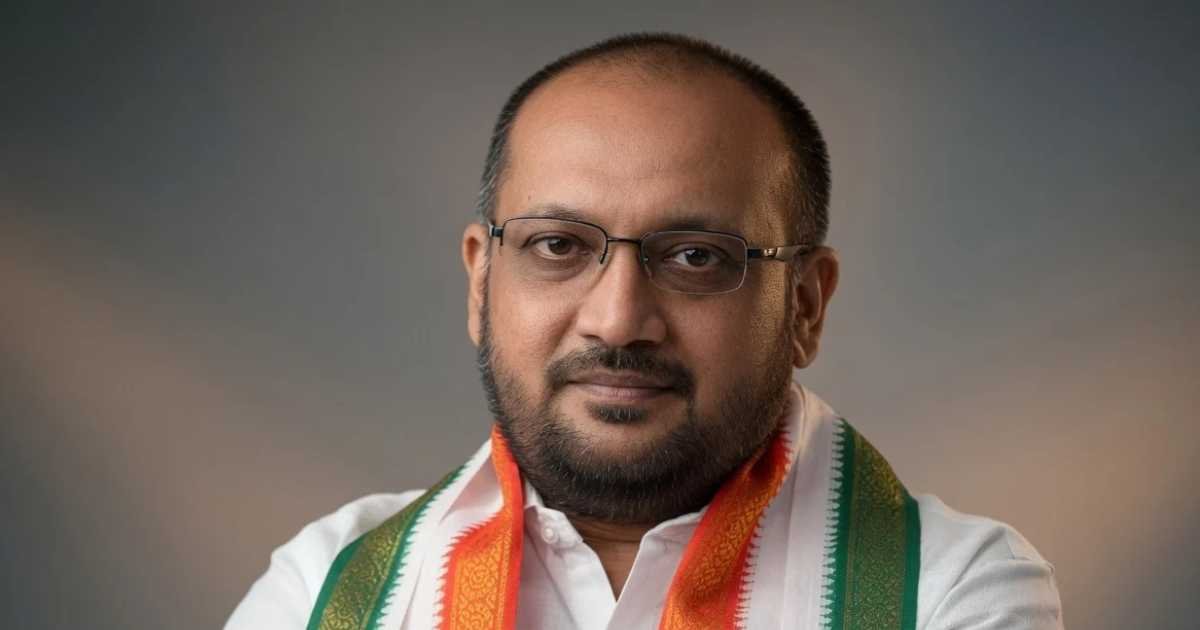
Hyderabad: Hyderabad Lok Sabha Congress in-charge Mohammed Waliullah Sameer on Thursday criticised the Owaisi leadership formula. He accused AIMIM president Asaduddin Owaisi of selling in Uttar Pradesh a model that he never implemented in Hyderabad and Telangana. Sameer, a former DCC president, was reacting to Owaisi’s recent speeches. In those speeches, Owaisi asked Muslims in Uttar Pradesh to stop depending on Nehru-Gandhi or Yadav leadership and to build leaders from within the community.
Sameer said the Hyderabad MP must first answer a simple question about independent Muslim leaders outside AIMIM’s traditional pockets. During decades of political dominance in Telangana, how many had the party created, he asked. “Owaisi is telling Muslims in Uttar Pradesh that Abdul should no longer spread the carpet for others and should himself become a leader. Fine. But before giving this advice in Azamgarh or Rampur, he should tell us what happened to Abdul in Telangana,” Sameer said. He asked why AIMIM never let Abdul move beyond a few selected constituencies.
The debate, he said, should not shrink to whether Muslims need greater political representation, since nobody disagrees on that. “Muslims certainly need more representation. They need more MLAs, MPs, ministers, mayors, councillors and party office-bearers. But the real question is whether Owaisi has expanded that representation or simply monopolised it in a limited geography,” he said.
Owaisi leadership formula and AIMIM’s nine seats
Sameer pointed out that AIMIM contested only nine of the 119 Assembly constituencies in Telangana in the 2023 elections. He asked why the party itself left 110 constituencies untouched if Owaisi believes larger parties deny Muslim youth platforms. “Were there no capable Muslim lawyers, doctors, entrepreneurs, social workers, women or educated youngsters in those constituencies?” he asked.
The contradiction became sharper, he said, because AIMIM backed the then BRS in most constituencies where it did not field candidates. “In Uttar Pradesh, Owaisi says Muslims should stop depending on others. In Telangana, he voluntarily handed over political space to another party. That is not independent leadership. That is selective politics,” Sameer said.
He accused the AIMIM chief of using the language of Muslim empowerment mainly when expanding into states where the party sought a new electoral base. “This slogan becomes loud in Uttar Pradesh, Bihar, Maharashtra or West Bengal. But in Telangana, where AIMIM has had the strongest organisation and the longest opportunity, there has been no serious attempt to create a statewide generation of Muslim leadership,” he said.
Sameer questions the Hyderabad model
If Owaisi’s claims were genuine, Hyderabad should have become the strongest advertisement for his political model, Sameer said. “For decades, AIMIM has had elected representatives, municipal influence and a permanent parliamentary presence from Hyderabad. If that model had truly transformed Muslim political power, Hyderabad should today be producing dozens of leaders with statewide and national stature from ordinary families,” he said.
“Instead, political influence has remained concentrated, while most ordinary Muslims continue to struggle with the same questions of education, employment, housing, health, civic infrastructure and access to economic opportunity,” he added.
Sameer called Owaisi’s “Abdul and the carpet” metaphor problematic because it reduced Muslim voters to passive followers. “Muslim voters are not people who have spent decades spreading carpets for politicians. They have repeatedly made strategic choices based on the political situation before them. Sometimes they backed Congress, sometimes regional parties, sometimes independents and sometimes AIMIM. They do not need anyone to certify their political intelligence,” he said.
Leadership versus isolation, says Sameer
In Sameer’s view, the larger problem is that Owaisi confuses Muslim leadership with Muslim isolation. “A Muslim leader should certainly emerge from the community, but why should his political appeal end at the community? The real achievement is when a Muslim leader can win the trust of Muslims, Hindus, Dalits, OBCs, Christians, Sikhs and others. That is leadership. Creating a separate political enclosure and calling it empowerment is something else,” he said.
Owaisi’s attack on Congress, Sameer added, also ignored the party’s long record of elevating Muslims to high positions. “Under Congress-led politics, Muslims have served as President of India, Governors, Union Ministers, Chief Ministers, State Ministers and in several other top constitutional and political positions. No other party can easily match this breadth of Muslim representation at the highest levels of public life,” he said.
He rejected any portrayal of Congress as a party that had historically denied Muslims leadership opportunities. Congress could legitimately face questions on whether Muslim representation should increase further, he said. “There is always scope for improvement and Congress must continue to create more space for Muslim youth and women. But rewriting history to suggest that Muslims were merely followers under Congress is false,” he said.
Sameer also challenged Owaisi’s repeated claim that traditional secular parties had failed to create enough Muslim leadership. “If that is his charge, he should prove that AIMIM has done better where it had the chance. Show us the numbers,” he said. He asked how many new Muslim leaders AIMIM had developed across Telangana in 20 years, including women and youngsters from poor and middle-class families. How many leaders outside the Old City, he asked, had genuine political space.
Consolidation in Hyderabad, fragmentation elsewhere
Owaisi’s politics, Sameer said, also contain an electoral contradiction. “In Hyderabad, AIMIM asks Muslims to consolidate behind it by warning that division may help the BJP. But when it travels to other states, it asks Muslims to move away from Congress or other anti-BJP formations even where elections are closely contested. Owaisi cannot preach consolidation in Hyderabad and fragmentation elsewhere without being questioned,” he said.
Those questions matter, he said, because AIMIM’s expansion often comes in states where triangular or multi-cornered contests could alter outcomes in narrow margins. “No one is denying AIMIM its democratic right to contest. But democratic rights also include the right to ask who benefits politically from that contest,” he said.
Sameer also referred to Owaisi’s financial rise over two decades. Voters have a right to compare their representatives’ progress with the constituency’s, he said. “Owaisi’s declared assets have risen from around Rs 39 lakh in 2004 to over Rs 23 crore in 2024. There is nothing wrong with legitimate prosperity,” he said. After twenty years, he added, voters can ask whether their own families grew more secure, better educated and economically stronger at the same pace.
Sameer wants Telangana as a test case
Sameer said the debate should move from symbolic slogans to measurable outcomes. “Muslims do not need another slogan about who should sit on the carpet. They need quality schools, scholarships, jobs, business opportunities, housing, hospitals, clean neighbourhoods and political representation that delivers results,” he said.
Owaisi should use Telangana as a laboratory for the model he advocates elsewhere, he said. “Let him contest more seats here. Let him identify 50 or 100 young Muslim leaders across Telangana and build them over the next five years,” Sameer added. He also wants Owaisi to give substantial space to women and first-generation political workers. Owaisi, he said, should prove that AIMIM is a leadership-building movement and not merely an election machine concentrated in a few seats.
“If Owaisi can do that in Telangana, his speeches in Uttar Pradesh will carry credibility. Until then, it will look like he is exporting a political product that he never tested successfully at home,” Sameer said.
