
Eisenkot faces December deadline to form Israel coalition government

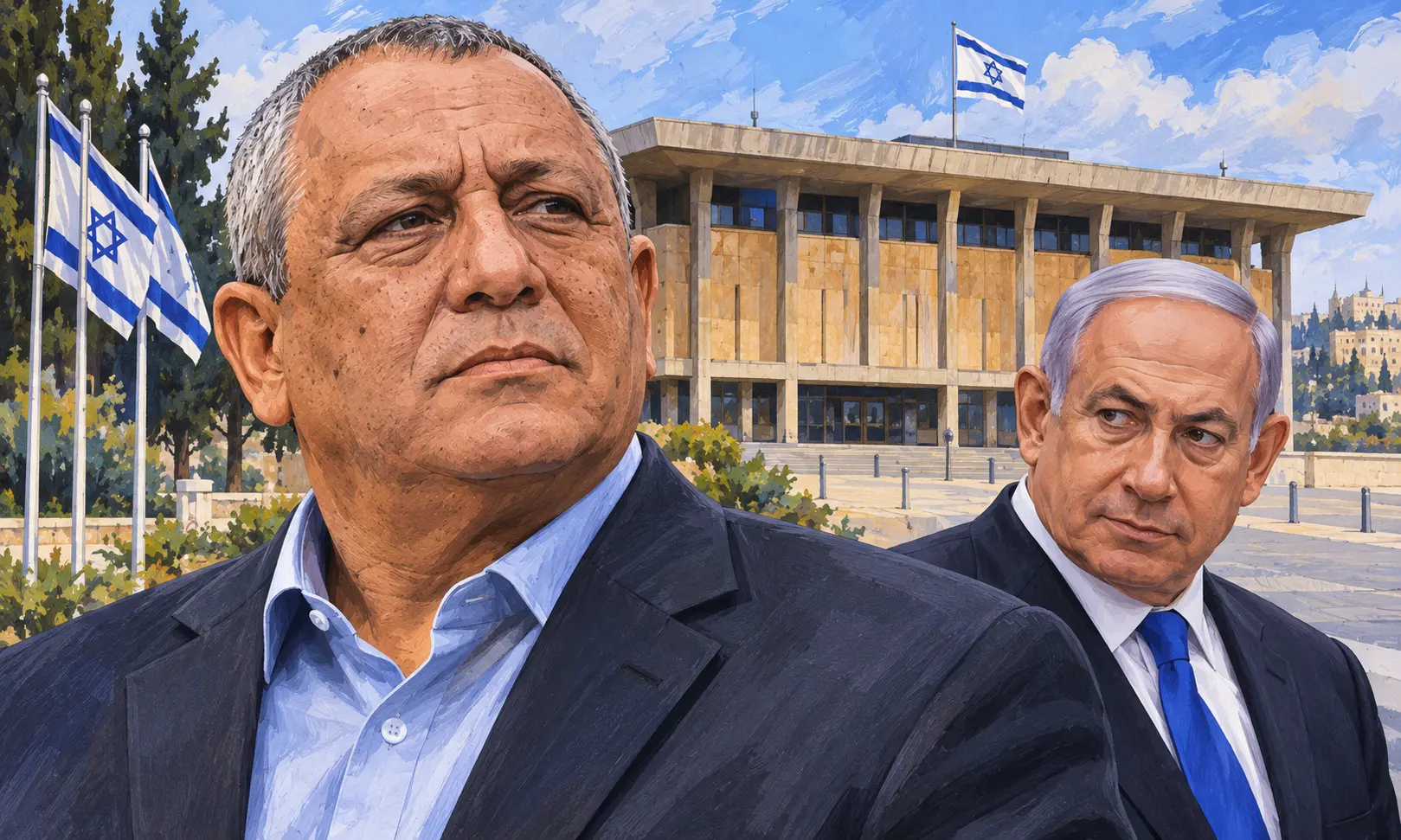
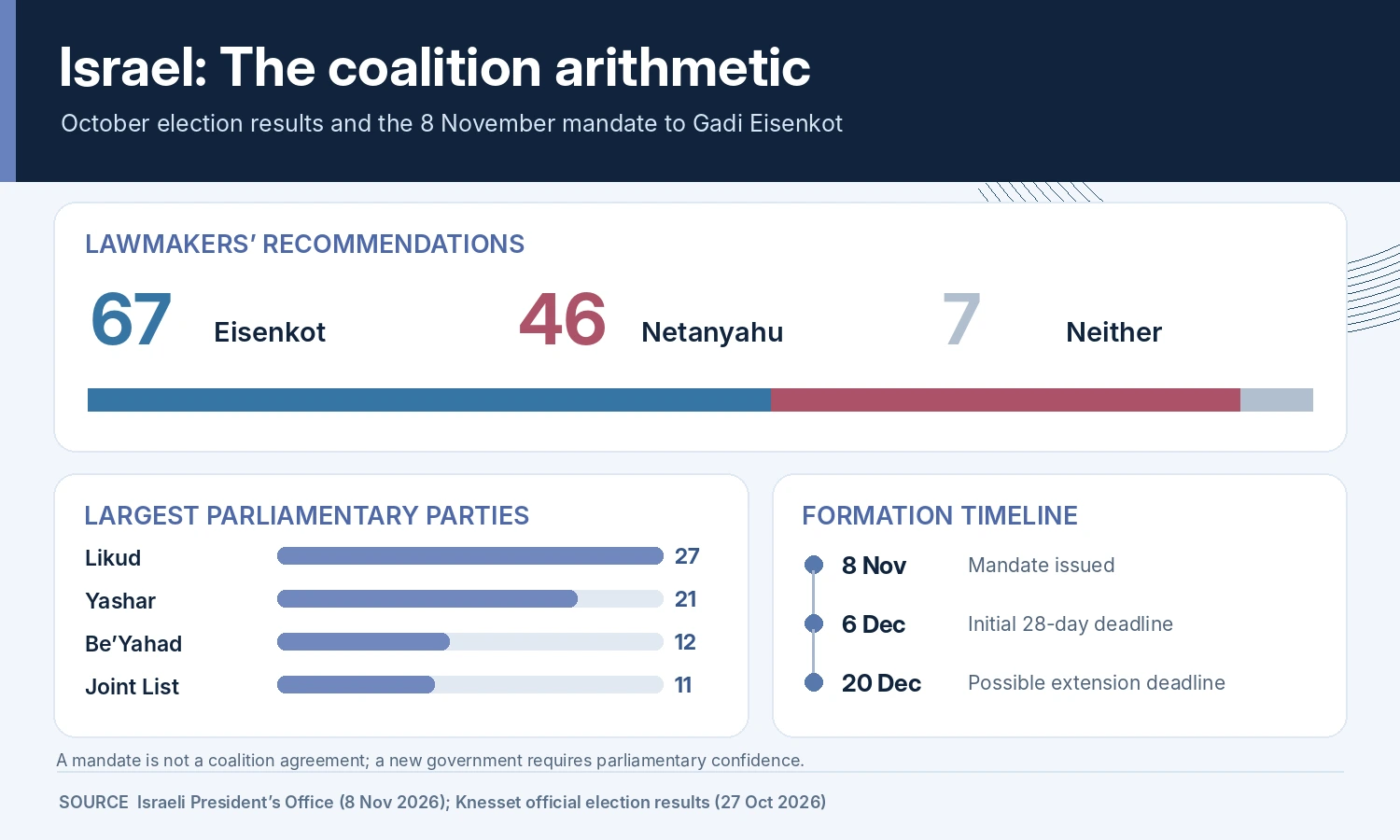
Jerusalem: Eisenkot coalition talks face a December 6 deadline after President Isaac Herzog issued a government-formation mandate on November 8. Gadi Eisenkot must secure parliamentary support. The former military chief received recommendations from factions holding 67 seats in the 120-member Knesset. Outgoing Prime Minister Benjamin Netanyahu received recommendations from factions holding 46 seats, while seven lawmakers backed neither candidate.
These recommendations helped Herzog decide whom to ask first, but they do not constitute a coalition agreement. Eisenkot must still negotiate support from parties with different positions on security, religion, economic policy and public institutions. Netanyahu remains caretaker Prime Minister while the government-formation process continues.
Israel held its parliamentary election on October 27. Official results gave Netanyahu’s Likud 27 seats and Eisenkot’s Yashar party 21 seats. Be’Yahad won 12 seats, while the Joint List won 11. Several smaller parties divided the remaining seats, leaving no single faction close to a majority.
Eisenkot coalition talks face difficult parliamentary arithmetic
Israel’s parliamentary system does not guarantee the premiership to the leader of the largest party. The decisive test is whether a candidate can form a government capable of securing the Knesset’s confidence. Herzog therefore considered both the consultation results and the prospects for agreements between political groups.
Under the Basic Law governing government formation, Eisenkot received an initial 28-day period from November 8, which runs to December 6. Herzog may allow an extension of up to 14 days, potentially taking the period to December 20. If Eisenkot fails, the law provides further procedures involving another candidate or a Knesset initiative before fresh elections become necessary.
Negotiations have encountered political differences over the composition and policies of a possible government. One prominent domestic issue concerns military-service arrangements and exemptions for ultra-Orthodox Jewish men. Disputes over this question have strained relations between secular and religious parties in previous coalition negotiations.
On November 14, Netanyahu called for talks on a national unity government. Eisenkot replied publicly that teams from Yashar and Likud had already arranged discussions. Their exchange suggested that dialogue remained possible, but it did not demonstrate agreement on leadership or a shared programme.
Regional policy will be another test
Any new coalition will inherit difficult decisions involving Iran, Gaza and Lebanon. Herzog raised these issues while discussing the need for stable government and a diplomatic approach to regional tensions. Parties that differ over military strategy or relations with neighbouring countries may struggle to agree on a common policy.
The outcome also matters beyond Israel. India maintains defence, trade and labour ties with Israel, while developments across West Asia affect energy markets and maritime transport. However, a change in the Prime Minister’s office would not by itself prove a change in Israeli foreign or military policy.
Eisenkot served as Israel’s military chief between 2015 and 2019 and later joined the emergency war cabinet after October 2023. His political task now differs from his military career: he must turn parliamentary recommendations into a workable coalition. Until a government wins a confidence vote, the transition remains unresolved.
