
Hormuz attacks put Indian energy supplies and seafarers under strain

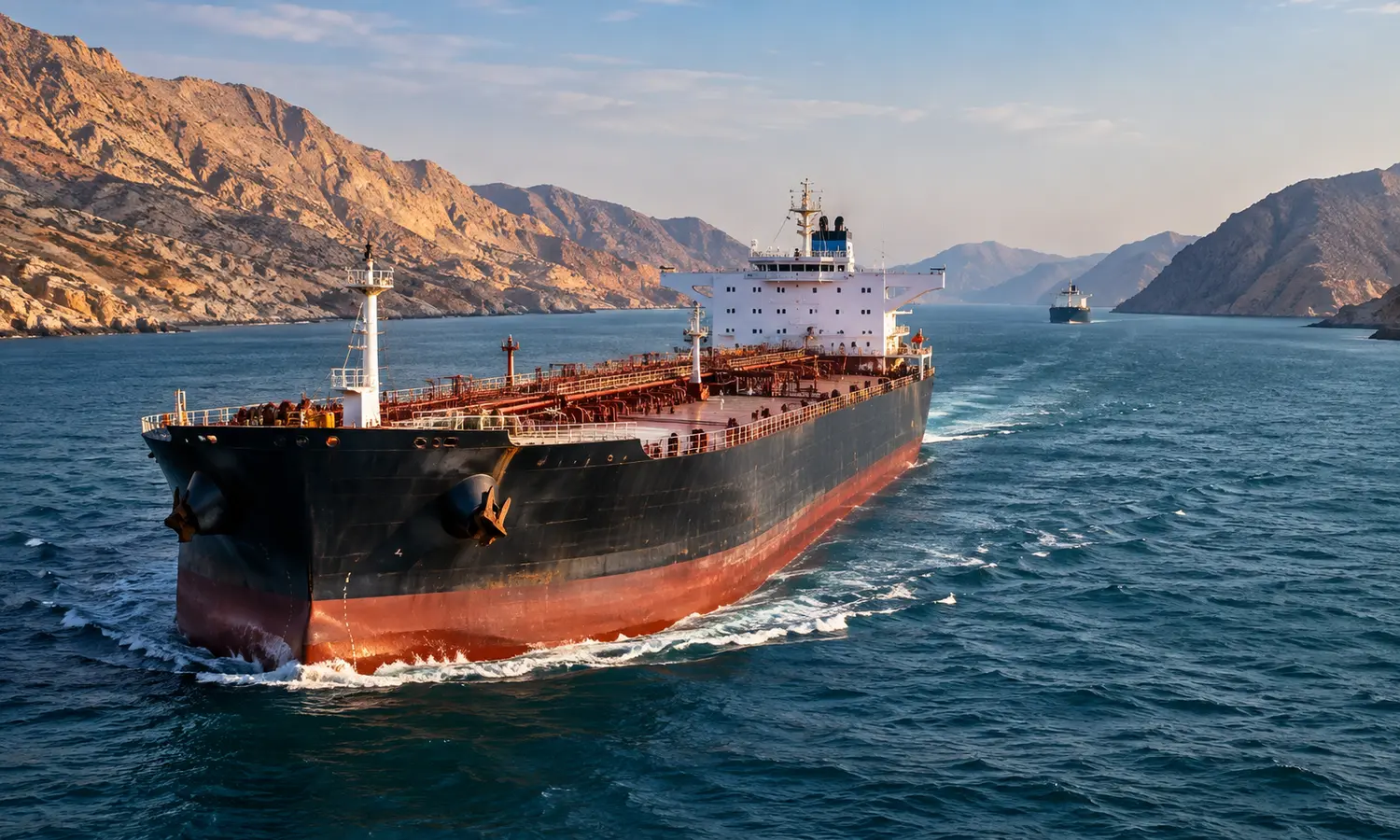
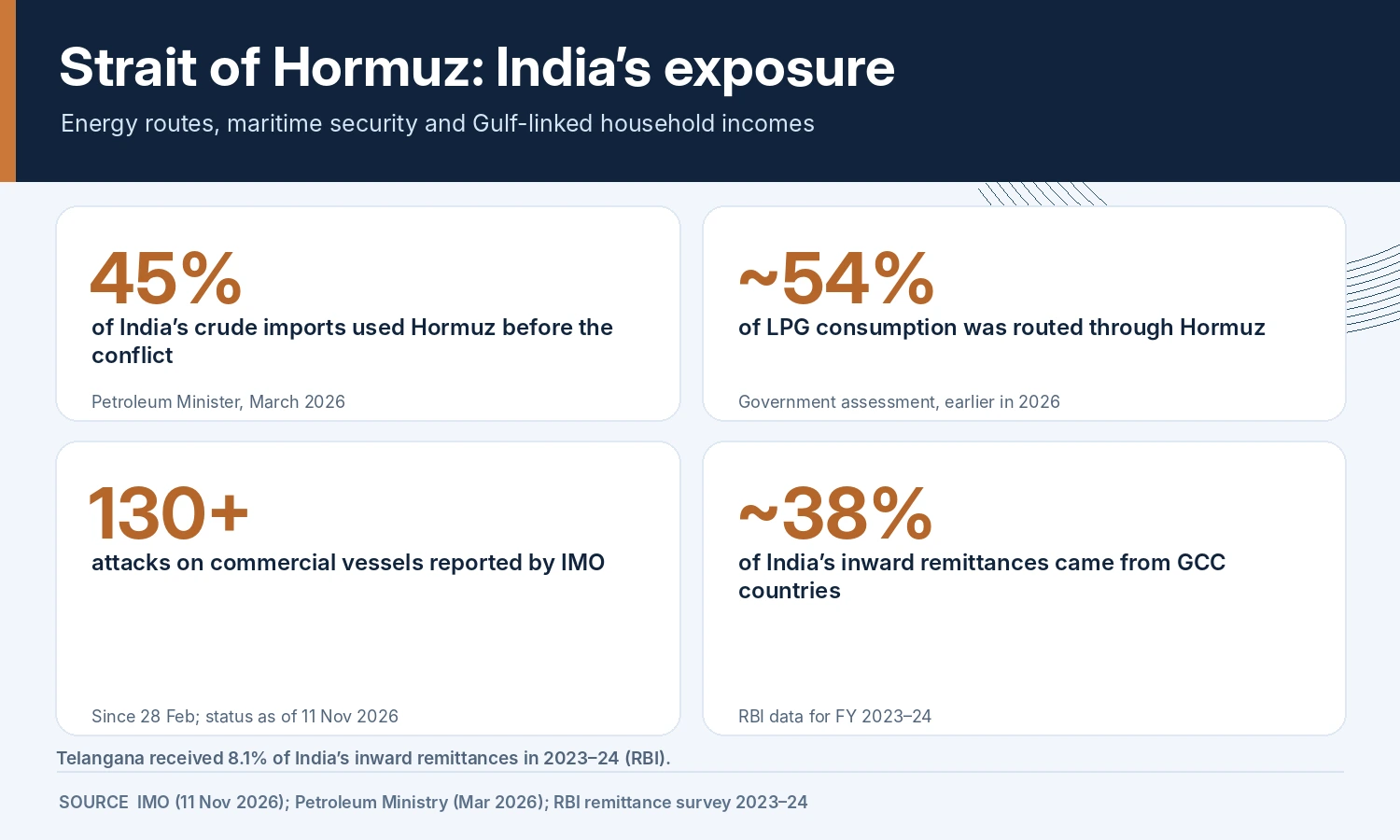
New Delhi: Fresh incidents involving commercial vessels near the Strait of Hormuz have renewed concerns over shipping safety and energy supply routes that matter to India. The International Maritime Organization said on November 11 that it had verified more than 130 attacks on internationally trading vessels since February 28. It also reported at least 25 seafarer deaths during the period, with others injured or missing.
The IMO’s wider incident register listed 136 confirmed cases in and around the Middle East maritime region as of November 11. These figures are not identical measures and should not be treated as two separate totals for the strait alone. Maritime security authorities have also reported damage to tankers in recent days, although investigations have not established responsibility for every incident.
The disruption matters to India because the waterway connects the Persian Gulf with the Arabian Sea. Oil, liquefied natural gas and petroleum products from Gulf producers often move through this narrow passage. Even when production continues, shipping delays, insurance costs and security restrictions can complicate deliveries.
Why the Strait of Hormuz matters to Indian households
Union Petroleum Minister Hardeep Singh Puri told Parliament in March that roughly 45 per cent of India’s crude imports had used the Hormuz route before the conflict. He said diversification had increased the proportion arriving through other routes. Those statements describe the government’s assessment earlier in 2026, not an independently verified breakdown for November.
Cooking gas is another concern. In a June government statement, the Petroleum Ministry said approximately 54 per cent of India’s LPG consumption had been routed through the strait during the disruption. The ministry also described efforts to increase domestic production and maintain deliveries. Its statement did not establish that households faced a new shortage in November.
Continued instability may raise freight charges and create price volatility. Yet higher transport costs do not automatically translate into an immediate rise in retail fuel prices. Domestic prices also depend on international benchmarks, exchange rates, procurement contracts and government decisions.
Indian crews face a more direct danger while operating near disputed waters. The IMO has urged states to enforce maritime safety rules and protect civilian seafarers. India has also issued maritime-security guidance and reporting arrangements for vessels and crew. A complete official casualty count for Indians in the latest incidents was not available for this report.
Gulf employment and remittance links
India’s economic relationship with the Gulf extends well beyond energy. Indian migrants work in construction, transport, healthcare, hospitality and other sectors. Their earnings help support households across the country, including in Telangana. A prolonged disruption to regional economic activity could affect employment and remittance flows, although that outcome is not yet established.
The Reserve Bank of India’s inward-remittance survey, published in March 2025, provides a useful baseline. Gulf Cooperation Council countries accounted for about 38 per cent of India’s inward remittances in 2023–24. The UAE contributed 19.2 per cent and Saudi Arabia 6.7 per cent. Telangana received 8.1 per cent of India’s total inward remittances, making it the fourth-largest recipient state in that survey.
These are historical figures, not evidence of a fall in transfers during the current crisis. They nevertheless show why stable Gulf employment and safe shipping matter to Indian families. India must balance diversified energy procurement with the safety of seafarers and the continuity of economic ties with its Gulf partners.
