
NRIs can complete investment KYC abroad under new SEBI rules


Mumbai: New NRI KYC rules will allow eligible overseas Indians to complete digital investment onboarding without travelling to India. SEBI issued the revised framework. The changes take effect on December 3, 2026. SEBI announced the relaxation in a November 4 circular covering individual Persons Resident Outside India, including NRIs, OCI cardholders and eligible foreign nationals.
The existing digital KYC framework generally requires an applicant to be physically located in India during verification. That condition has complicated account opening for overseas investors who cannot travel simply to complete paperwork. SEBI’s revised framework removes the India-location requirement for eligible applicants residing in FATF-compliant countries, while retaining identity and risk checks.
The change could benefit overseas Indians who maintain family or financial connections with Telangana. However, it does not authorise every foreign resident to invest in every Indian product. Intermediaries must still apply foreign exchange rules, product eligibility conditions and their own due diligence requirements.
How NRI KYC will work from overseas
SEBI-registered intermediaries can receive digital forms and supporting documents from qualifying applicants abroad. They may obtain existing KYC records through a KYC Registration Agency or the Central KYC Records Registry. If the information is incomplete or outdated, the intermediary can request additional documents before accepting the application.
Applicants should be prepared to provide a PAN, passport details, an OCI card where relevant and proof of their overseas address. They may also need a Central KYC number if one is available. The regulator permits electronically submitted forms and signatures, subject to the verification process and the intermediary’s requirements.
Where required, an authorised official can conduct Video In Person Verification. The process must confirm the applicant’s identity and location, use a live interaction and guard against prerecorded footage or false internet-location information. Intermediaries must prevent connections through spoofed addresses, proxy servers or VPNs during relevant verification steps.
The circular also permits international contact details under specified conditions. Applicants submitting documents in languages other than English may need an appropriately attested English translation. Investors should confirm the precise checklist with the institution where they plan to open an account.
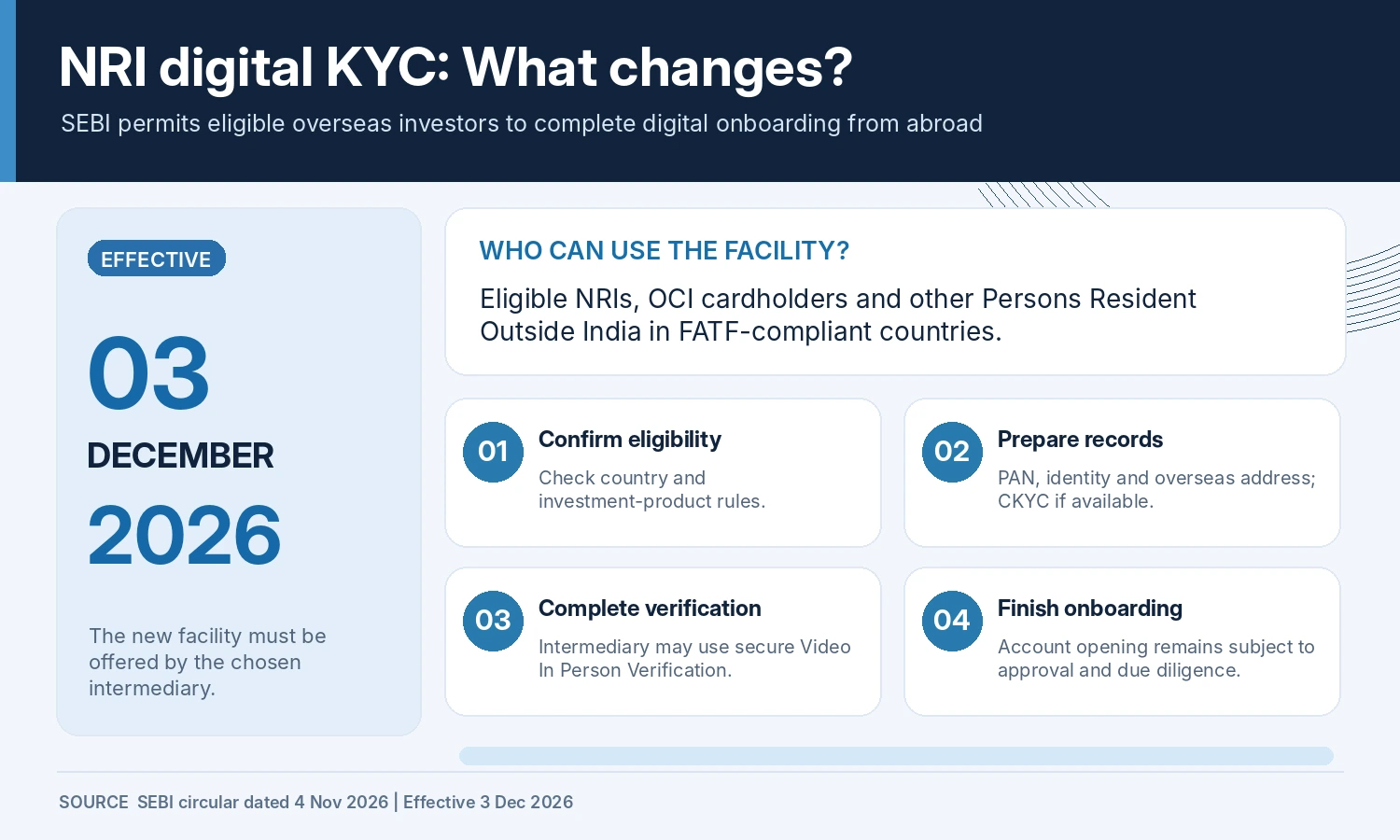
What changes for overseas investors
The main advantage is reduced dependence on physical visits to India. An eligible person in Dubai, London or another qualifying location may complete the required KYC process through an intermediary that offers the new facility. Existing verified records may also reduce repeat paperwork across regulated financial institutions.
The changes can support applications for demat, trading and mutual-fund investment accounts, subject to the rules governing each product and the applicant. They do not remove restrictions under the Foreign Exchange Management Act or applicable taxation and reporting obligations. SEBI also retains responsibility requirements for intermediaries handling higher-risk accounts.
Overseas investors should check their country of residence against the eligibility conditions. They should also confirm whether their selected intermediary has implemented the revised process from December 3. For many NRIs, the reform removes a practical obstacle, but digital access will still depend on successful verification and compliance with the applicable investment rules.
