

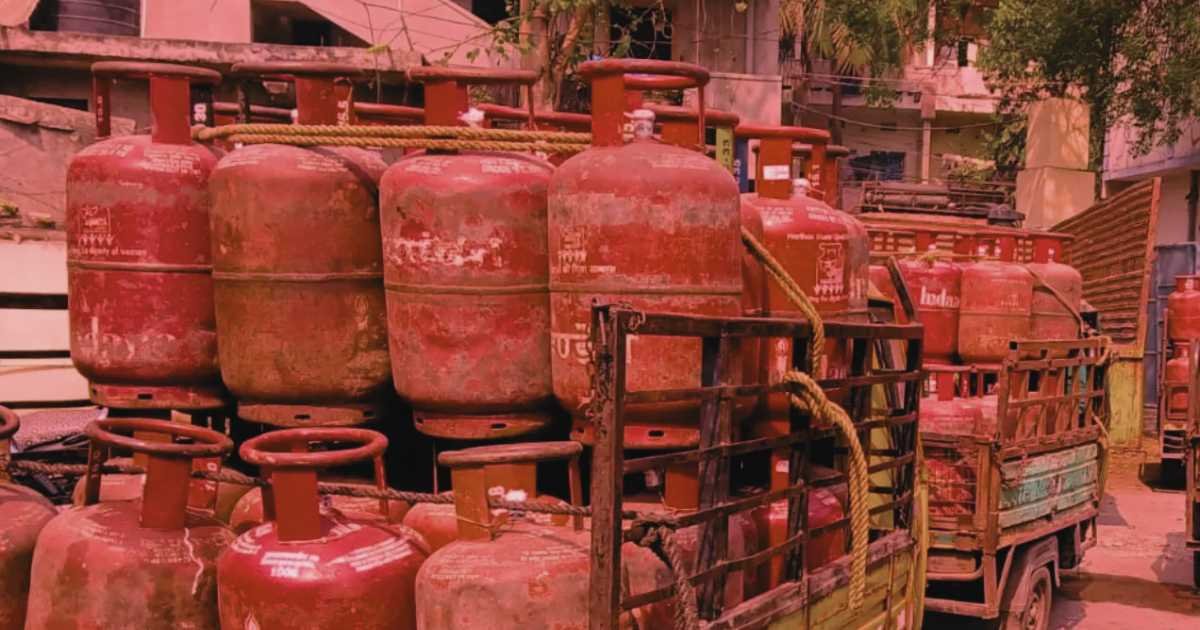
New Delhi: The Union government tightened LPG supply rules to prevent shortages in the domestic market amid rising global geopolitical tensions.
Officials said disruptions in global fuel trade followed tensions involving the United States, Israel and Iran. As a result, authorities moved quickly to protect household fuel availability.
Therefore, the government issued fresh directives late Monday night. The move aims to ensure uninterrupted LPG supply for domestic consumers across the country.
The Ministry of Petroleum and Natural Gas directed oil refineries to increase LPG production. In addition, officials asked refineries to allocate the additional output only for household consumption.
Authorities also introduced stricter monitoring to prevent hoarding and black marketing of LPG cylinders. Consequently, regulators expect better oversight of supply and distribution.
Under the new rule, consumers must maintain a minimum gap of 25 days between two LPG bookings. Officials believe this step will reduce misuse and improve cylinder availability for households.
LPG supply rules prioritise households and essential services
The government also clarified that imported LPG supplies must first serve essential sectors. These sectors include hospitals and educational institutions.
Officials said uninterrupted fuel access remains critical for such services. Therefore, authorities decided to prioritise their LPG requirements during supply disruptions.
Meanwhile, regulators will closely monitor LPG distribution to commercial sectors. These sectors include hotels, restaurants and other industries that rely on LPG.
To manage this process, the government created a special committee. The panel includes three executive directors from Oil Marketing Companies.
The committee will review requests from industries seeking LPG supply. It will also decide allocations if shortages arise.
Officials said the updated LPG supply rules aim to protect domestic consumers. At the same time, the measures will ensure that essential services continue to receive uninterrupted fuel supply during global energy uncertainty.
