

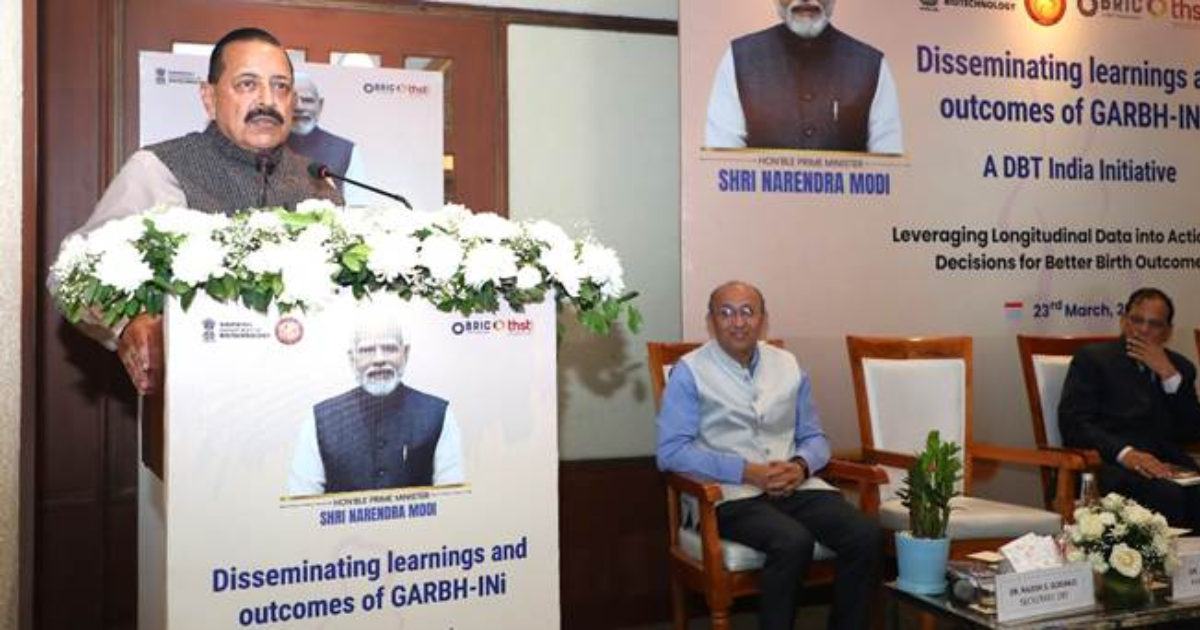
New Delhi: The GARBH-INi study enrolled 12,000 pregnant women to develop AI-driven solutions for early prediction of preterm births, Union Minister Dr Jitendra Singh said on March 23.
He said the initiative aimed to address preterm births, a major cause of neonatal mortality and long-term health issues. The programme followed a data-driven approach that combined clinical research, biomarkers and artificial intelligence.
The GARBH-INi study created one of South Asia’s largest pregnancy cohorts. It generated over 1.6 million biospecimens and more than one million ultrasound images. These datasets supported advanced research and personalised risk prediction.
The minister said researchers developed AI-based pregnancy dating models suited to Indian populations. They also identified microbiome-based predictors and genetic markers for early risk detection. In addition, teams built rapid diagnostic tools to improve maternal care.
He released a compendium of findings and said the initiative established a national biorepository. The GARBH-INi-DRISHTI platform enabled data sharing and supported global scientific research.
GARBH-INi study expands partnerships and research tools
The programme formalised key partnerships for technology transfer and innovation. Authorities transferred microbiome-based biotherapeutics technology to industry partners. They also signed agreements for AI-enabled ultrasound reporting and risk assessment systems.
The minister said maternal and child health remained central to India’s long-term growth. He added that science-led initiatives would support the country’s development goals for 2047.
Dr V K Paul of NITI Aayog said the next phase should focus on using the developed tools effectively. He called for stronger collaboration and deeper analysis to expand the programme’s impact.
The minister said the GARBH-INi study linked science, healthcare and technology to improve birth outcomes and build a healthier future generation.
