

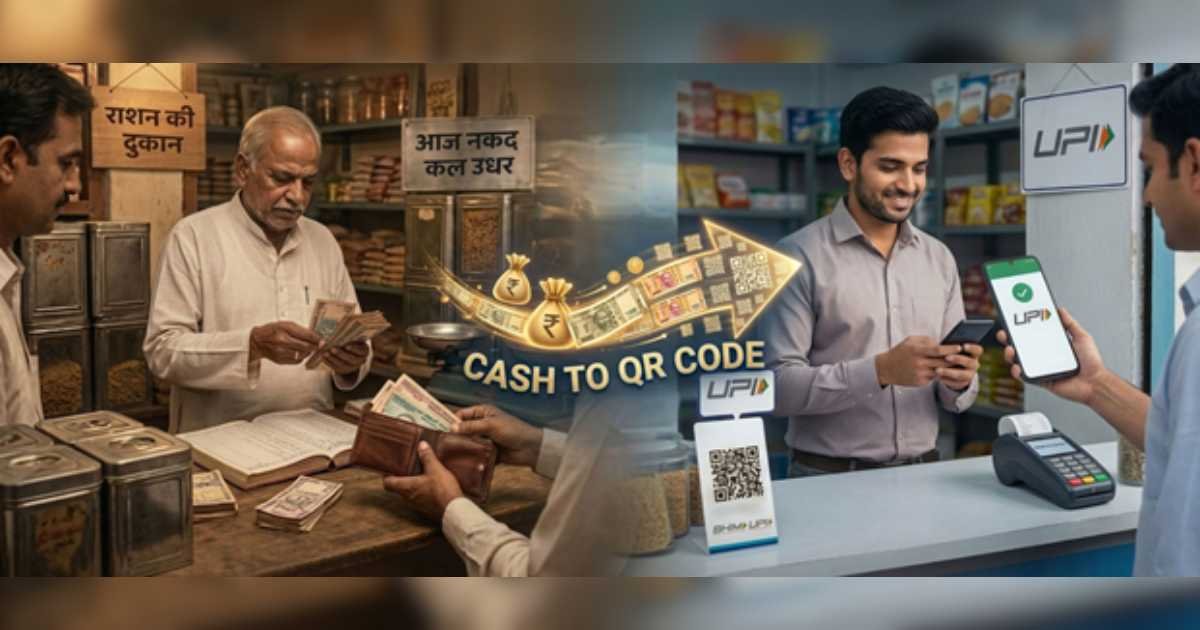
New Delhi: India’s payment revolution has transformed how financial transactions are conducted, with digital platforms like UPI enabling faster, simpler, and more inclusive systems across the country.
Earlier, financial transactions required time and effort. People stood in long queues to pay bills or transfer money. Many without banking access remained excluded from the system. However, this landscape has changed significantly with the rise of digital infrastructure.
India’s payment systems evolved from barter and cash to cheques and bank transfers. Yet, access remained limited, especially in rural areas. In the early 2000s, the Reserve Bank of India introduced RTGS and IMPS to enable faster transfers. These systems improved efficiency but did not reach all sections of society.
A major shift came with the JAM Trinity, which combined Jan Dhan accounts, Aadhaar, and mobile connectivity. This framework expanded banking access and improved service delivery. It also enabled Direct Benefit Transfers, which reduced leakages and ensured transparency.
Payment revolution accelerates with UPI expansion
In 2016, the National Payments Corporation of India launched UPI, which simplified digital payments. Users can send money instantly using a mobile number or UPI ID. The system operates round the clock and connects multiple banks through a single interface.
UPI has seen rapid growth in recent years. By January 2026, it processed 21.70 billion transactions worth Rs 28.33 lakh crore in one month. It now accounts for 81% of retail digital transactions in India. Globally, India contributes 49% of real-time payment transactions.
This growth has improved financial inclusion. Small merchants, street vendors, and workers now use QR codes for payments. Rural and urban users access the same system with ease. As a result, dependence on cash has reduced steadily.
New features such as UPI Lite and UPI AutoPay have expanded its use. Credit services on UPI also allow users to access pre-approved loans. These innovations have strengthened the financial ecosystem and increased participation.
Meanwhile, the Reserve Bank of India has strengthened security measures. From April 1, 2026, it introduced enhanced authentication for digital payments. This includes two-factor verification using PINs, biometrics, or OTPs, which reduces fraud risks.
India’s model has gained global recognition. Institutions like the IMF and World Bank have acknowledged its scale and efficiency. UPI has also expanded to countries such as Singapore, UAE, and France, enabling cross-border transactions.
Overall, the payment revolution has reshaped financial access in India. It has made transactions faster and more transparent. It has also helped bridge gaps between urban and rural users, strengthening economic participation.
