

New Delhi: Unincorporated sector growth accelerated across India in 2025 as the number of non-agricultural establishments rose to 7.92 crore, according to the Annual Survey of Unincorporated Sector Enterprises (ASUSE) released by the Ministry of Statistics and Programme Implementation.
The report showed that unincorporated sector growth pushed the number of establishments up by 7.97 percent compared to the previous survey period. Moreover, the sector generated 12.81 crore jobs and recorded a 10.87 percent rise in Gross Value Added (GVA).
Officials said the manufacturing, trade and services sectors continued to drive economic activity. Uttar Pradesh, West Bengal and Maharashtra reported the highest number of establishments during the survey period.
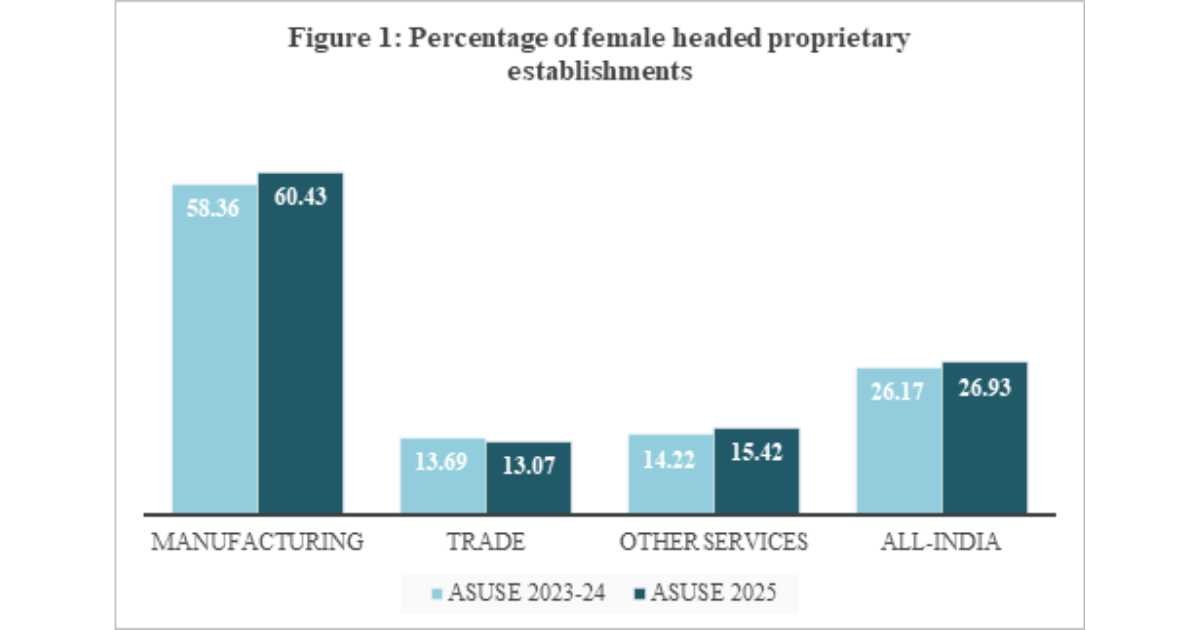
The survey also highlighted the rising role of women entrepreneurs in the economy. Female proprietors led more than 60 percent of manufacturing establishments. In addition, women accounted for nearly 29 percent of the workforce in the sector.
The Ministry stated that nearly 72 percent of female-led establishments with hired workers employed at least one woman worker. As a result, the sector continued to strengthen women’s participation in employment and entrepreneurship.
Unincorporated sector growth boosts digital adoption
The report showed a sharp rise in internet use among businesses. Overall, internet usage for entrepreneurial purposes increased from 26.68 percent to 39.37 percent during the survey period.
More than 50 percent of trading establishments used the internet to run business operations. Besides that, officials noted steady improvement in enterprise registration and access to institutional finance.
Average fixed assets per establishment increased to ₹3.42 lakh from ₹3.24 lakh recorded in the previous survey. Furthermore, around 80 percent of outstanding loans came through institutional channels, including banks and government schemes.
The survey found that retail trade, apparel manufacturing and community services accounted for the highest share of establishments and workers. Officials said the findings reflected stronger capital investment, digital adoption and resilience in the unincorporated economy.
