

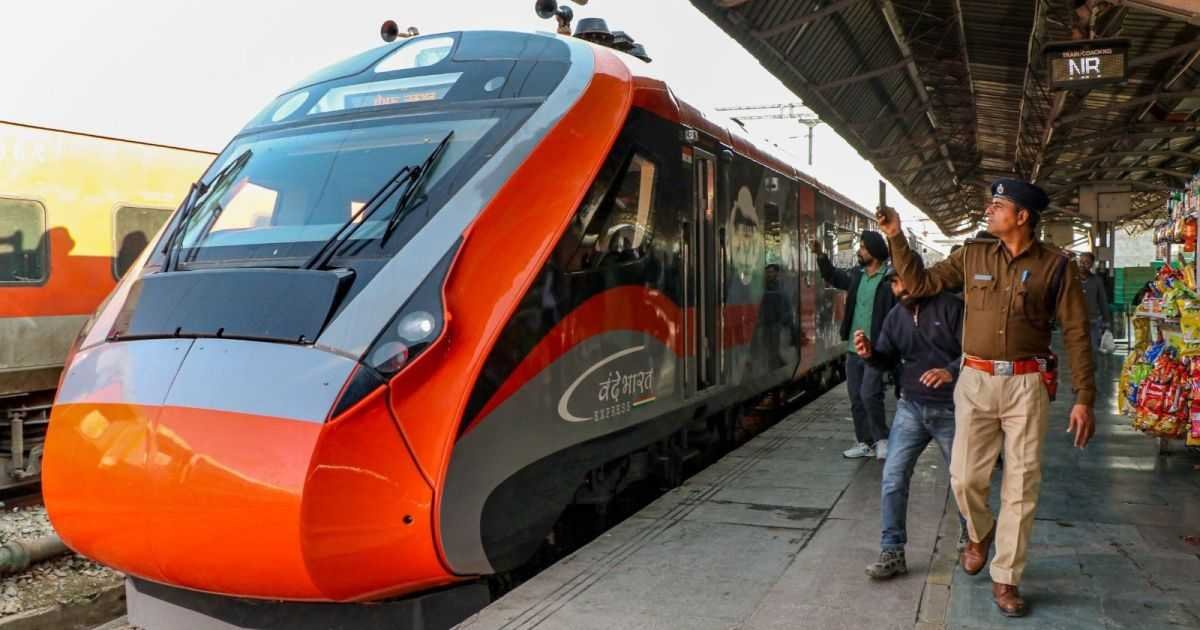
Jammu: The Vande Bharat Express services on the Jammu–Srinagar corridor carried 44,727 passengers within 10 days of regular operation. In the maiden week, the trains transported 28,762 passengers, reflecting immediate public response.
Prime Minister Narendra Modi inaugurated the Udhampur–Srinagar–Baramulla Railway Link in June 2025. Subsequently, Railways flagged off the augmented 20-coach service on 30 April 2026. Regular operations began on 2 May 2026, after which demand increased steadily.
Two train pairs now operate on the route. Together, they ensure at least four daily services on most days. As a result, passengers receive consistent connectivity between Jammu and Srinagar.
On several days, occupancy reached near capacity. For instance, 5,657 passengers travelled on 10 May. Similarly, high figures were recorded on 3, 8, 9 and 11 May. Therefore, demand continues to remain strong across weekdays and weekends.
Notably, Sunday recorded 98.21 per cent occupancy. Earlier, single-pair operations also crossed 94 per cent. In addition, weekends accounted for nearly 11,000 passengers, highlighting rising travel preference.
Vande Bharat Express strengthens corridor connectivity
The corridor now offers uninterrupted rail travel between Jammu and Srinagar. Consequently, pilgrims, traders, students and tourists benefit from direct services. Moreover, the trains reduce dependency on road travel.
Designed for extreme conditions, the trains can operate in temperatures up to minus 20 degrees Celsius. Therefore, services continue even during snowfall or adverse weather. This feature enhances reliability throughout the year.
In terms of affordability, the service remains competitive compared to air and road options. A Chair Car ticket with meals costs significantly less than most alternatives. Hence, passengers gain both comfort and cost efficiency.
The route also passes through major engineering structures, including bridges and tunnels. These elements improve regional integration and connectivity. Meanwhile, rising occupancy indicates strong tourism and economic potential along the corridor.
Overall, the service has become a key transport link for Jammu and Kashmir. With sustained demand, authorities expect continued growth in passenger numbers in the coming months.
