

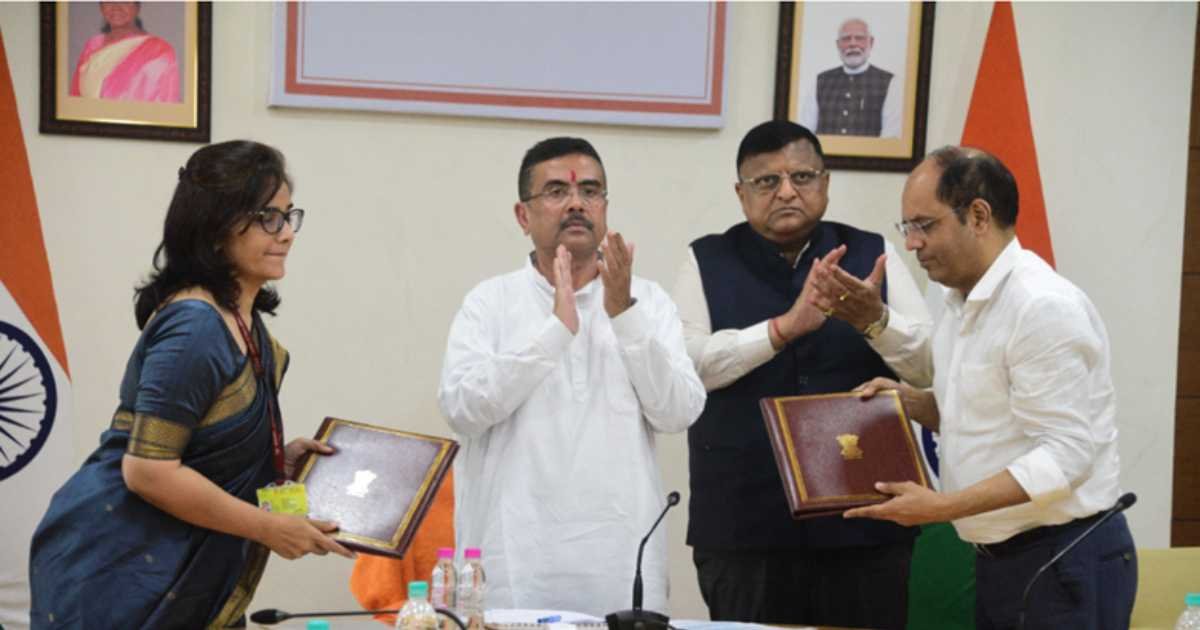
New Delhi: The Centre on Sunday signed reform-linked Jal Jeevan Mission MoUs with West Bengal and the Andaman and Nicobar Islands to improve rural water governance and strengthen community-led drinking water management.
Union Jal Shakti Minister C. R. Patil attended the signing ceremonies along with Minister of State V. Somanna and senior officials from the Department of Drinking Water and Sanitation.
Officials said the agreements would promote transparency, accountability, and public participation in village-level water supply systems. Moreover, the reform-linked model focuses on Gram Panchayat-led and service-based rural water governance.
The MoU with the Andaman and Nicobar Islands was signed between Joint Secretary Swati Meena Naik and Dr. Sachin Shinde, Secretary and Commissioner-cum-Secretary of the Union Territory administration.
Similarly, West Bengal signed its agreement through Principal Secretary Narayan Swaroop Nigam in the presence of Chief Minister Suvendu Adhikari and senior officials.
During the meeting, C. R. Patil said Jal Jeevan Mission had become a people-centric programme aimed at improving health, dignity, and living standards in rural areas.
He stated that the Centre extended the Jal Jeevan Mission deadline from May 2024 to December 2028 to achieve full tap water coverage across the country.
Jal Jeevan Mission reforms stress local accountability
Patil praised the Andaman and Nicobar administration for achieving 100 percent rural tap water coverage and Har Ghar Jal certification across all blocks. In addition, he urged officials to complete financial reconciliation of ongoing projects quickly.
The Union Minister also asked West Bengal officials to speed up implementation in Darjeeling, Kalimpong, and Purulia districts. Furthermore, he encouraged stronger public participation through Jal Sanchay Jan Bhagidari and the Karmabhoomi se Matrubhoomi campaign.
Patil said Village Water and Sanitation Committees should directly manage local water systems, maintenance work, and tariff collection. According to him, the policy would improve sustainability and accountability at the village level.
Lieutenant Governor D. K. Joshi said the Union Territory achieved complete rural tap water coverage in 2021 despite limited natural water resources.
He explained that the islands depended heavily on rainwater harvesting systems for water supply. Therefore, he requested continued support from the Centre to strengthen local infrastructure.
West Bengal Chief Minister Suvendu Adhikari thanked the Centre for financial support and assured cooperation in implementing rural drinking water schemes.
Officials said the new agreements would help strengthen decentralised water management systems and improve long-term rural water supply sustainability.
