

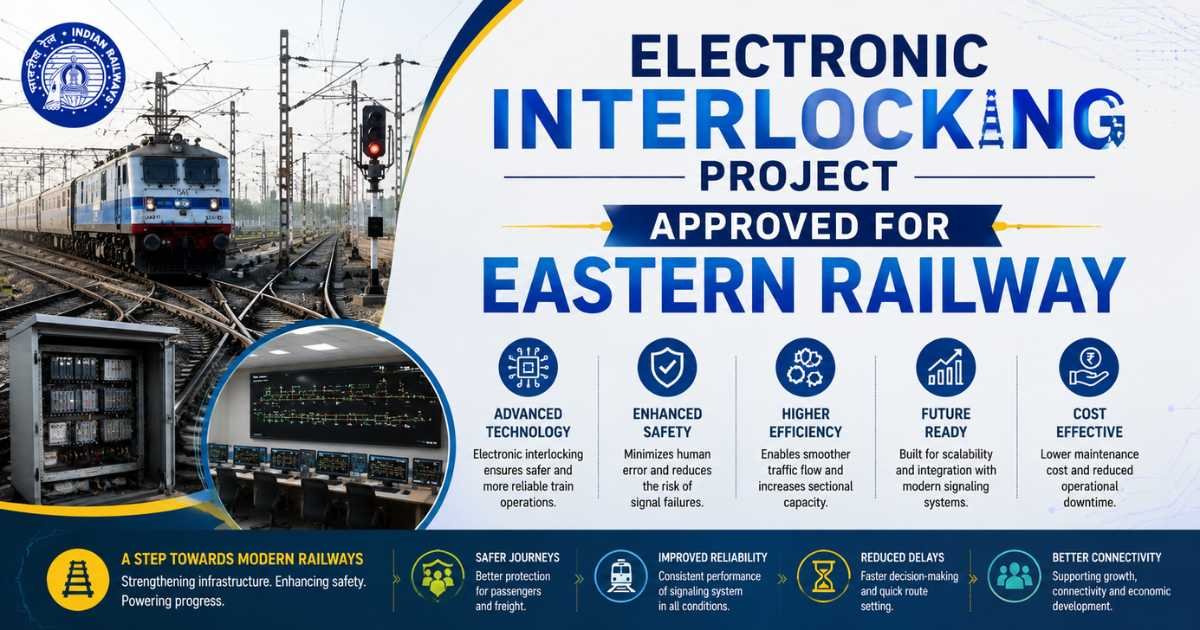
New Delhi: Indian Railways approved a ₹405 crore project to introduce Electronic Interlocking at 32 stations on Eastern Railway, aiming to improve safety, reliability and operational efficiency.
The project will replace relay-based signalling systems at 25 Panel Interlocking and Route Relay Interlocking stations. In addition, it will cover seven Intermediate Block Signalling locations on High Density Network and Highly Utilised Network routes.
Railway officials said the upgrade forms part of a broader plan to modernise signalling infrastructure on critical rail corridors. Consequently, the project is expected to strengthen train operations on some of the busiest routes in the country.
Many existing signalling installations use ageing relay technology. As a result, they require higher maintenance and face a greater risk of operational failures.
Officials noted that outdated wiring arrangements, ageing equipment and older power supply systems have increased maintenance challenges. Therefore, the railway administration decided to replace these systems with modern technology.
Electronic Interlocking to improve railway safety
Electronic Interlocking uses advanced digital systems to manage train movements with greater accuracy. Moreover, it improves reliability and reduces the likelihood of signalling failures.
Railways said the new system would support faster fault detection and quicker restoration of services whenever technical issues arise. As a result, train operations are expected to become smoother and more dependable.
The modern signalling network will also enhance safety standards for passenger and freight services. Furthermore, it will improve system availability on heavily used railway routes.
Officials said the project aligns with future railway modernisation plans. In addition, it will support advanced technologies such as Kavach, Automatic Block Signalling and Centralised Traffic Control.
Indian Railways stated that the investment reflects its continued focus on upgrading critical infrastructure. It also aims to improve operational performance while delivering safer and more efficient services across the network.
