
INCOIS launches El Niño bulletin for maritime sectors amid rising marine risks

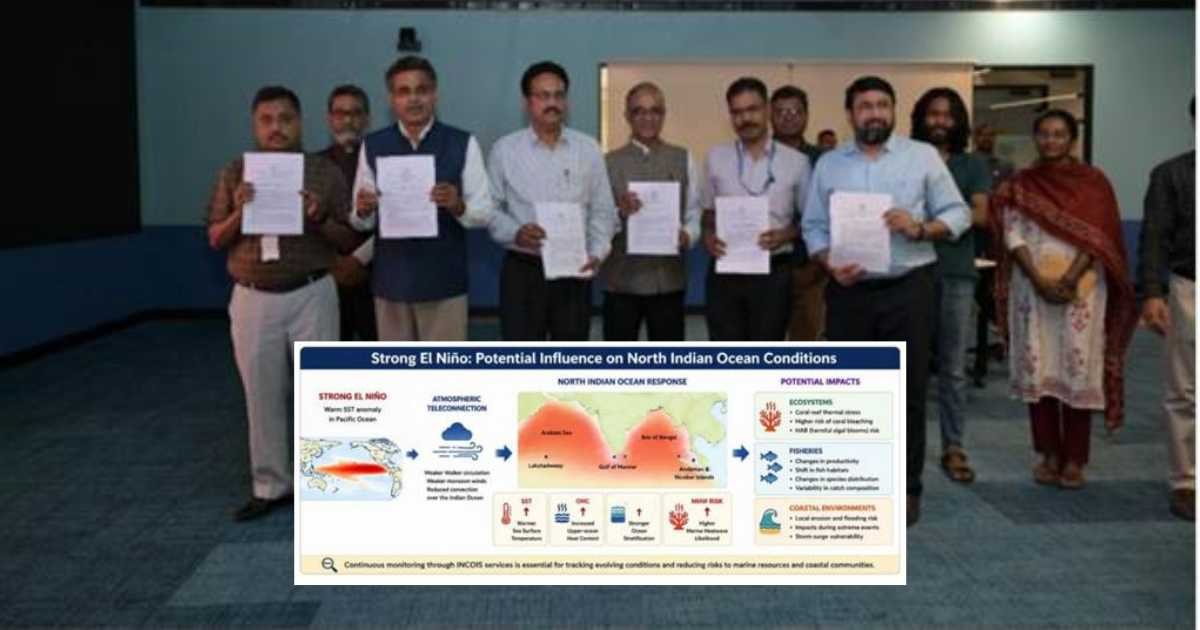
New Delhi: INCOIS launched its first specialised El Niño bulletin for maritime sectors, warning that the developing climate event could affect marine ecosystems, fisheries and coastal regions across India.
Chevella MP Konda Vishweshwar Reddy released the bulletin during an event at INCOIS on June 22. Officials said the El Niño event continues to strengthen and may peak between November 2026 and January 2027.
According to INCOIS, sea surface temperatures in the Indian Ocean will remain above normal until April or May 2027. Consequently, marine ecosystems in the Arabian Sea and Bay of Bengal could face significant thermal stress.
Scientists warned that warmer waters may trigger coral bleaching and marine heatwaves. Moreover, fish species such as sardines and mackerel may move to cooler waters. This shift could reduce fish catches and affect recruitment levels. Fish growth may also slow because of changing marine conditions.
El Niño bulletin highlights fisheries and coastal concerns
The bulletin stated that rough sea conditions are likely in the Bay of Bengal during the monsoon season. Therefore, parts of India’s east coast may face higher risks of coastal erosion and flooding.
However, sea conditions in the Arabian Sea are expected to remain calmer than usual. As a result, maritime operators may get longer windows for marine activities. In addition, coastal erosion and inundation risks may remain lower along the west coast.
INCOIS advised fishermen, maritime operators and coastal authorities to monitor its alerts and advisories regularly. Meanwhile, the agency announced that it will issue the next El Niño bulletin in the second week of July 2026.
The specialised advisory aims to help maritime sectors prepare for climate-related challenges. It also supports informed planning and risk management during the ongoing El Niño event.
