
BJP’s anti-drug campaign brings Gen Z into political focus

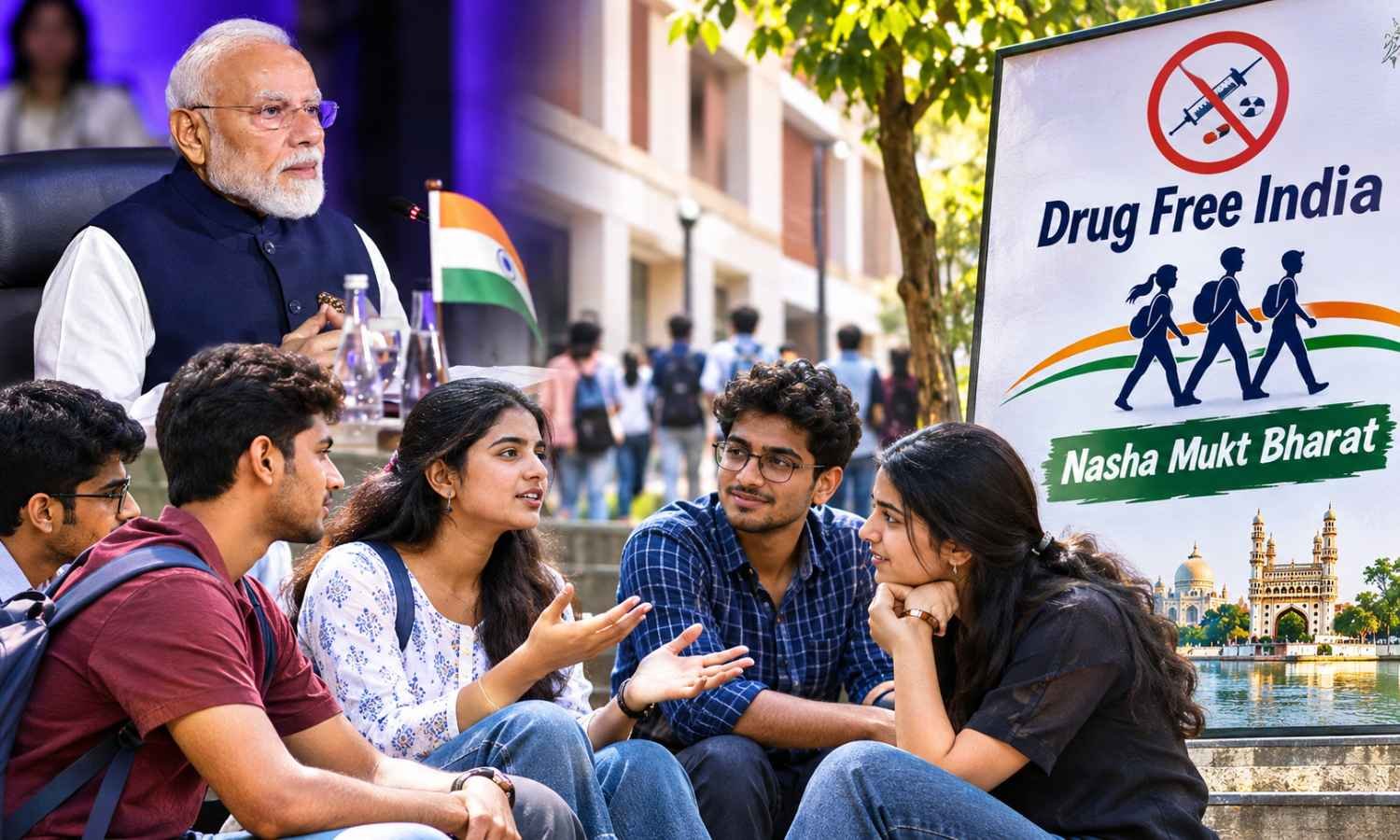
Hyderabad: India’s youngest voters are increasingly becoming the focus of two parallel campaigns that address different aspects of their lives. While the nationwide drive against substance abuse seeks to encourage healthier lifestyles, the Bharatiya Janata Party’s expanding outreach to students and first-time voters underlines the growing political importance of the same generation.
The convergence has become particularly noticeable since Prime Minister Narendra Modi launched the Nasha Mukt Yuva for Viksit Bharat Sankalp Abhiyan on August 2, 2026. With Gen Z placed prominently in its messaging, the campaign seeks to engage young Indians in activities aimed at preventing addiction and encouraging community participation.
The initiative envisages activities over 100 weeks, bringing together educational institutions, voluntary organisations and youth groups. Its programmes include sporting activities, awareness drives, public pledges and other forms of community engagement intended to discourage substance abuse.
Unlike a conventional government awareness campaign confined to official institutions, the initiative seeks to make young people active participants in spreading its message. It also connects the objective of a drug-free generation with the broader national development vision for 2047.
The growing reach of anti-drug programmes
The latest initiative builds on the Nasha Mukt Bharat Abhiyaan, which began on August 15, 2020. Originally concentrated in 272 vulnerable districts, the programme was subsequently expanded nationwide. The wider campaign has involved educational institutions, community organisations, volunteers and rehabilitation services in addressing substance dependence.
The programme reflects an important public-health concern. Substance abuse affects individuals and families through its consequences for physical health, mental well-being, education, employment and household finances. Preventive awareness, counselling and access to treatment therefore remain important elements of the broader response.
In Telangana, the BJP reinforced the message through a Nasha Mukt conference in Hyderabad on November 21. State BJP president N. Ramchander Rao and Union Minister G. Kishan Reddy participated in the event, placing the campaign within the larger objective of protecting young people from addiction.
The emphasis on youth participation gives the programme a substantial social dimension. Its long-term value, however, will depend on more than the number of meetings, pledges or awareness activities conducted. The extent to which vulnerable individuals receive timely counselling, treatment and rehabilitation support will be an important measure of its effectiveness.
Young voters become a political priority
Running alongside these programmes is a separate political effort to establish closer contact with students and younger voters. The BJP has planned campus interactions around Constitution Day on November 26, while youth-focused organisational activities are also being prepared in states approaching Assembly elections.
Such initiatives reflect the distinctive position of younger voters in Indian politics. Many are entering employment, higher education or professional training while making their first independent electoral choices. Questions involving jobs, education, economic opportunity, social mobility and public institutions have a direct bearing on their political expectations.
Campus discussions, constitutional awareness programmes and youth conventions provide opportunities for political parties to communicate with this demographic. They also allow parties to develop organisational networks and maintain contact with young citizens beyond conventional election rallies.
The anti-drug programme and political outreach must nevertheless be viewed separately. A public-health initiative does not become an electoral exercise merely because it addresses an age group that political parties also seek to engage. Establishing any deliberate coordination between the two would require evidence beyond similarities in audience or messaging.
What the parallel developments demonstrate is the increasing importance of India’s younger generation in public policy and political communication. Whether the immediate subject is addiction, education or democratic participation, the effectiveness of these initiatives will depend on their relevance to the practical concerns of young people.
For the BJP, sustained engagement may offer opportunities to build stronger relationships with younger citizens. For the anti-drug campaign, the more consequential test will be whether widespread participation leads to measurable improvements in prevention, treatment and rehabilitation.
