

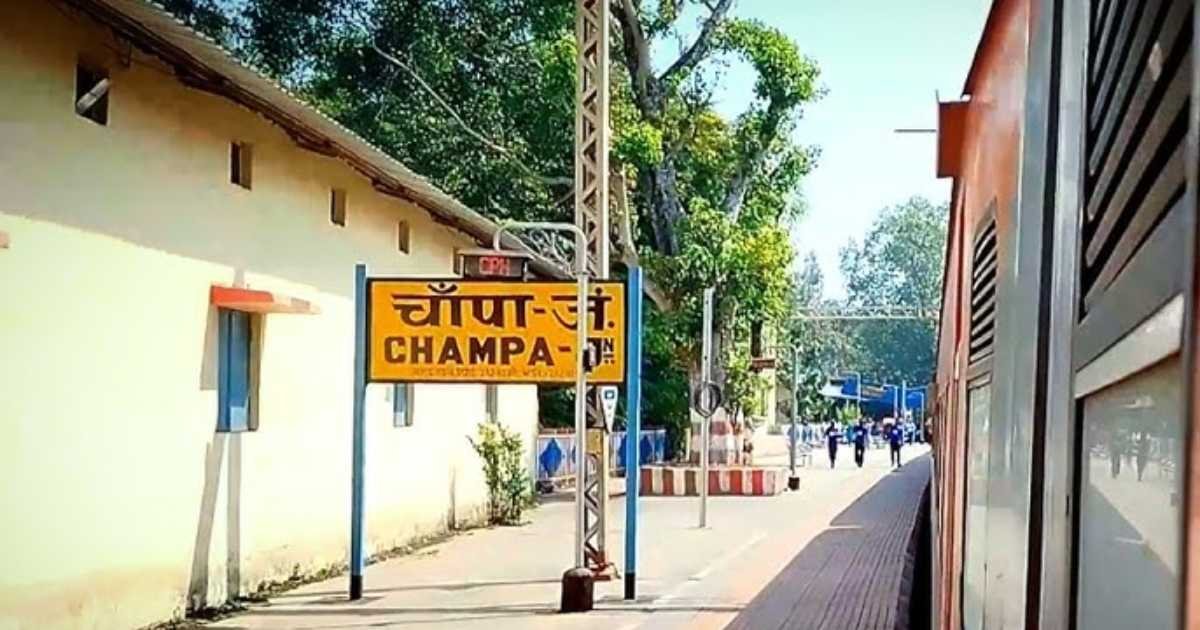
New Delhi: Indian Railways approved the Champa-Korba third line project at an estimated cost of ₹755 crore to strengthen rail capacity in one of the country’s key coal-producing regions.
The project covers a 42-km stretch under the South East Central Railway. It includes construction of a third railway line between Champa and Korba. The work forms part of Indian Railways’ Mission 3000 MT and High-Density Network initiatives.
Officials said the project will support rising coal transportation and improve freight movement. It will also increase operational flexibility on the busy corridor.
The Champa-Korba section connects coalfields operated by South Eastern Coalfields Limited and Mahanadi Coalfields Limited with the national rail network. Moreover, it links the region to the Mumbai-Howrah High Density Corridor.
Additional capacity planned under Champa-Korba third line
Korba is known as the Power Capital of India because of its large concentration of thermal power plants. Currently, the route handles around 10 pairs of passenger trains and 55 pairs of freight trains every day.
Coal production from SECL and MCL stands at about 247 million tonnes annually. However, production is expected to rise to nearly 450 million tonnes. Therefore, railway authorities anticipate substantial growth in freight traffic.
The new line will support additional freight movement of 5.95 million tonnes per annum. Furthermore, it will enable operation of two more passenger trains in each direction daily.
Railways expects annual net earnings of about ₹85 crore from the project. Freight services will contribute nearly ₹82 crore, while passenger services will add around ₹3 crore.
Additionally, the project will reduce freight train detention on the route. Officials estimate annual operational savings of about ₹1.30 crore through improved efficiency.
The approval marks another step in expanding railway infrastructure, improving freight capacity and supporting India’s growing energy requirements.
