

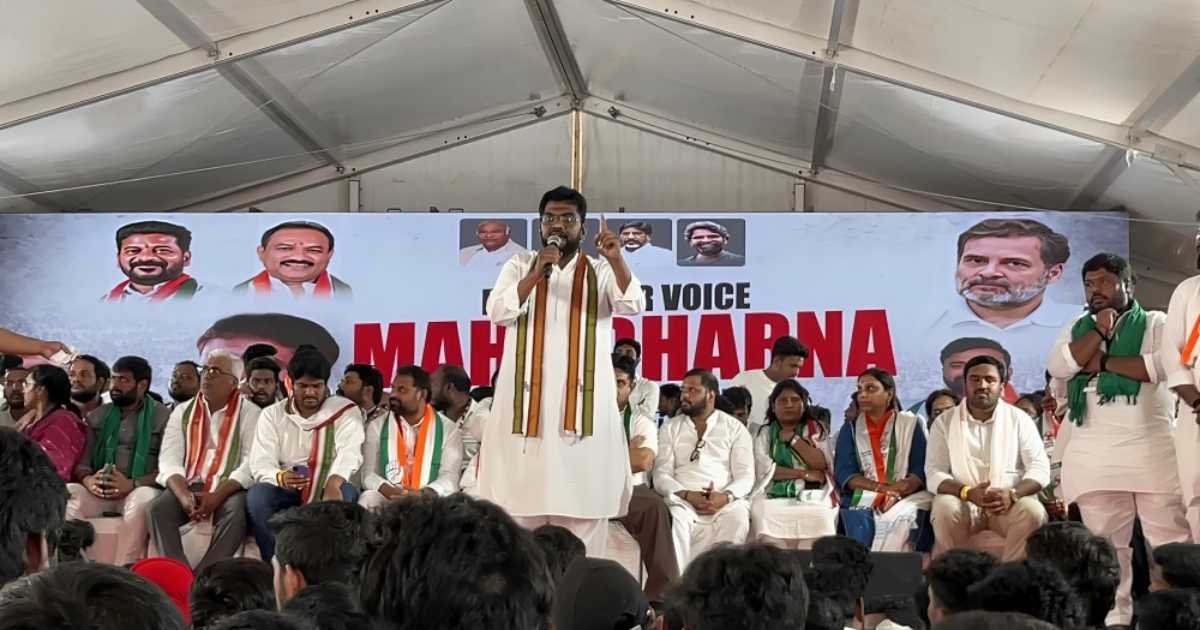
Hyderabad: Hyderabad District Congress Committee President Syed Khalid Saifullah said the Indo-US trade deal could hurt industries, traders, and small businesses.
He made the remarks while addressing a Maha Dharna organised by the Indian Youth Congress at Indira Park on Saturday. He said the agreement, finalised in February, could sharply increase imports from the United States. Earlier, imports stood at around $50 billion. Now, he said they could rise to $500 billion, putting pressure on domestic markets.
Saifullah expressed concern over the impact on small and medium enterprises. He said many such firms supply components to public sector units like BHEL. If cheaper imports dominate the market, these businesses may struggle to survive. He added that this could also affect employment.
He said previous Congress governments maintained higher import duties to protect domestic industries. Duties stood at 37% on several goods and reached up to 100% on some agricultural products. However, he said the current policy reduced duties significantly, with some falling to zero, allowing American goods to enter at lower prices.
Indo-US trade deal raises concerns over SMEs
Saifullah referred to remarks by former US President Donald Trump, who once called India a “tariff king.” He said India has now moved in the opposite direction by easing market access for US products. According to him, this shift could weaken domestic manufacturing capacity.
He also criticised the lack of parliamentary discussion before signing the agreement. He said the absence of debate raised concerns about transparency and accountability in policymaking. Moreover, he argued that such decisions should involve wider consultation.
“The Prime Minister may want to please US President Donald Trump. But the country will not accept policies that harm its people,” he said. He urged workers and citizens to oppose the agreement.
Leaders and workers of the Youth Congress who attended the protest echoed similar concerns. They demanded a review of the Indo-US trade deal and called for safeguards to protect domestic industries and jobs.
