

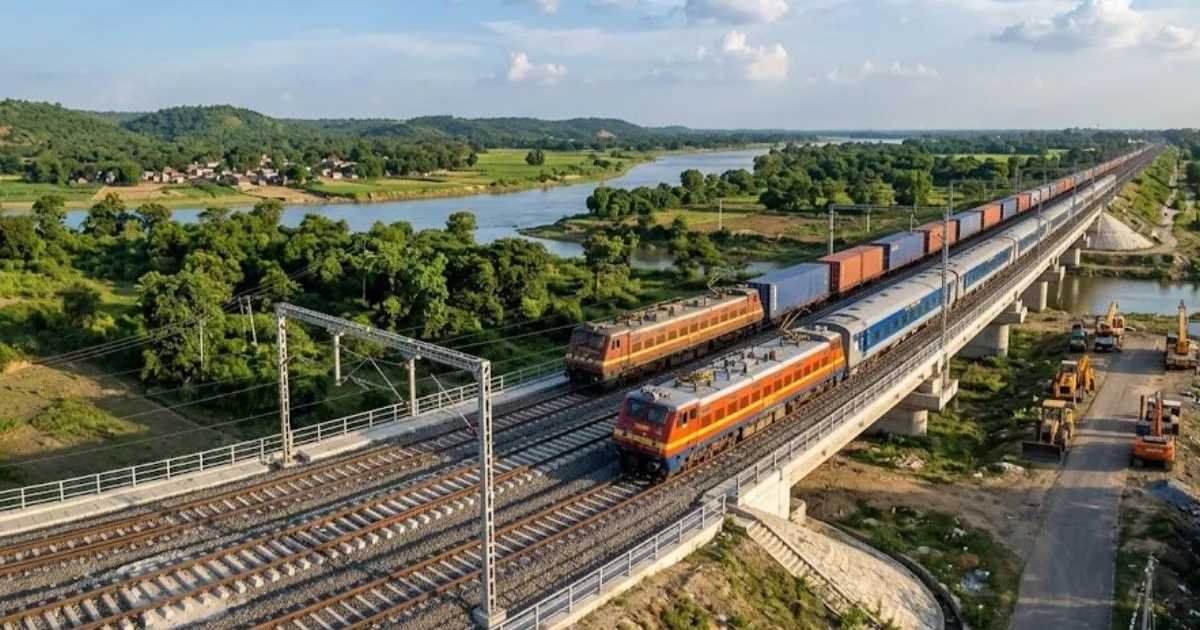
New Delhi: Indian Railways approved the Kiul-Jhajha project at a cost of ₹962 crore to strengthen rail capacity on the high-density Howrah-Delhi corridor.
The 54-km third line project aims to improve operational efficiency and support smoother passenger and freight movement across Eastern and Northern India.
Railway Minister Ashwini Vaishnaw said the additional rail line would improve punctuality and operational flexibility on the busy route. He added that the project would also support industrial growth and trade connectivity in the region.
At present, the existing double-line section between Kiul and Jhajha operates beyond optimal capacity. Moreover, railway authorities expect traffic demand on the corridor to rise further in the coming years.
Officials said the Kiul-Jhajha project would reduce congestion and improve line capacity. In addition, the project would strengthen rail connectivity between Patna and Kolkata.
The corridor also provides a key freight link between Kolkata and Haldia ports and Raxaul near the Nepal border. Furthermore, the route handles cargo linked to major industrial units, including Barh STPP, Jawahar STPP and Birganj ICD.
Kiul-Jhajha project to improve freight movement
Indian Railways identified the section under its High Traffic Density Network corridor due to increasing passenger and freight operations.
Officials said the third line would provide long-term infrastructure support for train services on the route. Consequently, railway authorities expect smoother logistics movement and reduced congestion across the corridor.
The project is also expected to improve transport reliability between major economic centres in Eastern and Northern India. Meanwhile, railway officials said the enhanced carrying capacity would support faster freight operations.
Ashwini Vaishnaw stated that the additional infrastructure would help Indian Railways meet future traffic demand efficiently. He also said the project reflected the Centre’s focus on strengthening railway connectivity and logistics networks.
Officials added that the project would play a key role in improving regional industrial growth and transportation efficiency along one of the country’s busiest railway corridors.
