

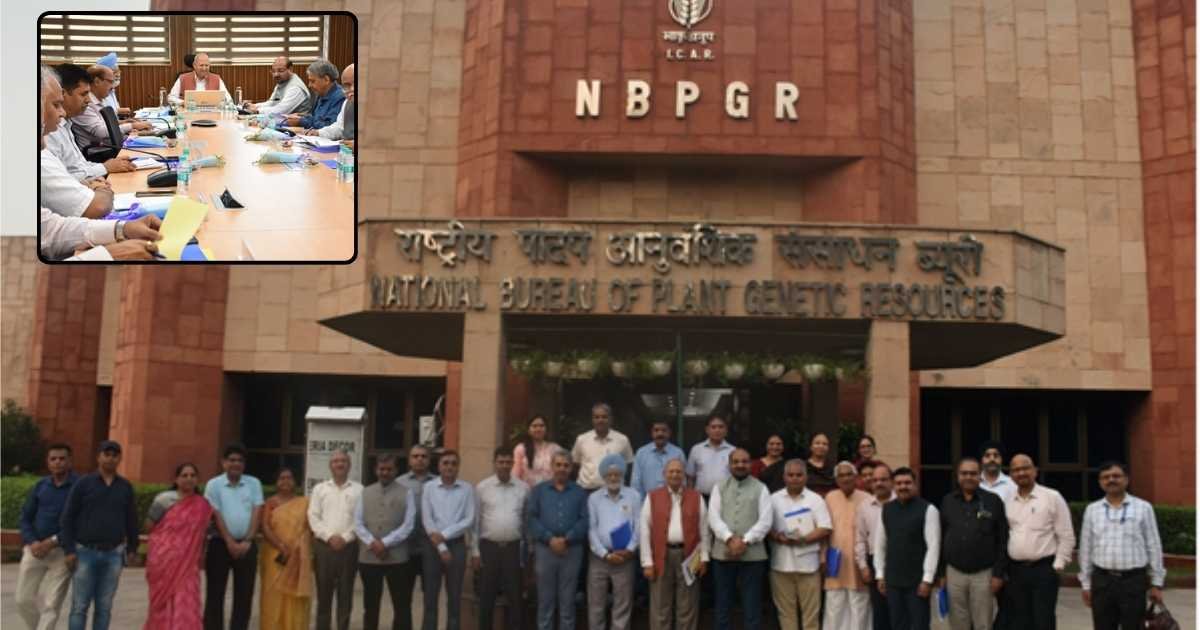
New Delhi: National Advisory Board on Management of Genetic Resources (NABMGR) has outlined a roadmap to strengthen genetic resources management and improve agrobiodiversity conservation. The board made the recommendations during its first meeting after its reconstitution. The meeting took place on July 29 at the ICAR–National Bureau of Plant Genetic Resources in New Delhi.
The board called for an integrated approach to managing plant, animal, fish, microbial and insect genetic resources. It said stronger coordination would support food security, climate resilience and the vision of Viksit Bharat.
Padma Bhushan Dr. R.S. Paroda chaired the meeting, while Dr. M.L. Jat served as co-chair. Senior officials from central ministries, ICAR institutions, the National Biodiversity Authority, the Department of Biotechnology, farmer groups and other experts attended the meeting.
Dr. Paroda described India’s genetic resources as a national strategic asset. He urged ICAR’s National Bureaux to align conservation efforts with emerging national needs. He also called for wider use of conserved germplasm in crop, livestock and fish improvement programmes to develop climate-resilient and high-performing varieties and breeds.
Genetic resources management to support climate-resilient agriculture
Dr. Paroda also urged authorities to review the recommendations of the 2016 International Agrobiodiversity Congress and prepare a roadmap for future action. He stressed stronger collaboration with Central Asian and South-East Asian countries to exchange valuable germplasm. He also proposed a legal framework to protect the rights of breeders and farmers dealing with animal and fish genetic resources.
Dr. M.L. Jat said genetic resources management should work closely with soil science, digital agriculture and crop improvement. He said identifying crop accessions for specific soils and agro-ecological regions would help develop climate-resilient farming systems. He added that ICAR’s research network would strengthen conservation and sustainable use through better coordination.
The six ICAR National Bureaux presented their achievements for 2021–2026 and their roadmaps for 2026–2031. The board recommended stronger pre-breeding programmes, wider germplasm collection and closer collaboration among ICAR institutions. Members also supported an inter-institutional programme to promote traditional and underutilised crop varieties, animal breeds, fish species, microbes and insects.
The board reviewed the implementation of Access and Benefit Sharing provisions under the Biological Diversity Act, 2002. It also assessed progress on the National Safety Genebank. Dr. Paroda urged authorities to complete the facility before ICAR’s centenary celebrations in 2028-29.
The meeting reaffirmed NABMGR’s commitment to strengthening scientific collaboration and evidence-based policymaking. The board said its recommendations would improve agrobiodiversity governance and support sustainable agricultural development.
