

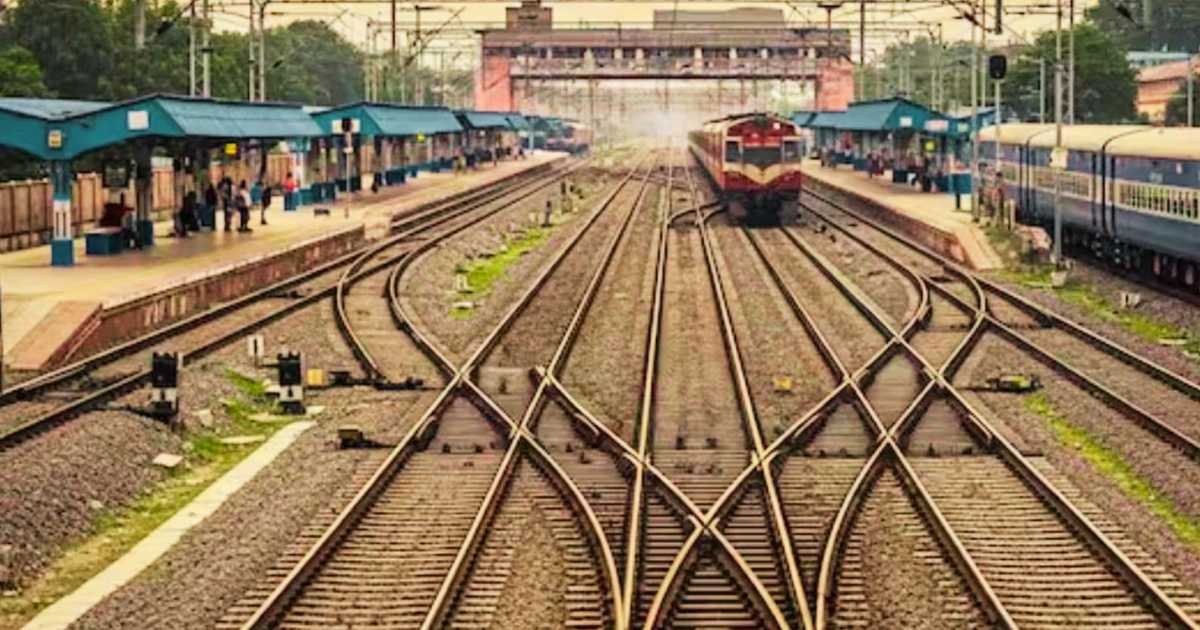
New Delhi: The Union Cabinet has approved Rail multitracking projects across Maharashtra, Madhya Pradesh, Bihar and Jharkhand to strengthen railway infrastructure and ease congestion.
The Cabinet Committee on Economic Affairs cleared three projects with a total estimated cost of Rs 9,072 crore. These include the Gondia–Jabalpur doubling, Punarakh–Kiul third and fourth lines, and Gamharia–Chandil third and fourth lines. Together, the works will expand the Indian Railways network by about 307 kilometres.
Importantly, the projects will improve connectivity across eight districts. Around 5,407 villages with a combined population of nearly 98 lakh people will benefit from better rail access. As a result, passenger mobility and freight movement will improve significantly.
The government aligned the projects with the PM Gati Shakti National Master Plan. Therefore, planners focused on integrated infrastructure development and multimodal logistics efficiency. The enhanced capacity will streamline train operations and reduce congestion on busy corridors.
Rail multitracking projects to boost freight and tourism
The upgraded routes will support the transport of coal, steel, iron ore, cement, fertilizers, foodgrains and petroleum products. Additionally, the capacity augmentation will enable an estimated 52 million tonnes of additional freight traffic per annum.
Tourism will also gain momentum. Improved connectivity will help visitors access destinations such as Kanha National Park, Pench National Park, Dhuandhar Waterfall, Chandil Dam and Dalma Wildlife Sanctuary. Consequently, local economies may witness higher employment and self-employment opportunities.
Moreover, the projects will contribute to environmental sustainability. Rail transport consumes less energy compared to road transport. The enhanced capacity will reduce oil imports by nearly 6 crore litres and cut carbon emissions by about 30 crore kilograms. This reduction equals the environmental benefit of planting one crore trees.
The government plans to complete the projects by 2030-31. Overall, the expansion aims to strengthen logistics, promote regional development and support India’s long-term climate goals.
