

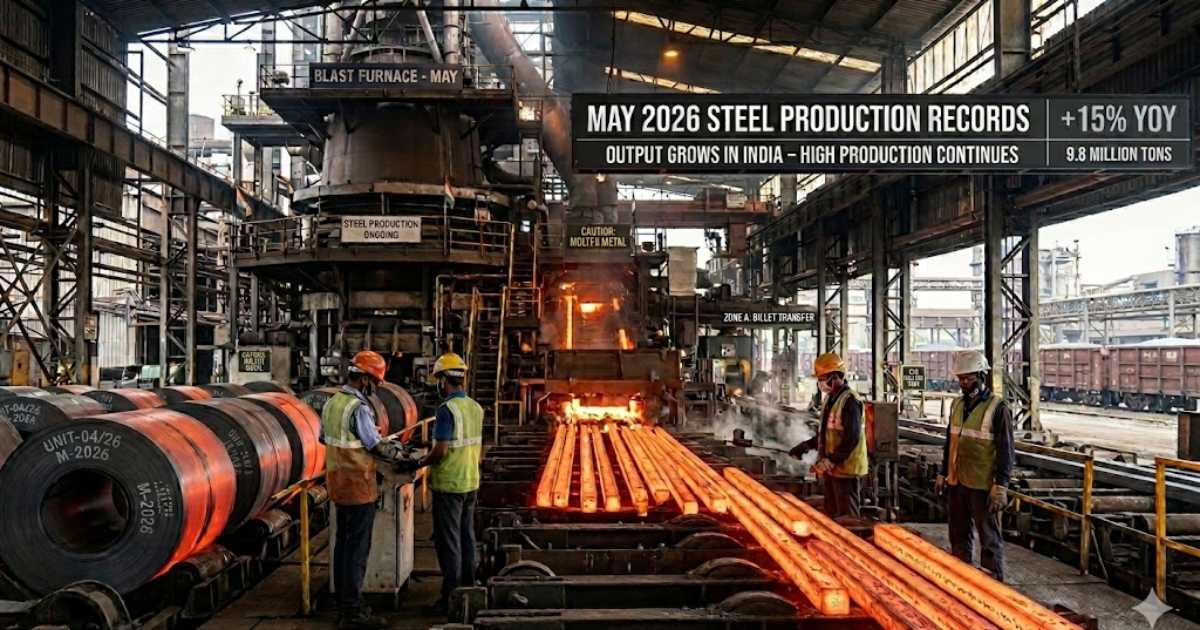
New Delhi: India recorded higher steel production and consumption in May 2026, extending the sector’s expansion amid strong demand from infrastructure, construction and manufacturing. Official data showed that crude steel production rose 2.9 per cent year-on-year to 14.21 million tonnes, while finished steel consumption increased 9 per cent to 14.33 million tonnes.
The latest figures highlighted continued momentum in the industry. Finished steel production reached 13.94 million tonnes during the month, marking a 7.7 per cent increase over the same period last year. Meanwhile, hot metal production grew 2 per cent and pig iron output rose 1.1 per cent.
During April and May 2026, crude steel production climbed 2.7 per cent to 28.04 million tonnes. At the same time, finished steel production increased 6.4 per cent to 27.36 million tonnes. Finished steel consumption also rose 8.7 per cent, supported by sustained activity across key end-use sectors.
Imports and exports both increased during May. Steel imports rose 62.5 per cent year-on-year to 0.69 million tonnes, while exports grew 29.9 per cent to 0.51 million tonnes. Consequently, India remained a net importer during the first two months of the financial year.
Steel output growth supported by investment and capacity expansion
India’s crude steelmaking capacity reached about 220 million tonnes per annum during FY 2025-26. As a result, the industry remains on course to meet the National Steel Policy target of 300 million tonnes per annum by 2030.
In a major expansion move, SAIL approved the increase of Bhilai Steel Plant’s crude steel capacity from 6.8 million tonnes per annum to 10.2 million tonnes per annum. Similarly, JSW Steel started construction of its integrated steel plant at Paradip in Odisha during May. The project will eventually add 13.2 million tonnes per annum of capacity in phases.
The Ministry of Steel said 94 producers across 15 states received green steel certificates under the Green Steel Initiative by May 31, 2026. Moreover, most certified products secured the highest five-star rating, reflecting wider adoption of sustainable production practices.
Domestic steel prices declined during May. TMT and rebar prices fell about 1.3 per cent month-on-month. Likewise, HR Coil and GP Sheet prices recorded marginal declines. However, TMT prices still remained around 4.5 per cent higher than a year earlier.
Raw material costs continued to rise. NMDC increased iron ore prices by ₹200 per tonne during the month. In addition, international coking coal prices advanced 2.8 per cent to $239 per tonne. International scrap prices also moved higher, adding pressure on production costs.
Despite rising input expenses, the outlook for the sector remains positive. Strong infrastructure spending and expanding manufacturing activity are expected to support demand. However, lower steel prices and higher raw material costs may weigh on producer margins in the near term.
