

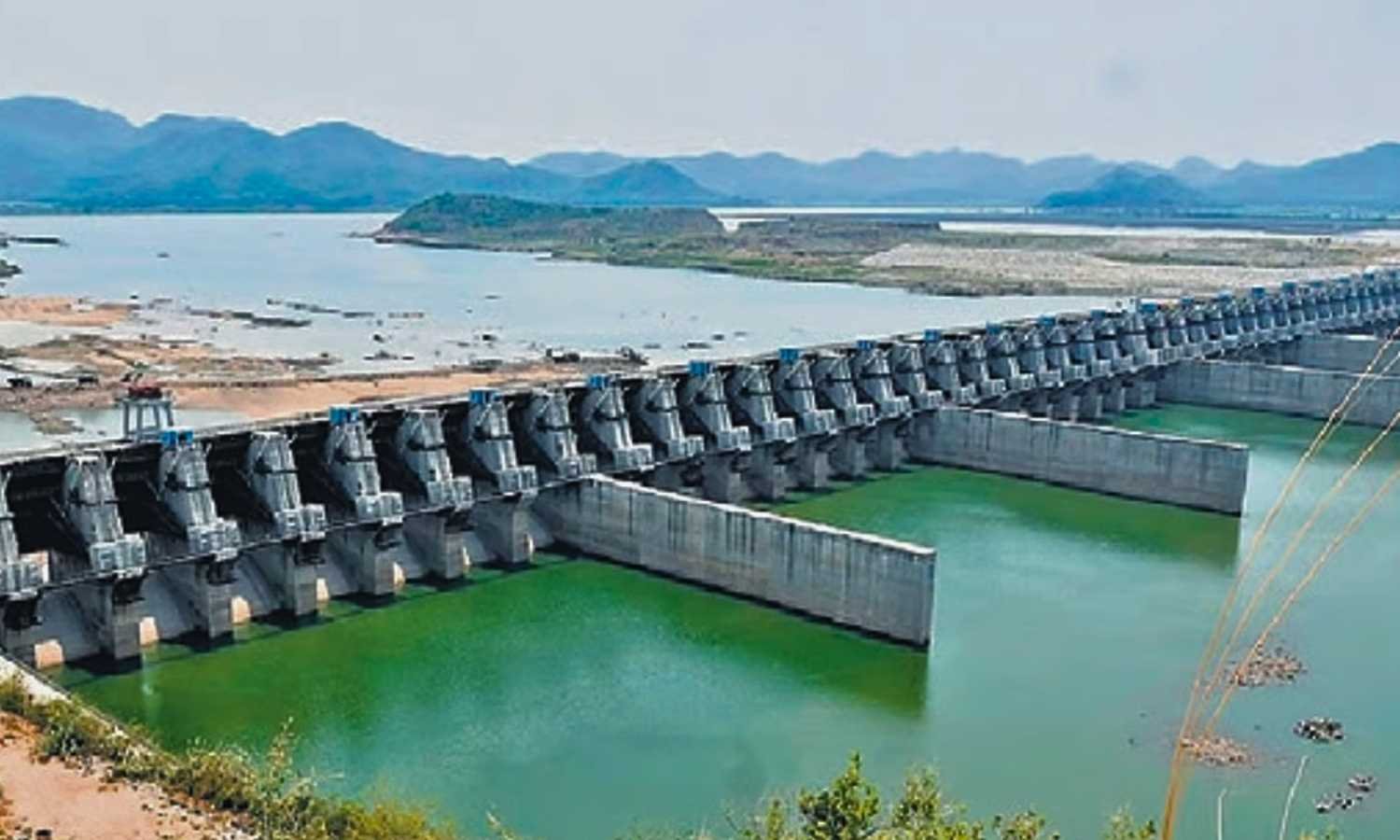
New Delhi: The Supreme Court on Monday disposed of a writ petition filed by the Telangana government against the Polavaram project expansion, after holding that the plea was prima facie not maintainable.
Senior advocate A M Singhvi, appearing for Telangana, argued that the court should entertain the plea under Article 32 of the Constitution. He said authorities had already fixed the quantum of Godavari water under an award. According to him, any diversion beyond that allocation amounted to an illegality. He also alleged clear violations of provisions under the Godavari Water Disputes Act.
Chief Justice of India D Y Chandrachud noted that Telangana relied on alleged statutory violations and an existing allocation framework. He observed that the state claimed authorities now sought to go beyond the awarded distribution of water. The Bench examined whether such claims fit within the scope of a writ petition under Article 32.
Justice J B Pardiwala and Justice P S Narasimha, who were part of the Bench, pointed out another issue. They noted that Karnataka and Maharashtra were also parties to the original Godavari water award. However, Telangana had not impleaded those states in the present proceedings.
Bench flags maintainability issues in Polavaram project expansion case
After the court raised these concerns, Singhvi sought permission to withdraw the petition. He told the court that a comprehensive suit was almost ready for filing. He added that the state could not remain without any legal remedy. The Chief Justice accepted the request made by senior counsel.
The court then disposed of the writ petition. It recorded that the plea was not maintainable at the threshold. At the same time, it granted liberty to the Telangana government. The state can now approach the appropriate forum. It can also raise all issues mentioned in the withdrawn petition.
The Telangana government had moved the Supreme Court against the Union government and the Andhra Pradesh government. It challenged the expansion of the Polavaram multipurpose irrigation project. The state argued that the project expansion affected its share of Godavari waters. It also questioned the legality of actions taken beyond the water allocation fixed under the award.
