

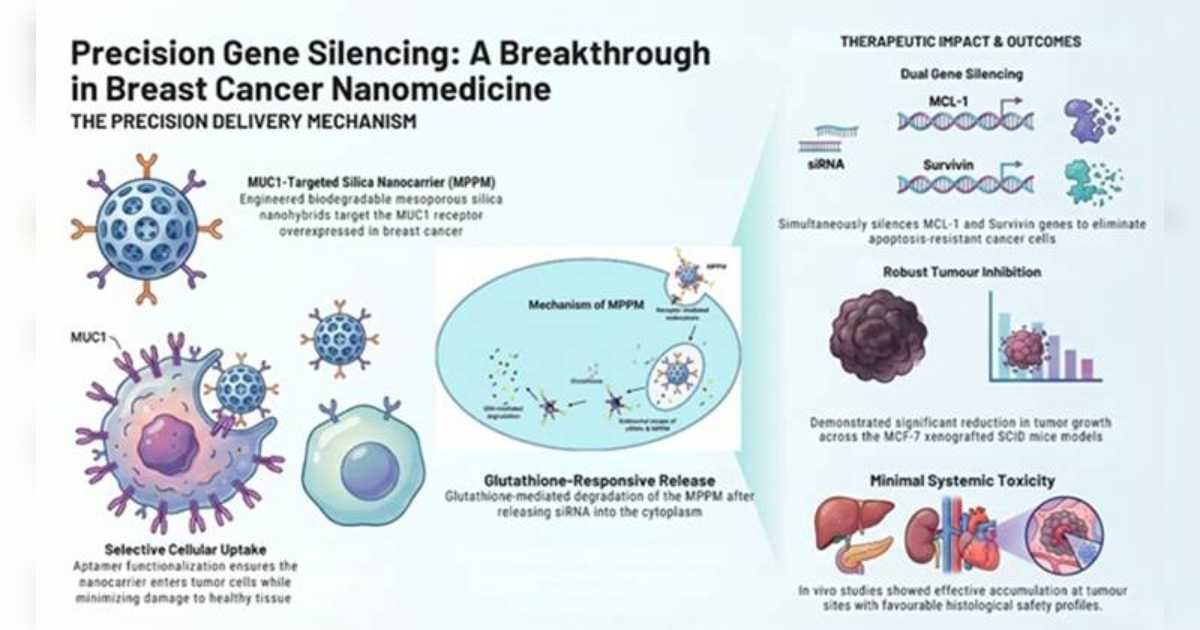
New Delhi: Scientists from the Agharkar Research Institute (ARI) in Pune have developed a targeted nanomedicine platform that silences key cancer-driving genes and significantly suppresses breast tumour growth.
The research team reported that the biodegradable nanocarrier delivers small interfering RNA (siRNA) directly to cancer cells. The approach aims to improve treatment precision while reducing the toxic side effects often associated with conventional cancer therapies.
Researchers designed the system using biodegradable mesoporous silica nanoparticles. They enhanced tumour targeting by combining the nanocarrier with a protamine biopolymer and a MUC1-specific aptamer.
The MUC1 receptor is highly expressed in many breast cancer cells. As a result, the targeting strategy improves cellular uptake and limits off-target effects.
Scientists said the platform simultaneously targets two anti-apoptotic genes, MCL-1 and Survivin. Both genes help cancer cells survive and resist treatment.
Targeted nanomedicine silences key cancer genes
The nanocarrier releases its therapeutic payload inside the tumour environment through a glutathione-responsive mechanism. Consequently, the siRNA molecules efficiently enter cancer cells and suppress gene activity.
Laboratory studies using MCF-7 breast cancer models showed strong gene knockdown and increased cancer cell death. Furthermore, researchers observed substantial inhibition of tumour growth during testing.
Animal studies in Severe Combined Immunodeficiency (SCID) mice also produced encouraging results. The nanocarrier accumulated effectively at tumour sites and caused minimal systemic toxicity.
According to the researchers, the study combines targeted delivery, controlled drug release and dual gene silencing within a single biodegradable platform. Therefore, the technology could support the development of safer and more effective RNA-based cancer treatments.
The findings were published in the journal Advanced Healthcare Materials. The study was conducted by scientists from the Nanobioscience Group at ARI, an autonomous institute under the Department of Science and Technology.
