

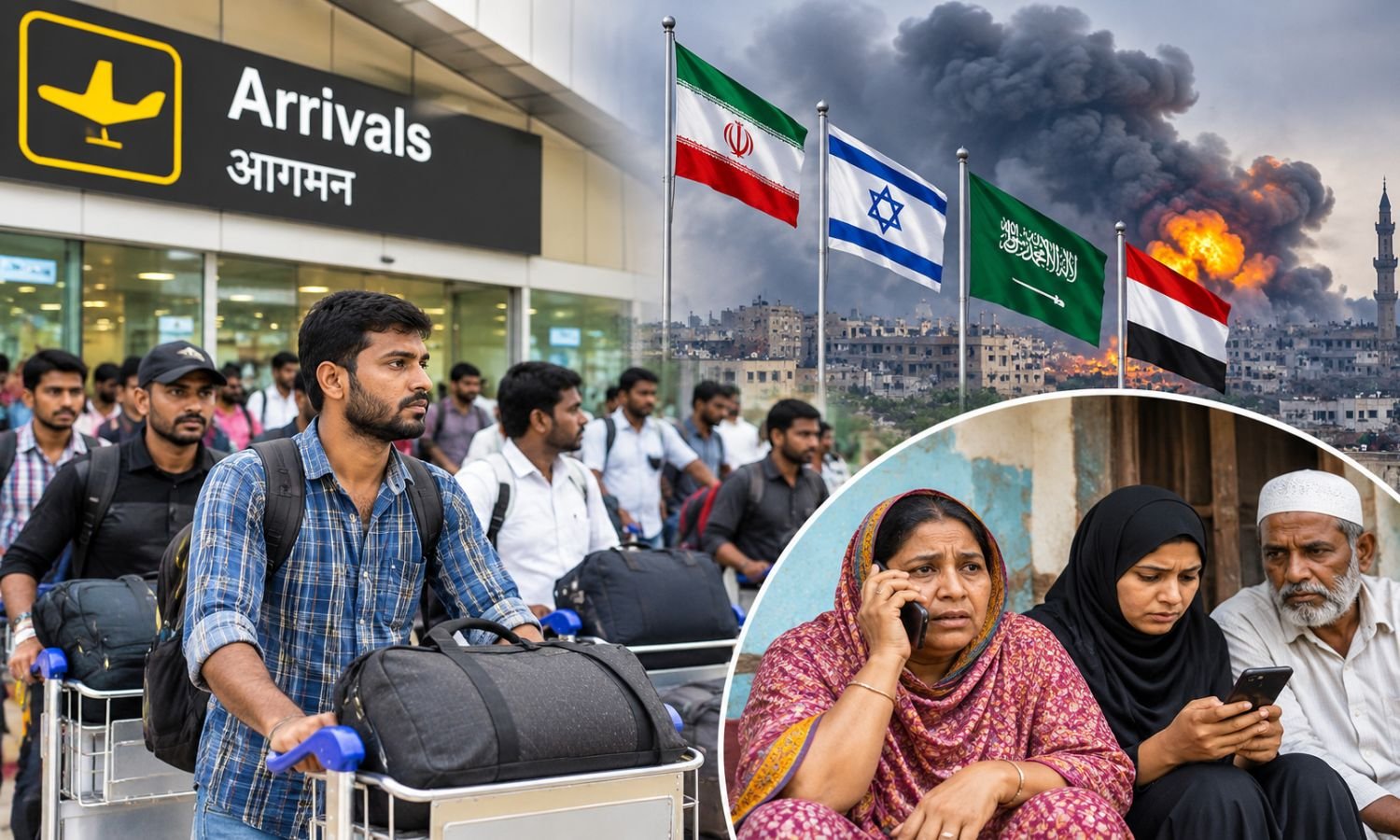
Hyderabad: Renewed Houthi attacks on Saudi Arabia have raised concerns over the safety and employment of Telangana Gulf workers. The developments have also highlighted gaps in the State’s migrant welfare system, particularly in tracking workers affected by the West Asia conflict.
On October 30, Yemen’s Houthi group claimed six attacks targeting Saudi airports and oil facilities. However, independent confirmation of the strikes was unavailable. Two days earlier, the Ministry of External Affairs (MEA) reported that 22 Indians had died in the conflict since February 28, including three in Saudi Arabia.
The developments have caused concern among families in Jagtial, Nizamabad and Hyderabad’s Old City, where many households depend on Gulf earnings. Estimates place Telangana’s Gulf workforce at around 15 lakh, although an updated official count is unavailable.
India also witnessed large-scale returns from West Asia during the conflict. By mid-April, more than 10 lakh passengers had travelled to India from the region. However, Telangana-specific figures remain unavailable, making it difficult to assess how many returning workers need rehabilitation or employment assistance.
For many migrants, returning home brings additional financial difficulties. An International Organization for Migration (IOM) survey covering 3,046 returnees from Hyderabad, Jagtial and Nizamabad highlighted widespread borrowing to finance overseas employment. It also found that nearly 62 per cent of women returnees remained unemployed.
These findings underline the financial risks associated with overseas migration. Workers who lose their jobs often return with unpaid loans, limited savings and few local employment opportunities.
Telangana Gulf workers await comprehensive welfare policy
Meanwhile, Telangana’s proposed Gulf migrant welfare policy remains pending. The State has examined measures to strengthen migrant protection, including a dedicated welfare board, better worker records and rehabilitation programmes.
A State delegation also visited the Philippines in August to study its migration management system. The exercise aimed to identify measures that Telangana could adopt to improve overseas worker protection.
The government already provides Rs 5 lakh ex-gratia assistance to eligible families of workers who die in Gulf countries. The scheme covers deaths occurring from December 7, 2023. However, migrant welfare activists have raised concerns over delays in processing applications and releasing benefits.
Despite regional tensions, overseas remittances remain crucial to Telangana’s economy. According to Reserve Bank of India data, the State accounted for 8.1 per cent of India’s inward remittances during 2023-24. This represented approximately Rs 79,800 crore, placing Telangana fourth nationally.
However, updated State-level remittance figures for 2026 remain unavailable. Consequently, the financial impact of the ongoing conflict on migrant-dependent households is difficult to assess.
Overseas recruitment opportunities continue in Saudi Arabia, the UAE, Qatar, Oman and Kuwait. Nevertheless, further attacks could disrupt flights, business operations and employment. A slowdown in Saudi Arabia’s construction sector could also affect workers from Telangana.
For families dependent on monthly Gulf salaries, even temporary job losses or delayed wages could create financial difficulties. The renewed tensions have therefore reinforced the need for reliable migrant data, faster welfare assistance and a comprehensive rehabilitation policy.
Until these measures take shape, Telangana Gulf workers and their families will remain vulnerable to economic disruptions arising from conflicts abroad.
