

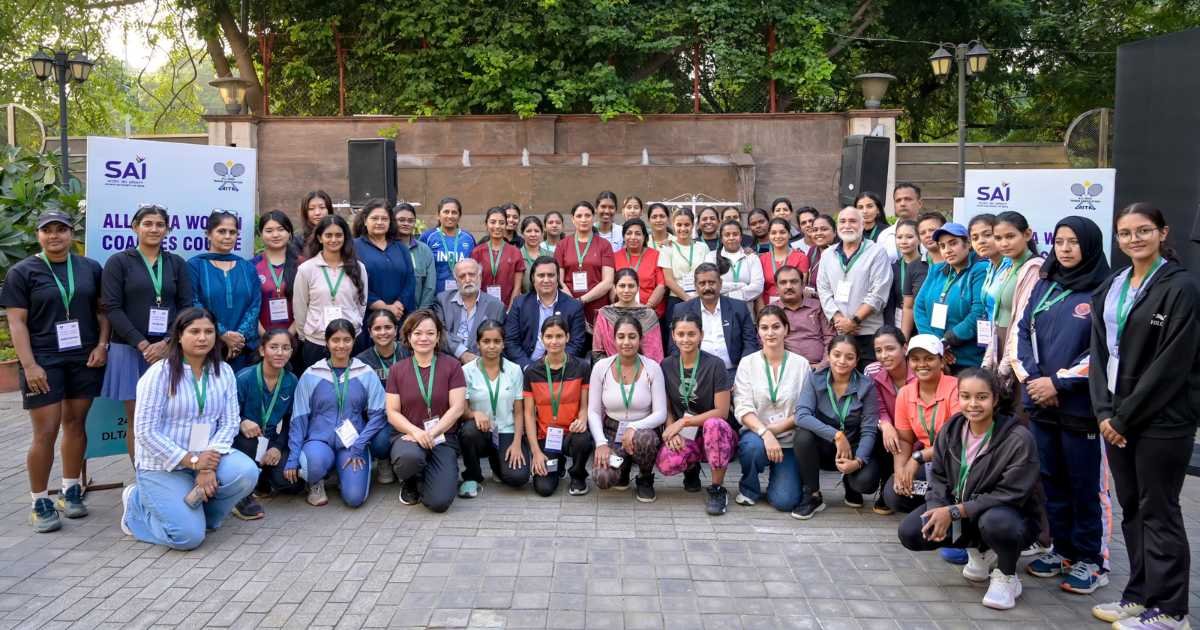
New Delhi: Union Minister of State for Youth Affairs and Sports Raksha Khadse addressed the women coaches course under the All India Tennis Association’s (AITA) ACE 2032 initiative on Saturday. She spoke at the Delhi Lawn Tennis Association (DLTA) Tennis Stadium. Khadse said India must expand opportunities for women across sports, from grassroots participation and coaching to high-performance competition and leadership.
DLTA President Rohit Rajpal and AITA Director of Coaching Kawaljeet Singh attended the event. Davis Cup Coach Ashutosh Singh, AITA Honorary Secretary Sunder Iyer and AITA Treasurer Dinesh Arora were also present. So was Coach Radhika Kanitkar, who is associated with the BKJC Cup. Coaches and sporting professionals shared views on coach education, grassroots tennis and athlete development.
The Ministry of Youth Affairs and Sports (MYAS) and the Sports Authority of India (SAI) support the initiative. It aims to strengthen links between coach education, talent identification and high-performance training.
Women coaches course stresses grassroots to high performance
Khadse stressed that India’s ambition to become a leading sporting nation depends on spotting talent early. Women and girls, she said, need qualified coaches, suitable infrastructure, regular competition and sustained support. Sporting talent exists across rural, tribal, semi-urban and urban communities, she noted. Wider participation, she added, is vital to widen India’s talent pool and strengthen its prospects in national and international competitions.
She also underlined that opportunities for women must extend beyond the playing field. They should cover coaching, sports science, administration, event management and other professional roles.
Speakers discussed the role of the ASMITA women’s leagues under the Khelo India framework. Launched in 2021, the leagues have reached more than three lakh women. They have created opportunities for participation and competition across regions and communities. Speakers also stressed the need to connect grassroots initiatives with Khelo India Centres, accredited academies and Centres of Excellence. Such links would help promising athletes progress to higher levels.
Building a stronger women coaching workforce
A key focus of the course was increasing the number of qualified women coaches. It also sought wider access to coaching education and certification across states. Greater representation of women in coaching can encourage girls to take up sport, participants said. It can also improve the quality and reach of athlete development.
The AITA ACE 2032 initiative seeks to connect coach education with talent identification and elite player development. Participants highlighted practical training, mentorship and continued professional development. These, they said, prepare coaches for the demands of competitive sport.
Discussions also covered high-performance training and specialised coaching. Sheerika Burman, who is associated with high-performance training, stressed the importance of building expertise in this area. The programme also discussed a possible course in Bengaluru beginning on December 10. Organisers would select 16 players for the CHP course.
Regional voices on coaching and fitness
Participants shared insights from their regions on strengthening grassroots tennis and coaching practices. Preeti Srinivasan from Tamil Nadu highlighted focused coaching attention and grassroots tennis development. Marnu Riba from Arunachal Pradesh emphasised holistic player development. She also stressed that athletes should enjoy the sport as they build their abilities.
Harjot Kaur from Jammu and Kashmir said Level One fitness programmes should be more comprehensive, particularly for beginners. The discussions underscored the need for coaching and fitness programmes that suit players at different stages and in diverse regional settings.
Safe and sustainable careers in sport
The course also highlighted the growing range of professional opportunities in sport. These include coaching, fitness training, sports science, event management and administration. Participants stressed the need to equip more women with the skills and qualifications to enter these fields and move into leadership roles.
Participants identified safe sporting environments, athlete welfare and professional accountability as essential to sustaining women’s participation. Coaches, sporting associations and governing bodies share responsibility for upholding standards of safety, conduct and athlete protection.
The course reflects the wider effort to strengthen women’s participation and leadership in Indian sports. By expanding coaching opportunities, supporting grassroots talent and improving pathways to high-performance sport, the initiative seeks to contribute to India’s sporting ambitions for 2036. It also aims to support the vision of Viksit Bharat @2047.
