

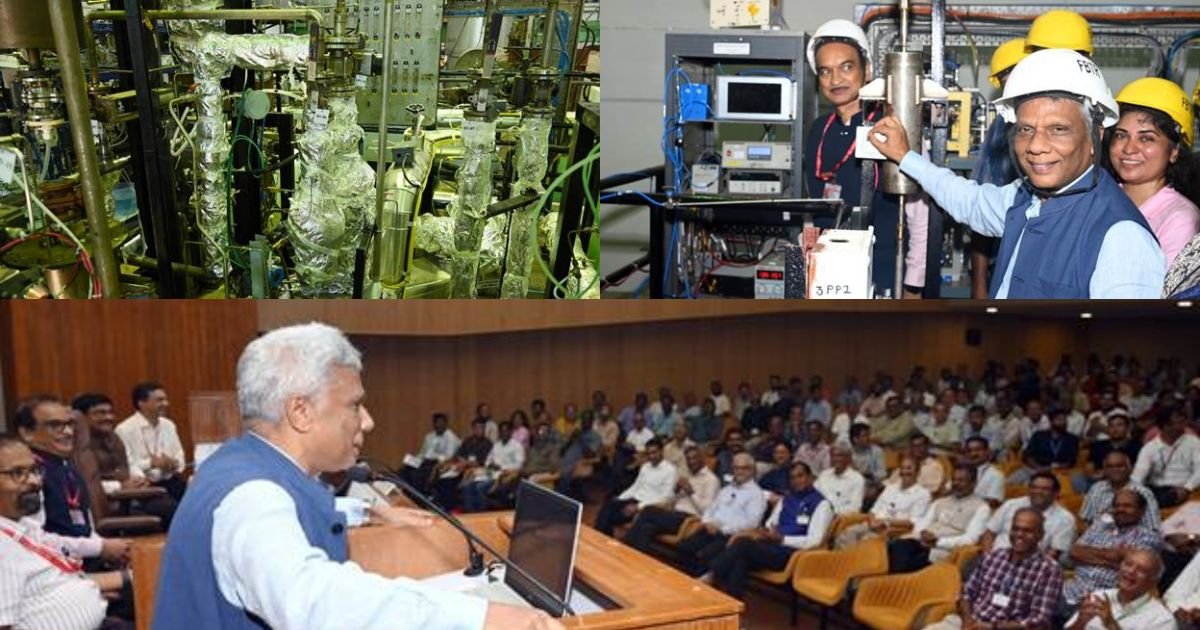
Kalpakkam: India inaugurated the world’s first nuclear hydrogen facility based on the Copper-Chlorine (Cu-Cl) thermochemical cycle at the Indira Gandhi Centre for Atomic Research (IGCAR) in Kalpakkam. The Department of Atomic Energy (DAE) launched the technology demonstrator on Thursday using nuclear process heat generated from the Fast Breeder Test Reactor (FBTR), marking a major milestone in clean energy and advanced nuclear technology.
DAE Secretary and Atomic Energy Commission Chairman Dr. Ajit Kumar Mohanty inaugurated the facility in the presence of IGCAR Director Sreekumar G. Pillai. The project validates hydrogen production using the indigenously developed Cu-Cl thermochemical process created by the Bhabha Atomic Research Centre (BARC).
The nuclear hydrogen facility integrates nuclear process heat with hydrogen generation for carbon-free production. Scientists said the breakthrough could support large-scale clean hydrogen production using advanced nuclear reactors while reducing dependence on fossil fuels.
Hydrogen is expected to play a major role in future clean energy systems. Moreover, the Cu-Cl thermochemical cycle operates at comparatively lower temperatures and offers higher efficiency than many alternative technologies. By using nuclear heat, the process also eliminates greenhouse gas emissions associated with conventional hydrogen production.
Nuclear hydrogen facility strengthens India’s clean energy mission
The project resulted from years of research, engineering, fabrication, installation, testing and commissioning by BARC and IGCAR. It will provide operational data, help optimise the Cu-Cl process and support future commercial-scale deployment of nuclear-assisted hydrogen production technologies.
Addressing the event, Dr. Ajit Kumar Mohanty said integrating nuclear energy with hydrogen production offers a strategic pathway for sustainable energy, energy security and decarbonisation. He congratulated the scientists, engineers and technical teams of BARC and IGCAR for transforming an advanced scientific concept into an operational facility.
IGCAR has led India’s Fast Breeder Reactor programme since 1971. It designed, built and operated the Fast Breeder Test Reactor, which has supported the development of advanced fuels, materials and reactor technologies for more than four decades. Furthermore, the expertise gained through FBTR contributed to the development of the 500 MWe Prototype Fast Breeder Reactor, a key component of India’s three-stage nuclear programme.
IGCAR Director Sreekumar G. Pillai said the achievement demonstrates the versatility of advanced nuclear systems and reflects IGCAR’s commitment to clean energy innovation. He added that the facility strengthens India’s long-term energy security while showcasing indigenous technological capabilities.
The Department of Atomic Energy said the commissioning of the nuclear hydrogen facility expands the role of nuclear power beyond electricity generation and reinforces India’s commitment to indigenous innovation, sustainable development and the vision of Atmanirbhar Bharat.
