

New Delhi: Ministry of Rural Development will deploy more than 100 Area Officers across the country to support the VB-G RAM G rollout ahead of the Act coming into force on July 1, 2026. The officers will assist States and Union Territories during the transition to the new rural development framework.
The Ministry announced the initiative as part of preparations for implementing the Viksit Bharat–Guarantee for Rozgar and Ajeevika Mission (Gramin) Act, 2025. Officials said the deployment would help ensure smooth operationalisation of the programme nationwide.
Area Officers will work closely with State governments and district administrations. They will support implementation, strengthen local capacities and facilitate the sharing of best practices.
In addition, the officers will help address operational challenges and improve coordination among stakeholders. Their role will focus on providing institutional support during the initial phase of implementation.
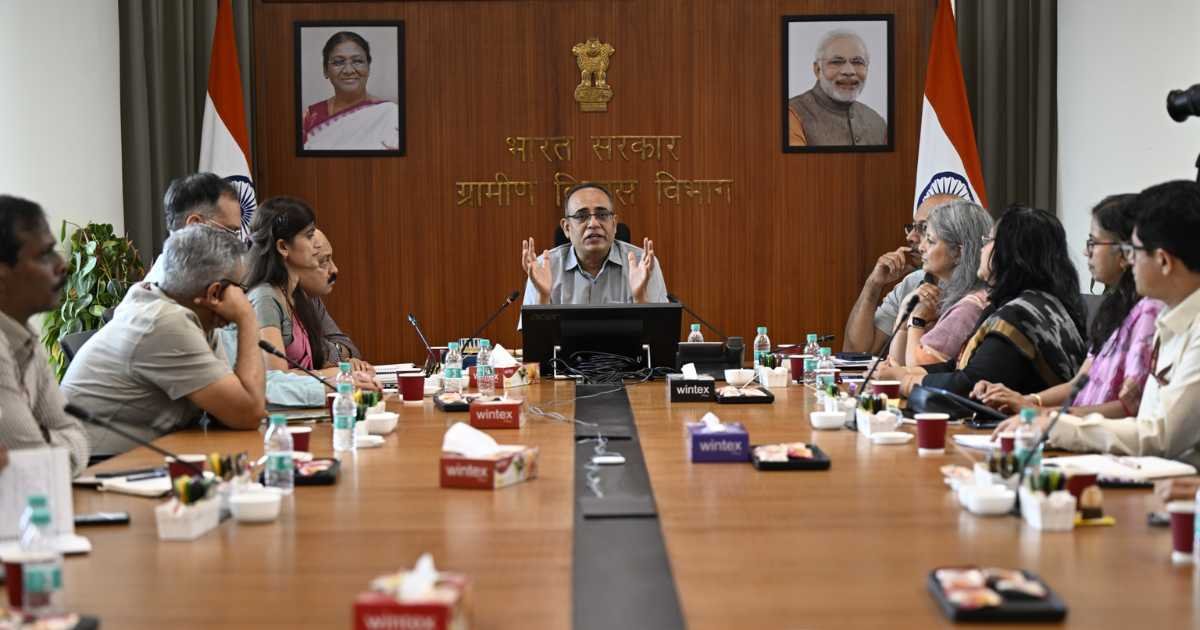
The Department of Rural Development organised a special orientation programme for the officers. Secretary Rohit Kansal chaired the programme, while Joint Secretary Rohini R. Bhajibhakare conducted the sessions.
VB-G RAM G rollout gains momentum nationwide
During field visits, Area Officers will interact with State governments, district administrations and grassroots functionaries. Furthermore, they will identify implementation requirements and support capacity-building efforts.
The officers will also facilitate the exchange of experiences and assist in resolving operational issues. As a result, the Ministry expects stronger coordination and smoother implementation across regions.
The government has already taken several preparatory measures. These include an interim allocation of Rs.95,692 crore for 2026-27, onboarding all States and UTs to the DBT-SPARSH platform and completing e-KYC for nearly 93 percent of active workers.
Additionally, authorities have introduced a nationwide Face Authentication-based Attendance System and developed dedicated digital platforms. They have also conducted large-scale training programmes.
Reflecting the progress achieved so far, 27 States and Union Territories have made budgetary provisions for implementation. Meanwhile, six States and UTs have already notified their schemes under the new framework, while others are finalising theirs.
The Act seeks to combine wage employment, livelihood promotion, climate resilience, infrastructure development and technology-enabled governance to support the vision of Viksit Bharat@2047.
