
SHANTI Bill among Modi government’s biggest science reforms, says Jitendra Singh

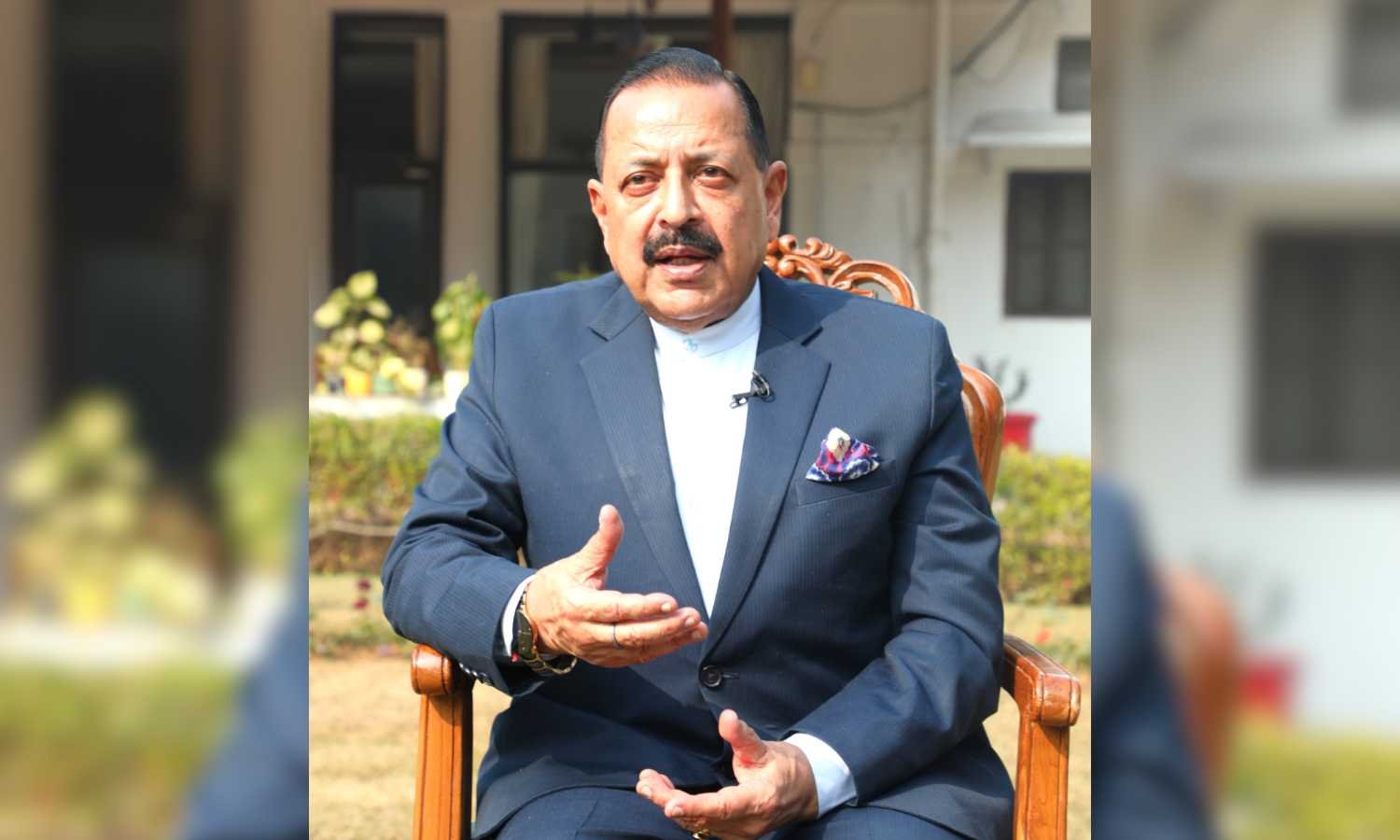
New Delhi: Union Minister for Science and Technology Dr Jitendra Singh said the SHANTI Bill would go down in history as one of the Modi government’s biggest science reforms.
Speaking to the media on Sunday, the Minister said Prime Minister Narendra Modi’s third term marked a shift towards bold structural reforms. He added that Modi 3.0 placed strong emphasis on science, innovation and entrepreneurship.
According to Dr Jitendra Singh, long-term socio-economic growth would depend on science-led policy decisions. Therefore, he said the SHANTI Bill placed scientific reform at the centre of national transformation.
He said India had rarely treated science as part of its reform narrative in the past. However, he added that the SHANTI Bill corrected this long-standing gap.
SHANTI Bill opens new era for nuclear energy growth
Dr Jitendra Singh said the SHANTI Bill marked a historic reform in India’s nuclear sector. He noted that it broke a stalemate that had continued for more than six decades.
He said the Bill unlocked the potential of nuclear energy for peaceful and clean use. At the same time, he stressed that safety, sovereignty and public interest remained protected.
Referring to Prime Minister Modi, the Minister said the reform became possible due to his willingness to dismantle legacy taboos. As a result, India could align its nuclear policies with global best practices.
Dr Jitendra Singh recalled that India’s nuclear programme began with peaceful intent under Dr Homi Bhabha. He said the SHANTI Bill strengthened this vision by supporting clean power, healthcare and advanced research.
Highlighting future needs, the Minister said nuclear energy was vital for AI, quantum computing and data-driven sectors. Unlike renewables, he said nuclear power provided round-the-clock electricity.
Meanwhile, Dr Jitendra Singh said India had doubled its nuclear capacity from 4.4 GW in 2014 to nearly 8.7 GW. He added that the government aimed to reach 100 GW by 2047.
According to the Minister, this capacity would meet nearly 10 percent of electricity demand. It would also support India’s Net Zero commitment.
Dr Jitendra Singh said nuclear science was also transforming healthcare. He pointed to its growing role in cancer diagnosis and treatment.
Looking ahead, he said India was moving towards Small Modular Reactors. These reactors, he added, suited urban clusters and industrial corridors.
Finally, Dr Jitendra Singh said the SHANTI Bill had received wide support from scientists, industry and startups. He said the Bill reflected Modi 3.0’s reform-first approach and India’s journey towards becoming a developed nation by 2047.
