

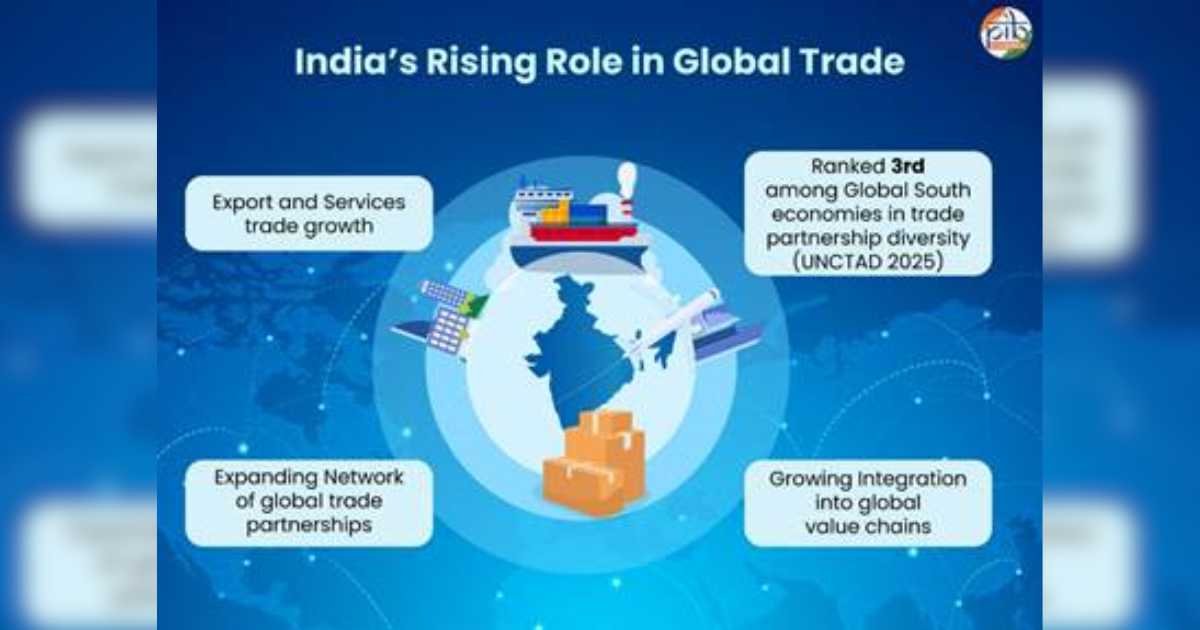
New Delhi: India strengthened its global trade presence through several India free trade agreements signed or announced during 2025-26, expanding its network to nine FTAs covering 38 countries. Over the past decade, the country has pursued a new generation of trade partnerships designed for modern global markets.
India began this expansion with the India–Mauritius agreement in 2021. Subsequently, it signed the India–UAE Comprehensive Economic Partnership Agreement in May 2022. The India–Australia Economic Cooperation and Trade Agreement came into force in December 2022.
Later, India signed the EFTA Trade and Economic Partnership Agreement on March 10, 2024. The agreement entered into force on October 1, 2025. In addition, India concluded the India–UK Comprehensive Economic and Trade Agreement in July 2025.
The country also signed the India–Oman Comprehensive Economic Partnership Agreement in December 2025.
India free trade agreements expand market access
India announced the India–New Zealand Free Trade Agreement on December 22, 2025. Soon after, India announced the India–European Union Free Trade Agreement on January 27, 2026. Furthermore, India and the United States agreed on a framework for an interim trade agreement on February 7, 2026.
Officials said these agreements expand market access for Indian farmers, businesses and professionals. For example, agricultural producers can now access developed markets with fewer trade barriers. At the same time, entrepreneurs and MSMEs can export products such as garments, leather and handicrafts more competitively.
The agreements also create opportunities for Indian professionals including IT experts, chefs, yoga instructors and students. Mobility provisions in several agreements provide pathways for work opportunities, post-study visas and social security benefits. Moreover, these trade deals support exports of organic products and traditional wellness systems under AYUSH.
They also strengthen India’s role in digital services and emerging technologies. Officials said the government negotiated these agreements while protecting sensitive sectors such as dairy, agriculture and domestic industry. Therefore, India aims to balance global trade expansion with the national goal of building a self-reliant economy.
Authorities believe these partnerships will increase investments, boost exports and strengthen economic cooperation with partner countries. The government said the agreements will help India advance toward its long-term vision of becoming a developed nation by 2047.
