

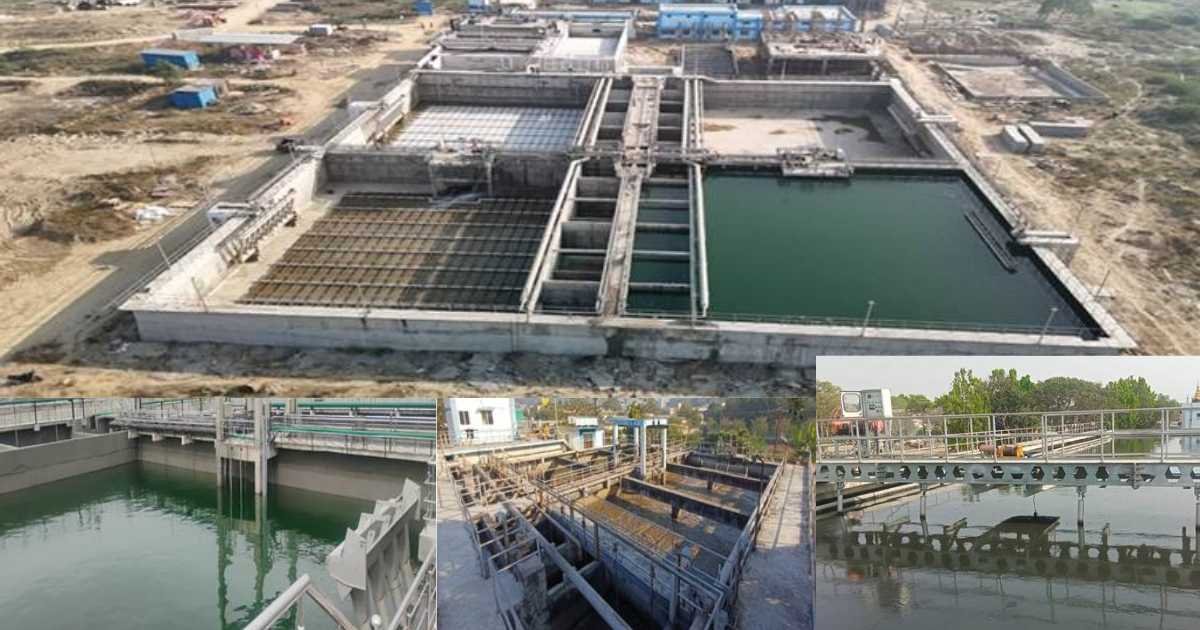
New Delhi: The National Mission for Clean Ganga (NMCG) added 538.03 MLD sewage treatment capacity in FY 2025–26, marking a major push in pollution control across the Ganga basin.
Officials completed 18 projects during the year across Uttar Pradesh, Uttarakhand, Jharkhand, West Bengal, and Bihar. In total, 28 sewage treatment plants (STPs) became operational, compared to 22 in the previous year. These projects involved an investment of nearly ₹4,700 crore.
Uttar Pradesh led the NMCG capacity growth with multiple projects across key cities. Varanasi recorded the highest addition of 55 MLD capacity in the Assi–BHU area. In Prayagraj, authorities added 43 MLD by intercepting 13 drains and upgrading the Salori STP.
Moradabad contributed 25 MLD through pollution control measures along the Ramganga. Shuklaganj added 5 MLD, while Vrindavan enhanced capacity by 13 MLD. Agra recorded the largest addition in the state with 166 MLD across multiple projects.
In Uttarakhand, projects across Udham Singh Nagar, Haridwar, Dehradun, and Muni ki Reti improved wastewater management. Udham Singh Nagar added 10.3 MLD, while Dehradun contributed 15 MLD. Smaller decentralised works in Haridwar added 0.23 MLD. Muni ki Reti further increased capacity by 11 MLD.
NMCG capacity growth expands monitoring and digital systems
Jharkhand reported progress with a 14 MLD project in Phusro. Meanwhile, West Bengal strengthened its infrastructure through projects in Maheshtala, Jangipur, Chakdah, and North Barrackpore. Maheshtala alone added 35 MLD, while other projects contributed significant additional capacity.
In Bihar, projects in Digha, Kankarbagh, and Bhagalpur added 30 MLD, 35 MLD, and 22.5 MLD respectively. These initiatives addressed urban wastewater challenges and improved river water quality.
Alongside infrastructure, NMCG introduced digital monitoring tools to improve oversight. The Drain Dashboard tracks sewage flow, diversion, and treatment status in real time. It helps authorities identify pollution risks and take timely action.
Additionally, the Ganga Pulse Public Portal provides live data from STPs across five states. It displays parameters such as pH, BOD, and TSS at inlet and outlet points. This enables assessment of treatment efficiency and ensures compliance.
Officials said the NMCG capacity growth reflects a balanced and strategic approach across regions. They added that ongoing projects and improved monitoring systems will further strengthen efforts to rejuvenate the Ganga.
The expansion of sewage treatment infrastructure is expected to address current pollution challenges and support future urban growth along the river basin.
