
Ramayana’s box-office success faces a new test over portrayal of epic

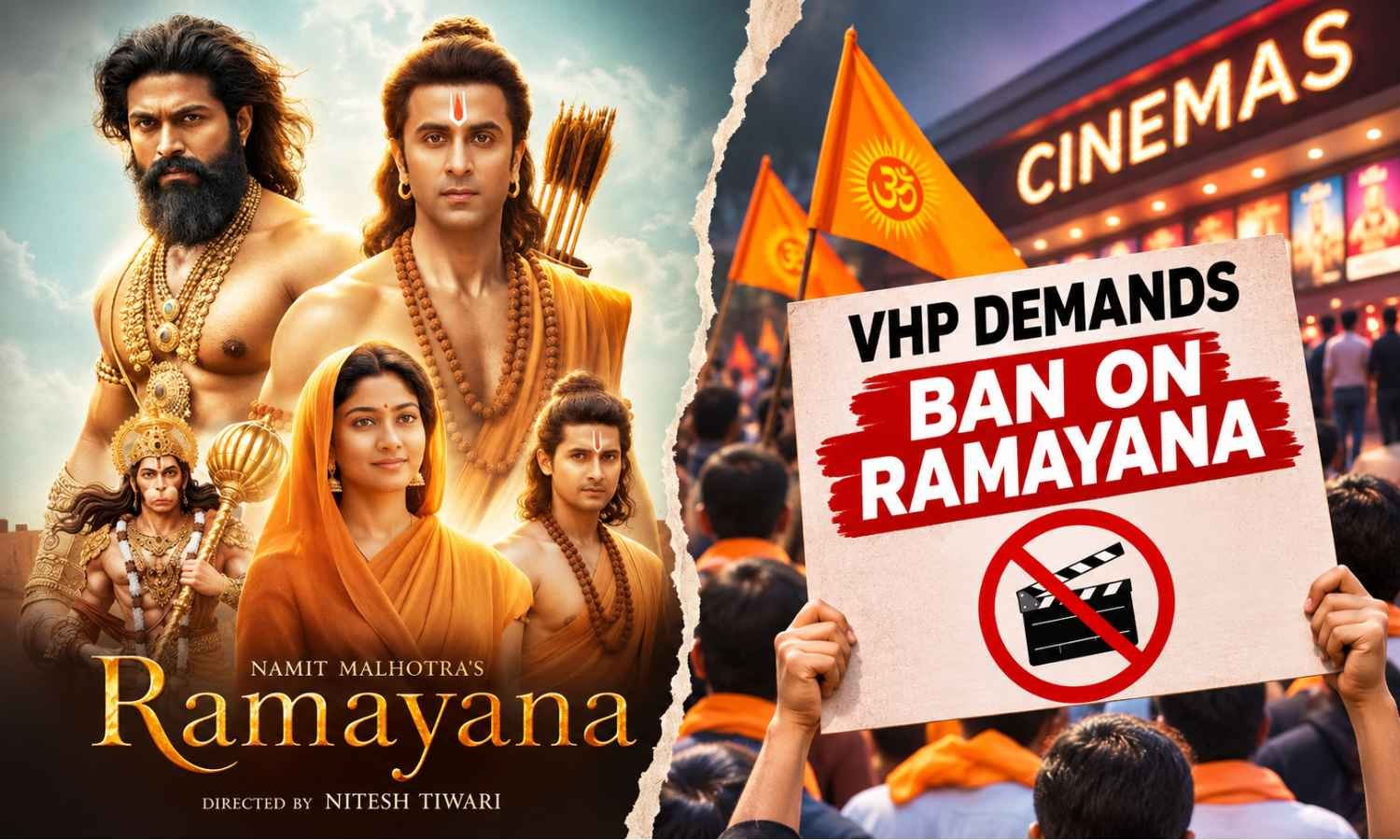
Mumbai: A film drawing enormous audiences to cinema halls would ordinarily be celebrating its commercial success. Nitesh Tiwari’s Ramayana, however, has entered a more complicated phase, with its strong theatrical performance now accompanied by demands to stop screenings over allegations that the adaptation distorts important elements of the Hindu epic.
The controversy intensified on November 21 when the Vishva Hindu Parishad demanded revocation of the film’s certification and an immediate halt to its exhibition. The objections emerged barely two weeks after the first instalment of the ambitious two-part production reached theatres on November 5.
The film, featuring Ranbir Kapoor as Rama, Sai Pallavi as Sita and Yash as Ravana, has attracted considerable attention because of its production scale, technical presentation and interpretation of a story occupying a central place in India’s religious and cultural traditions.
Its worldwide theatrical collections had reportedly crossed Rs 1,500 crore by November 21, placing the production among the country’s biggest commercial releases. The financial performance has provided a striking contrast to the demands for regulatory intervention.
Commercial success meets organised opposition
The production represents a substantial attempt to bring an extensively known epic to contemporary cinema audiences. Large-scale visual effects, international technical collaboration, a prominent cast and multilingual distribution have contributed to its appeal.
Such productions depend on attracting audiences beyond their initial regional or linguistic markets. Premium cinema formats, dubbed versions and international screenings can help recover costs while supporting the longer-term commercial potential of a film franchise.
Ramayana also carries expectations that extend beyond those associated with conventional commercial cinema. Its principal characters and episodes have been represented through literature, theatre, television, devotional traditions and different regional adaptations over generations.
This familiarity presents a challenge for filmmakers. Audiences may already hold strong expectations about the depiction of particular characters, events and moral relationships. Creative choices intended to develop a cinematic narrative can therefore become subjects of wider cultural disagreement.
The VHP’s objections concern the portrayal of Ravana, the treatment of Rama’s mission and the alleged omission or alteration of important episodes. The organisation has argued that these decisions undermine the religious and moral character of the source material.
These are allegations concerning the film’s interpretation. Their validity cannot be established merely from the fact that objections have been raised, just as strong collections cannot establish that every viewer approves of the adaptation.
The question of creative interpretation
Adapting a religious epic for cinema involves decisions about which incidents to include, how characters should be presented and what aspects of the narrative should receive greater attention.
A film cannot necessarily reproduce every episode of an extensive literary tradition within the limitations of theatrical storytelling. However, changes affecting central characters or the moral structure of a narrative can provoke disagreement, particularly when the subject has profound religious significance.
The present controversy reflects this tension between creative interpretation and expectations of fidelity to established traditions. Organisations opposing the film regard certain changes as unacceptable, while the production’s theatrical performance demonstrates substantial audience interest in the cinematic version.
Audience interest and religious objections are not necessarily contradictory. Viewers may appreciate a film’s performances, music or visual presentation while disagreeing with aspects of its narrative. Equally, organisations raising objections do not automatically represent the views of every person familiar with the epic.
The question of certification introduces a separate legal dimension. Film certification determines eligibility for public exhibition under the applicable regulatory framework. A demand for revocation does not, by itself, establish that the certificate was improperly granted or that the film has violated the law.
Any formal challenge would need to be examined through the relevant legal and regulatory processes rather than settled solely through public disagreement.
The stakes extend beyond one film
Indian cinema has repeatedly adapted religious and mythological narratives, with varying degrees of commercial success and public acceptance. The experience of earlier productions demonstrates that expensive visual effects and familiar subjects do not automatically guarantee favourable audience reactions.
Ramayana’s current performance indicates substantial demand for a large-scale cinematic retelling. Its commercial prospects also matter because the project has been conceived as a two-part production with broader ambitions beyond the initial theatrical release.
The second instalment is planned for 2027, making the present controversy relevant to the filmmakers’ future decisions about narrative treatment, marketing and audience expectations.
For the industry, the broader question concerns the conditions under which culturally significant stories can be adapted for modern audiences. Producers face the challenge of maintaining commercial appeal while recognising the sensitivities attached to religious narratives.
The controversy is unlikely to be resolved through box-office figures alone. Its significance lies in the continuing debate over the relationship between artistic interpretation, cultural expectations and the legal standards governing public exhibition.
For now, Ramayana’s commercial success and the objections to its content remain parallel developments. How they influence the reception of the second part will become clearer as the project progresses.
