
Eight-week theatrical window puts mid-budget films under pressure

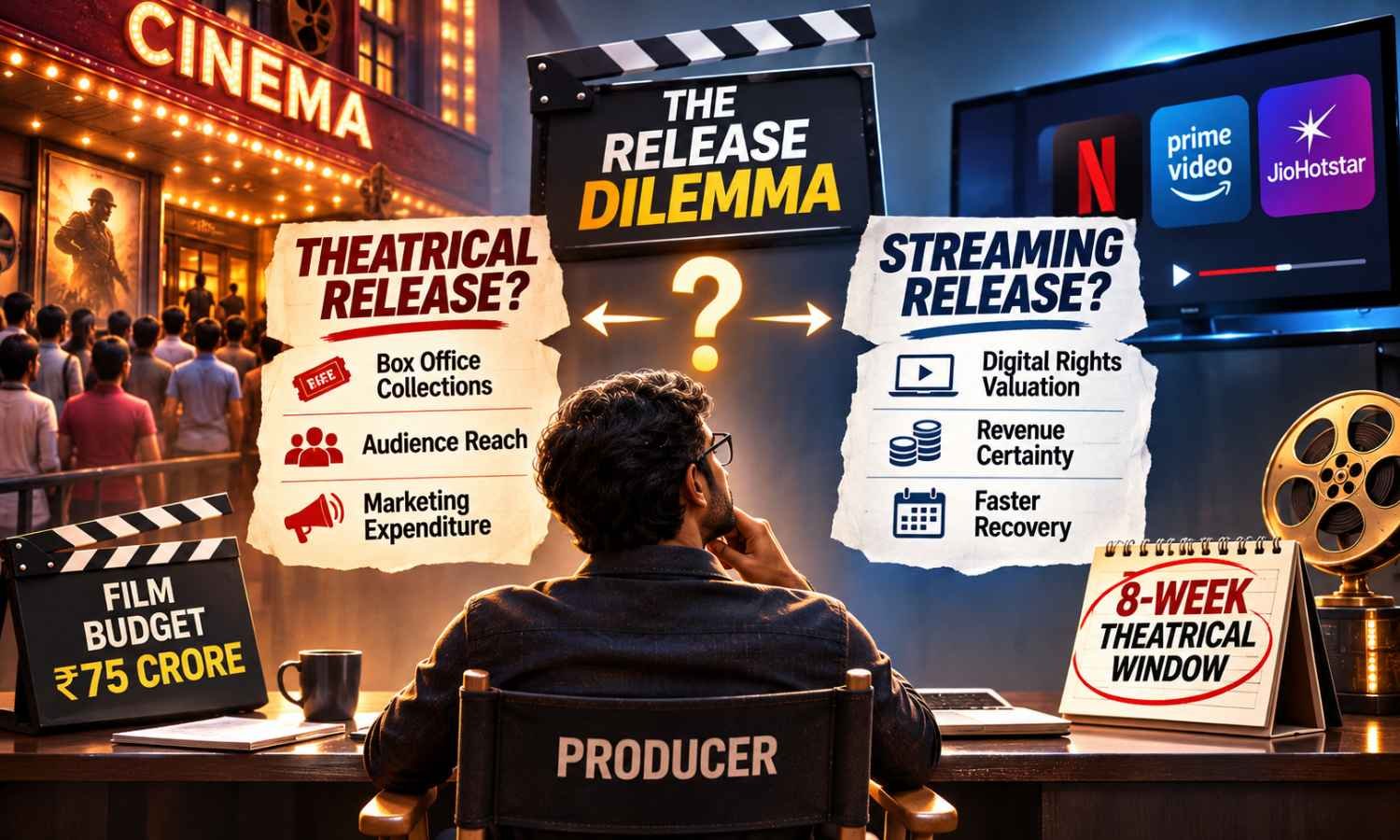
Mumbai: A producer planning a Rs 75-crore film faces a question that was once easier to answer: should the film receive a conventional theatrical release or should its financial future depend more heavily on a streaming platform? The answer now involves a complicated calculation of cinema collections, digital-rights valuations, marketing expenditure and the time required to recover investment.
The changing economics of India’s film industry have made this decision particularly important for mid-budget productions. While large-scale films continue to draw substantial theatrical audiences, smaller and medium-sized projects face a more uncertain relationship between cinema revenues and streaming income.
An eight-week theatrical release window has become an important feature of Hindi cinema’s distribution arrangements, particularly for films seeking screens across national multiplex chains. The window generally determines the period between a film’s cinema release and its availability on streaming platforms.
For producers, the arrangement can protect theatrical earnings by ensuring that audiences do not have immediate access to the same film at home. However, it can also delay digital monetisation and increase financial exposure when a film fails to attract sufficient cinema attendance.
Theatrical revenues recover ground
India’s film business has experienced a recovery in theatrical revenues, although the benefits have not been evenly distributed across productions.
The domestic theatrical market generated approximately Rs 13,000 crore in gross box-office collections during 2025, reflecting the continued ability of successful films to attract paying audiences. Higher ticket prices contributed to the revenue growth, while audience footfalls remained under pressure.
This distinction has important consequences for the industry. An increase in total box-office revenue does not necessarily mean that more people are visiting cinemas. Large releases, premium ticket prices and strong performances by selected films can produce record revenues even when attendance trends are uneven.
The commercial success of major productions has reinforced the importance of theatres as a primary source of income. Cinema releases also contribute to publicity, audience awareness and the value of rights sold through subsequent distribution channels.
Theatrical performance can therefore influence the price a film commands when it becomes available for streaming or television exhibition.
For expensive event films, this sequence may be commercially attractive. Substantial opening-weekend collections, strong advance bookings and continued audience interest can help recover investment before the film reaches digital platforms.
Mid-budget films, however, may not enjoy the same advantages.
Why the eight-week window matters
A film’s gross box-office collection does not flow entirely to its producer. Revenue must be shared with exhibitors and distributors, while production expenses, marketing costs and other financial obligations must also be considered.
The amount ultimately available to recover the producer’s investment can therefore be substantially lower than the headline collection.
A longer theatrical window may benefit films that develop gradually through favourable audience reactions. Such productions can retain screens and generate revenue over several weeks without competing immediately against their own streaming release.
The same arrangement can become a disadvantage for a film that struggles during its opening weekend. Weak collections may reduce available screens, and the producer may still need to wait before receiving revenue associated with a later digital release.
Marketing expenditure creates an additional burden. Films that depend on sustained theatrical attendance may require promotional activity beyond their initial release period, adding to the overall cost.
Shorter windows can offer an alternative by allowing quicker access to streaming revenue. However, they may weaken the theatrical proposition if audiences expect the film to become available at home within a few weeks.
Multiplex operators also have a commercial interest in protecting the period during which films are available exclusively in theatres. Their approach to screen allocation can influence the decisions made by distributors and producers.
Streaming platforms become more selective
The expansion of digital entertainment initially created substantial expectations for film producers. Streaming platforms offered an additional market for completed productions, and the value of digital rights became an important component of financing arrangements.
The market has since become more selective. Platforms must balance spending on film acquisitions against subscriber growth, audience engagement and the performance of their existing content libraries.
Large films and established franchises may attract considerable interest because they offer recognisable titles and the possibility of reaching large audiences. Mid-budget films without comparable commercial visibility can face a more difficult negotiation.
This does not mean smaller productions have lost their value to streaming services. Content-driven films, regional productions and projects aimed at specific audiences can remain commercially useful. However, their acquisition prices depend on expectations about viewership and the platform’s wider programming strategy.
A film that performs poorly in theatres may also lose some of its appeal as a subsequent digital acquisition. The assumption that streaming rights will automatically compensate for weak cinema collections has consequently become less dependable.
Industry data demonstrate the changing balance between distribution channels. During 2025, domestic theatrical revenues accounted for approximately 63 per cent of India’s filmed-entertainment income, while digital and OTT revenues contributed about 14 per cent.
Digital licensing remains significant, but the industry’s revenue structure shows that cinema exhibition continues to play a central role in the commercial performance of successful films.
Mid-budget producers face a difficult calculation
The challenge for a producer is to determine the most suitable release strategy before the film’s commercial potential is fully known.
A theatrical release can deliver substantial upside when audiences respond favourably. It can also enhance the film’s visibility and strengthen the value of subsequent rights. However, the strategy involves uncertainty over ticket sales, screen availability and the cost of maintaining publicity.
A direct or earlier streaming release offers a different financial arrangement. It may provide greater certainty about some revenues, but the producer may surrender the possibility of earning substantially more through a successful theatrical run.
The decision also depends on genre and audience behaviour. A large-scale action or fantasy film may benefit from the technical and social experience of cinema exhibition. A smaller drama may need to assess whether sufficient audiences are likely to purchase tickets when alternative entertainment is readily available at home.
Neither model guarantees commercial success. The central issue is whether expected revenues justify the costs and risks associated with the chosen distribution strategy.
The middle of the industry remains vulnerable
The growing distinction between large theatrical productions and smaller content-driven films raises questions about the future diversity of India’s cinema market.
Mid-budget films have historically provided opportunities for new directors, emerging actors and stories that do not require the financial scale of major productions. If their commercial options narrow, the consequences may extend beyond individual producers to the variety of films reaching audiences.
Streaming platforms can support this segment, but their acquisition decisions cannot be assumed to provide a guaranteed financial safety net. Similarly, a strong overall box-office year does not establish that the theatrical market is equally favourable to productions of every size.
The eight-week theatrical window is therefore only one part of a wider economic adjustment. Rising production costs, changing audience expectations, selective digital acquisitions and competition for cinema screens all influence the prospects of mid-budget films.
The industry’s longer-term challenge will be to develop viable distribution arrangements that allow commercially ambitious event films and smaller productions to coexist.
For producers working between these two extremes, the decision is increasingly about managing risk rather than simply choosing between theatres and streaming platforms. The economics of each release must be assessed separately, with the theatrical window treated as one factor in a broader commercial calculation.
