

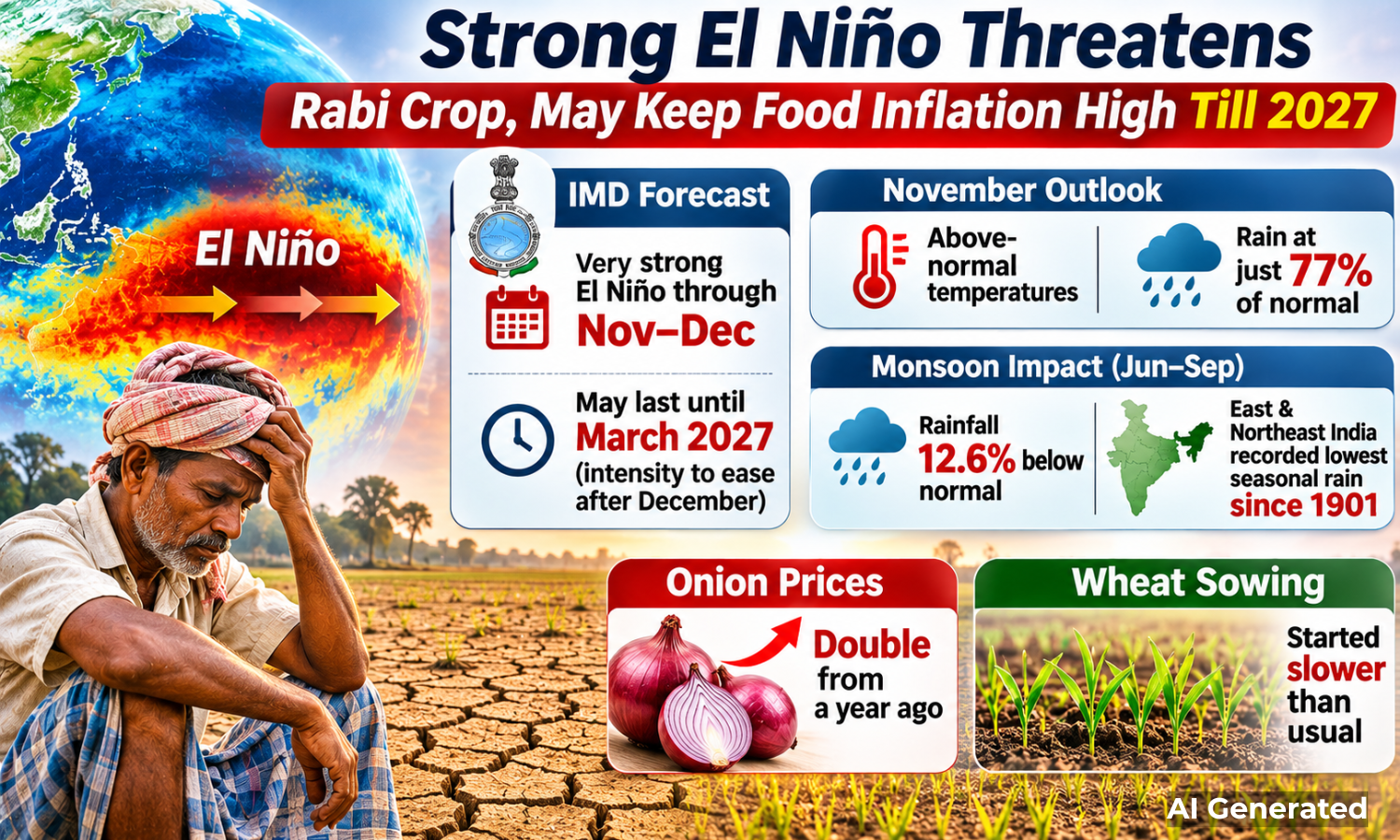
New Delhi: Strong El Niño conditions and deficient monsoon rainfall have raised concerns over winter crop production and rising food inflation across India. With wheat sowing progressing slowly and reservoir levels falling, economists fear that food prices could remain elevated well into 2027.
The India Meteorological Department (IMD) expects very strong El Niño conditions during November and December. These conditions could persist until March 2027, although their intensity may weaken after December.
In its November outlook, the IMD also forecast above-normal temperatures and rainfall at just 77 per cent of the long-period average. The combination of warmer weather and inadequate rainfall could increase pressure on agricultural production.
India’s southwest monsoon ended with a rainfall deficit of 12.6 per cent between June and September, making it the weakest since 2015. East and northeast India recorded their lowest seasonal rainfall since 1901.
The impact has already become visible in food prices. Retail inflation increased to 5.54 per cent in September from 4.83 per cent in August. Food inflation rose more sharply, climbing to 7.74 per cent from 5.97 per cent.
Onion prices recorded a particularly steep increase, rising 108 per cent from a year earlier. However, potato and tomato prices declined during the same period, indicating uneven price movements across vegetables.
According to Consumer Affairs Ministry data, average retail onion prices reached approximately Rs 53 per kg by the end of October. Tur dal cost around Rs 134 per kg, while packed mustard oil sold for nearly Rs 208 per kg.
The next inflation figures, scheduled for release on November 12, will provide a clearer picture of whether food price pressures continued through October.
Food inflation may remain elevated into 2027
The approaching rabi season presents a major challenge for farmers. Wheat sowing has started more slowly than last year, raising concerns over the area that farmers can bring under cultivation.
By October 23, farmers had sown wheat across approximately 11,000 hectares, compared with 27,000 hectares during the corresponding period last year. Total rabi sowing also declined to 18.02 lakh hectares from 28.26 lakh hectares.
Water availability remains a major concern. As of October 22, India’s 178 major reservoirs held about 66.7 per cent of their total capacity, nearly 18 per cent below normal levels. Reservoirs in southern India were particularly affected, with storage at approximately 42 per cent.
Lower water availability could affect irrigation during the winter growing season. Wheat-producing states such as Punjab and Rajasthan face additional risks if rainfall remains inadequate and groundwater demand increases.
Above-normal winter temperatures could further complicate the situation. Former Earth Sciences Secretary Madhavan Rajeevan has warned that El Niño could bring a warmer winter followed by unusually harsh pre-monsoon conditions.
Higher temperatures during February and March are particularly harmful to wheat. Heat during the grain-filling stage can reduce grain size and lower yields, even when farmers complete sowing on time.
However, the government has several measures available to contain food prices. Food Corporation of India wheat stocks remain above the prescribed October buffer requirement, providing room for market intervention.
The Centre has also continued open market wheat sales to millers, alongside stock limits and export restrictions aimed at improving domestic supplies.
Nevertheless, economists expect food prices to remain under pressure. ICRA economist Aditi Nayar has indicated that food inflation could stay above 5 per cent during the current financial year.
During the previous strong El Niño episode in 2023-24, food inflation averaged approximately 7.5 per cent. The experience has renewed concerns about the impact of prolonged weather disruptions on agricultural production and household expenses.
The coming months will therefore be crucial for India’s food supply outlook. Adequate irrigation, favourable winter temperatures and timely government intervention could help limit the damage. However, another weak agricultural season may keep food inflation elevated into 2027.
