

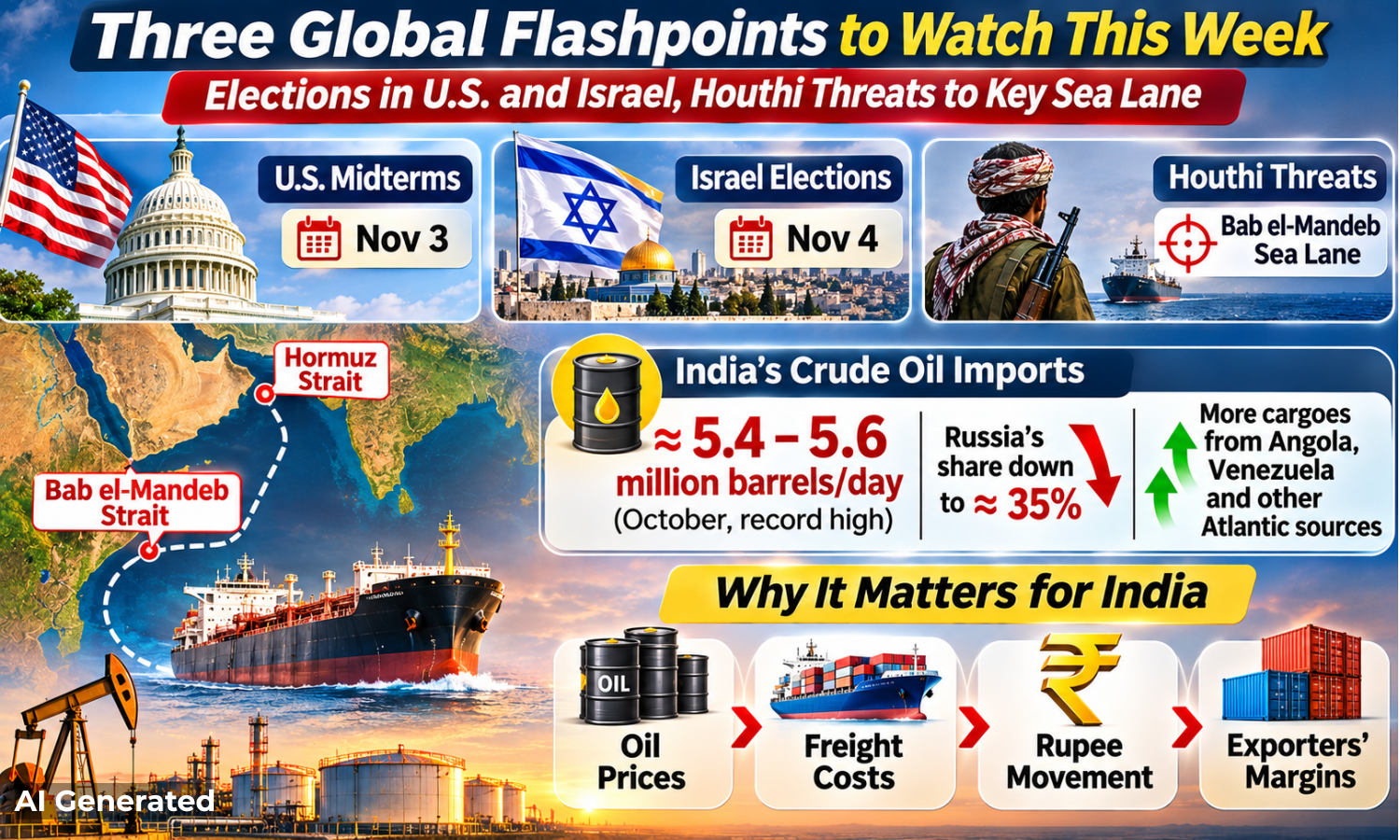
New Delhi: Disruptions to Hormuz shipping, rising freight charges and political developments in the United States and Israel could increase pressure on Indian businesses this week. With tensions also threatening the Bab el-Mandeb strait, importers and exporters face growing uncertainty over transport costs and supply chains.
The US midterm elections on November 3 and developments following Israel’s October 27 election could influence global markets. Meanwhile, continued threats from Yemen’s Houthi group have raised concerns over shipping through the Red Sea.
India imports nearly 90 per cent of its crude oil requirements, making it particularly vulnerable to disruptions in international energy markets. Higher oil prices and freight charges can weaken the rupee, increase inflation and reduce exporters’ profit margins.
Despite the tensions, India’s crude imports have continued. According to energy analytics firm Kpler, imports reached approximately 5.4 million to 5.6 million barrels per day in October, among the highest monthly levels recorded.
However, the composition of imports has changed. Russian crude reportedly accounted for around 35 per cent of supplies, while shipments from Angola, Venezuela and other Atlantic producers increased.
The shift has helped maintain supplies but added to transportation expenses. Longer shipping routes and higher insurance premiums have reduced the financial benefits of purchasing discounted crude.
India’s crude oil basket averaged more than $120 per barrel in October. Meanwhile, reported vessel movements through the Strait of Hormuz remained sharply below normal levels, with several ships waiting for safer passage.
War-risk insurance has become another major expense. Premiums for some Gulf-bound tankers reportedly increased to between 6 and 10 per cent of vessel value, compared with approximately 0.25 per cent before the conflict.
These charges, combined with longer routes and additional freight expenses, have reportedly increased delivered crude costs by $10 to $37 per barrel in some cases.
Hormuz shipping disruptions squeeze Indian exporters
The rising costs are affecting both energy companies and exporters. Indian Oil Corporation chairman A S Sahney recently told Reuters that higher freight charges were reducing the benefits of discounted crude purchases.
Exporters face similar challenges. Federation of Indian Export Organisations director general Ajai Sahay has warned that overseas buyers may become less willing to absorb higher shipping costs.
During earlier restocking cycles, some buyers accepted increased freight expenses to maintain inventories. However, sustained increases could force Indian exporters to reduce margins or raise prices.
Trade tensions with the United States have added further uncertainty. Since July 24, several Indian products have reportedly faced a 10 per cent US tariff under Section 301, while steel and aluminium remain subject to higher duties.
Although the US Supreme Court struck down certain reciprocal tariffs in February, other trade restrictions continue to affect exporters. Pharmaceuticals and smartphones have remained largely outside some of the additional tariff measures.
The outcome of the US midterm elections could influence future trade policy. A Democratic majority in the House of Representatives could increase scrutiny of tariffs and immigration restrictions. However, Congress cannot immediately reverse executive actions without legislative or judicial processes.
Political uncertainty in Israel presents another risk. The October 27 election left Prime Minister Benjamin Netanyahu’s bloc with 53 seats and the opposition led by Gadi Eisenkot with 48. Neither secured the 61 seats required for a parliamentary majority.
Prolonged coalition negotiations could complicate regional diplomacy, particularly if tensions involving Iran intensify.
For Indian businesses, the immediate outlook depends largely on maritime security. If Hormuz shipping remains restricted but stable, companies may continue managing higher freight and insurance costs.
However, fresh attacks on energy infrastructure or commercial vessels could trigger another rise in crude prices. A reduction in regional tensions would ease shipping costs and improve trade conditions.
Until maritime traffic returns to normal, Indian importers and exporters are likely to face continued pressure from expensive oil, volatile exchange rates and uncertain global demand.
