

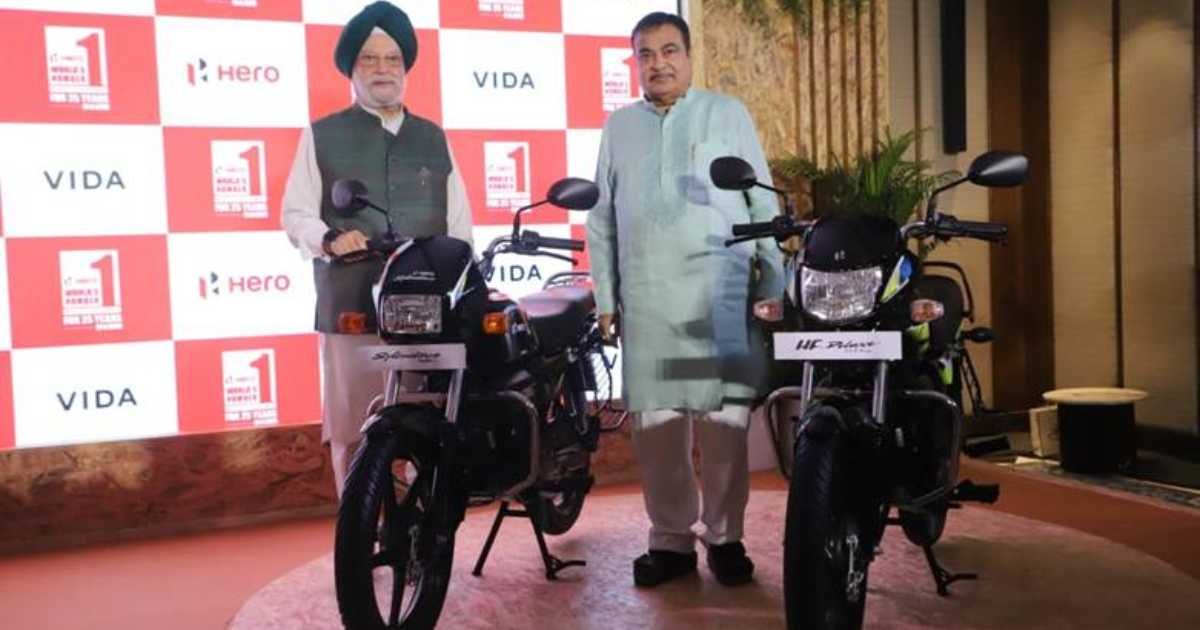
New Delhi: Union Petroleum and Natural Gas Minister Hardeep Singh Puri said flex-fuel motorcycles can help India reduce crude oil imports, support farmers through higher ethanol demand and accelerate low-carbon mobility.
Speaking at the launch of Hero MotoCorp’s first flex-fuel motorcycles in New Delhi, Puri described the development as a major milestone in India’s energy transition. Union Road Transport and Highways Minister Nitin Gadkari also attended the event.
The newly launched Splendor+ and HF Deluxe models can operate on ethanol-petrol blends ranging from E20 to E85. According to the Minister, the launch marks India’s entry into mass-market flex-fuel mobility with domestically developed vehicles.
Puri said India has more than 300 million active two-wheelers. Therefore, the adoption of flex-fuel technology can significantly transform the country’s mobility sector.
He noted that India increased ethanol blending from 1.5 per cent in 2014 to 20 per cent at present. As a result, the programme has strengthened energy security and created new income opportunities for farmers.
Flex-fuel motorcycles support ethanol economy
The Minister said India imports nearly 88.5 per cent of its crude oil requirements. Consequently, the country remains vulnerable to global energy price fluctuations and geopolitical disruptions.
According to official estimates, the ethanol blending programme has saved ₹1.84 lakh crore in foreign exchange since 2014-15. It has also replaced 302 lakh metric tonnes of crude oil and reduced carbon dioxide emissions by 909 lakh metric tonnes.
Furthermore, the programme generated ₹1.58 lakh crore in earnings for farmers by increasing demand for ethanol feedstock. Puri said the initiative has helped transform farmers from food providers into energy providers.
He added that even a one per cent adoption rate among annual petrol vehicle sales in 2026-27 could create demand for four crore litres of ethanol. This would save foreign exchange, reduce crude oil imports and lower carbon emissions.
The Minister said flex-fuel vehicles offer lower manufacturing costs and require limited infrastructure investment compared with electric vehicles. In addition, they rely on domestically produced biofuels and support India’s self-reliance goals.
Puri also said the government is examining supportive policies, including pricing measures and incentives, to accelerate adoption. He expressed confidence that wider use of flex-fuel motorcycles would strengthen rural incomes, reduce import dependence and position India as a global leader in ethanol-based mobility.
