

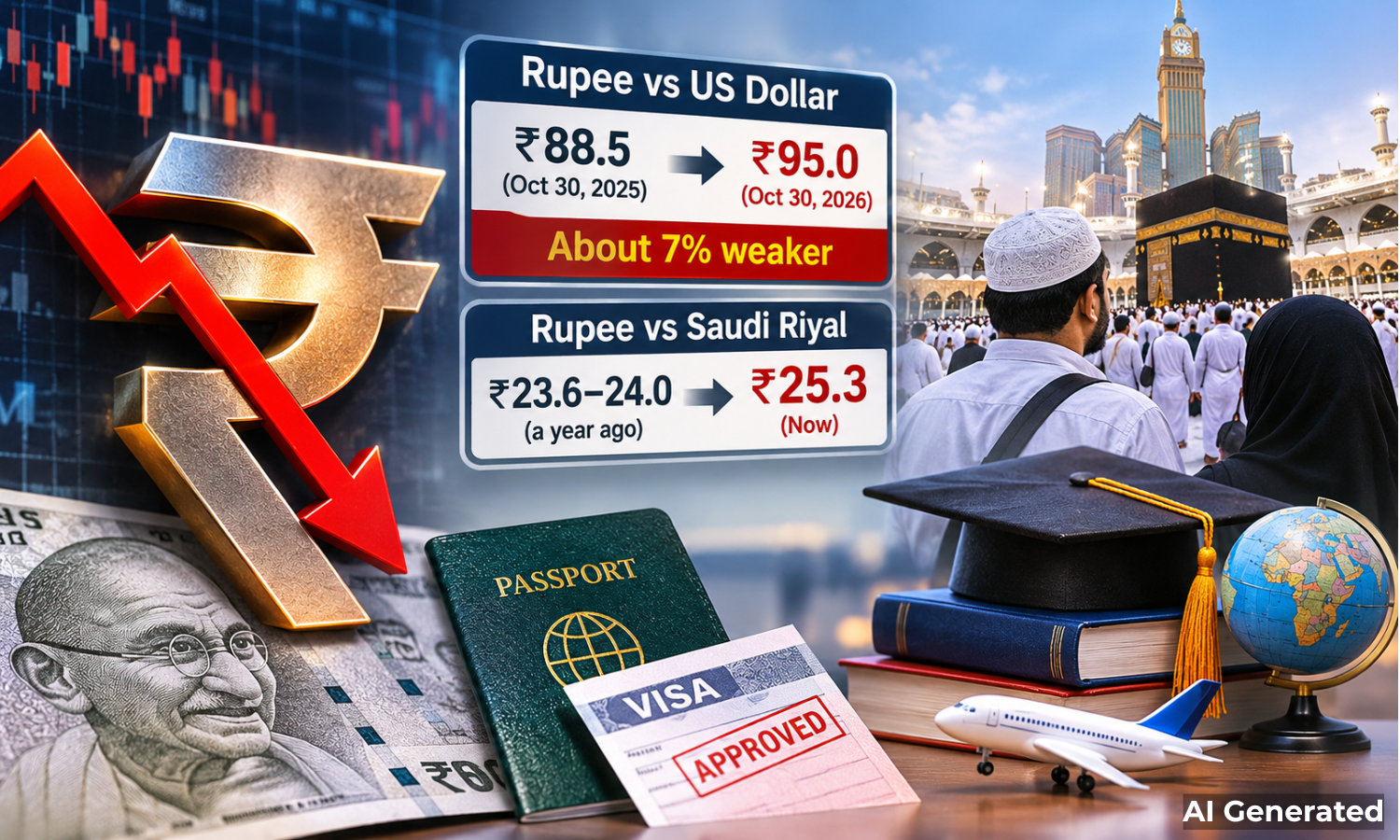
Hyderabad: The weakening rupee is increasing expenses for Hyderabad families planning Umrah pilgrimages, overseas education and international travel. The Indian currency closed near Rs 95 against the US dollar on October 30, compared with approximately Rs 88.5 a year earlier.
The rupee has lost nearly 7 per cent of its value against the dollar over the past year. It touched record lows near Rs 96.9 in early October before recovering towards the month-end.
The depreciation has also affected transactions in Saudi riyals. One riyal now costs approximately Rs 25.3, compared with Rs 23.6 to Rs 24 a year ago. Consequently, families must spend more rupees on expenses denominated in Saudi currency.
Several factors have contributed to the decline. High crude oil prices following disruptions around the Strait of Hormuz have increased India’s import costs. Meanwhile, foreign portfolio outflows and higher US bond yields have added pressure on the currency.
The Reserve Bank of India (RBI) has intervened through measures aimed at reducing dollar demand and stabilising the exchange rate. On October 7, the central bank also increased the repo rate by 25 basis points to 5.50 per cent.
These measures helped the rupee recover during the second half of October. However, continued volatility in oil prices and global financial markets could keep the currency under pressure.
Weak rupee increases Umrah and overseas education expenses
For Hyderabad’s Muslim families, the immediate impact is visible in Umrah pilgrimage costs. Since travel operators pay for accommodation, transport and other services in Saudi riyals, currency depreciation increases their expenses.
Economy Umrah packages for 14 to 15 days are currently estimated at Rs 76,000 to Rs 1.5 lakh, depending on accommodation, travel dates and services. In November 2025, typical packages reportedly ranged between Rs 80,000 and Rs 1.3 lakh.
The weakening currency could also increase the cost of Haj 2027. The Haj Committee of India opened applications in June, but final package costs will depend on contracts and exchange rates. Industry estimates suggest expenses could range from Rs 4 lakh to Rs 5 lakh per pilgrim.
Overseas education presents another major financial challenge. Students pursuing postgraduate courses in the United States, United Kingdom and Canada must pay tuition fees and living expenses in foreign currencies.
A one-year master’s programme in the US could cost between Rs 45 lakh and Rs 90 lakh, including accommodation and living expenses. Comparable expenses may range from Rs 40 lakh to Rs 80 lakh in the UK and Rs 30 lakh to Rs 60 lakh in Canada.
Even without an increase in university fees, currency depreciation raises the rupee cost of education. For example, a $50,000 annual expense would cost Rs 47.5 lakh at Rs 95 per dollar, compared with Rs 44.25 lakh at Rs 88.5. This represents an additional burden of Rs 3.25 lakh.
However, the weaker rupee benefits families receiving remittances from Gulf countries. Workers earning in Saudi riyals or UAE dirhams can now send more rupees home for the same amount of foreign currency.
Gold buyers face a different situation. International prices, exchange rates and local taxes influence domestic gold rates. Consequently, a weaker rupee can increase jewellery costs even when global gold prices remain unchanged.
Financial advisers recommend comparing foreign exchange charges before booking travel or paying university fees. Forex cards and staggered payments may help manage currency risks, although exchange-rate movements remain unpredictable.
For Hyderabad households, the impact ultimately depends on whether they earn or spend in foreign currency. While Gulf remittances provide some relief, families planning pilgrimages and overseas education face higher expenses.
